

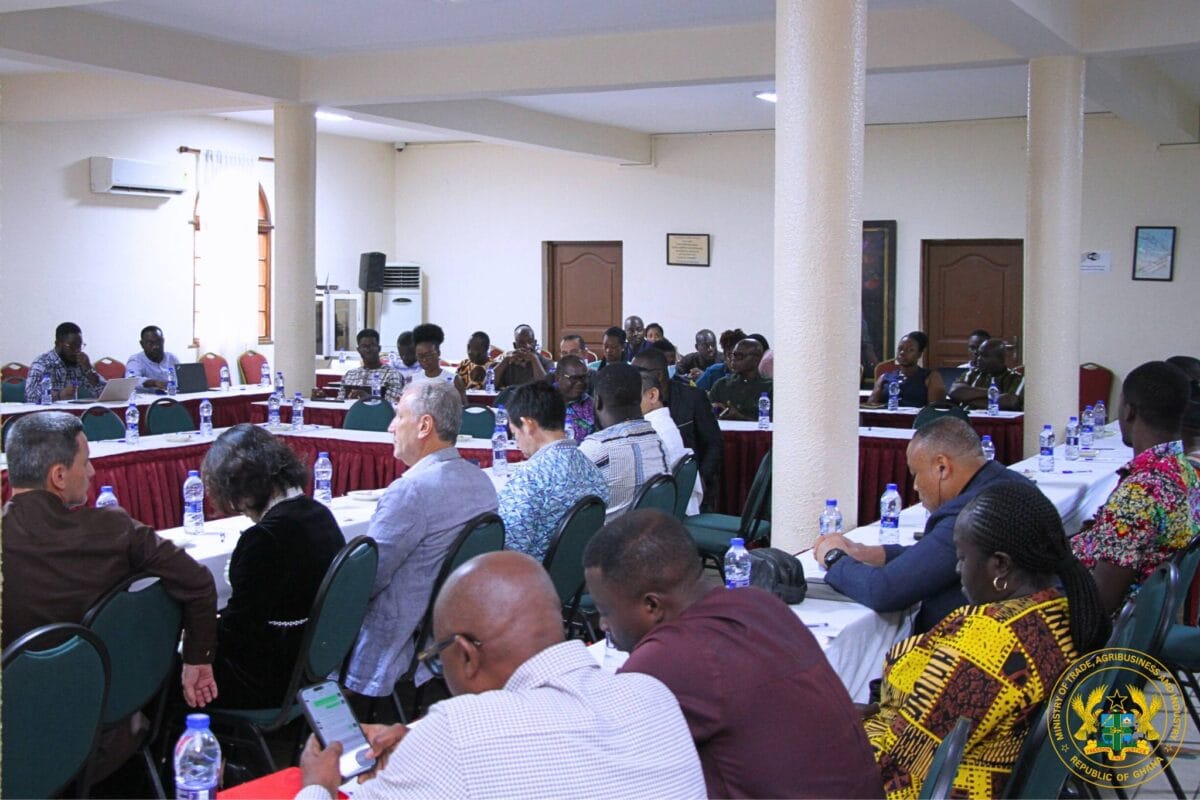
The Ministry of Trade, Agribusiness and Industry has held stakeholder consultations on the revised Ghana Automotive Development Policy Phase II (GADP II) aimed at future-proofing the country’s automotive industry and aligning it with emerging global mobility trends.
The engagement workshop took place on Thursday, January 23, 2026, in Accra and brought together industry players, development partners and regulators to review proposals under the draft policy and provide inputs ahead of its finalisation.
Get more exclusive breaking news updates on our WhatsApp channel .
Opening the workshop on behalf of the Chief Director of the Ministry, Mr Noah Tumfo, the Head of Textiles and Garments, Mr Kwesi Ofori Antwi, said the revision was necessary to ensure Ghana’s automotive framework remains commercially viable, technologically relevant and globally competitive.
He noted that since the introduction of the Ghana Automotive Development Policy in 2019, the country has established a solid foundation for vehicle assembly, with eight assembly plants currently operating and assembling different vehicle models from global original equipment manufacturers and domestic brands.

Mr Antwi stated that the next phase must respond to structural shifts in the global automotive industry, particularly the transition to electric vehicles, modular assembly models and the growing relevance of two- and three-wheeler mobility solutions.
He explained that the objective of the revised policy is diversification and future-proofing rather than disruption, and that GADP II seeks to incorporate electric vehicles as well as two- and three-wheelers into the assembly and localisation framework while maintaining stability for existing internal combustion vehicle investments.
According to him, the revised policy will provide clear incentives for EV and two-wheeler assembly, predictable tariff and fiscal regimes to support phased localisation, and regulatory certainty on safety, performance and environmental standards. He highlighted opportunities for developing local supplier ecosystems in battery assembly, wiring harnesses, plastics, metal fabrication and digital systems, supported by skills development and integration of SMEs into automotive value chains.
Discussions during the “Way Forward” session addressed implementation and regulatory issues, including the definition and phasing of knock-down kits for electric vehicles, model limitations per assembler, charging infrastructure standards, duty and VAT structures, competitiveness of local assembly and compliance with international trade obligations.
Participants also examined the role of inter-ministerial collaboration, particularly involving the Ministries of Energy, Transport and Finance, in addressing EV charging infrastructure, standards and fiscal incentives while ensuring affordability and competitiveness for locally assembled vehicles.
The engagement underscored Ghana’s ambition to strengthen its regional position under the African Continental Free Trade Area by serving as a competitive assembly and export hub for affordable and sustainable mobility solutions across West Africa and the continent.
Delivering closing remarks, Mr Eugene Sangmortey, Team Lead at GHANA JET, a UK government-funded programme supporting industrialisation efforts, commended stakeholders for robust discussions and reaffirmed the programme’s commitment to supporting the Ministry and private sector to advance the automotive policy and expand its impact.
He expressed optimism that the next phase of the policy will deepen job creation, attract increased investment and strengthen linkages between the automotive industry and other sectors of the economy.
The stakeholder engagement forms part of ongoing consultations to finalise the revised Ghana Automotive Development Policy Phase II.