Thursday, March 12, 2026
  • Home
  • About
  • Contact
  • Sitemap
  • Login
  • Register
The Ghanaian Standard
  • Home
  • Latest
  • TrendingHot
  • Politics
  • Legal
    • Crime
    • Security
  • News
    • Education
    • Environment
    • Health
    • Social
    • Tech
  • Business
    • Economy
    • Finance
  • Opinion
  • Sports
    • Boxing
  • International
  • Featured
    • Profiles
  • Job Vacancies
No Result
View All Result
  • Home
  • Latest
  • TrendingHot
  • Politics
  • Legal
    • Crime
    • Security
  • News
    • Education
    • Environment
    • Health
    • Social
    • Tech
  • Business
    • Economy
    • Finance
  • Opinion
  • Sports
    • Boxing
  • International
  • Featured
    • Profiles
  • Job Vacancies
No Result
View All Result
The Ghanaian Standard
No Result
View All Result

Sweet Abroad, Bitter at Home: Ghana’s Bittersweet Cocoa Contradiction

Kay CodjoebyKay Codjoe
February 12, 2026
in Economy, Opinion
Ghana's Bittersweet Cocoa Contradiction

Somewhere in Europe tonight, a couple unwraps a glossy bar of chocolate proudly labelled premium Ghana cocoa. The aroma is rich. The branding elegant. The price may equal what a farmer here earns after days of labour beneath an unforgiving sun. That contrast should disturb us far more than it currently does.

Ghana exports roughly five hundred thousand to eight hundred thousand tonnes of cocoa annually. In strong years production has crossed the one million tonne mark. Even in difficult seasons Ghana remains the world’s second largest cocoa exporter and one of the most important suppliers to global chocolate manufacturers. Our beans are trusted. Our quality is respected. Our reputation is secure.

Get more exclusive breaking news updates on our WhatsApp channel .

Yet the farmer behind that reputation often lives with uncertainty.

Recent tensions between COCOBOD and farmers did not emerge suddenly. Payment delays, financing constraints, global price swings, and structural weaknesses collided. Farmers delivered beans expecting timely income. Months passed for some without payment. For them cocoa income is not theoretical revenue. It is school fees, medicine, fertilizer, food, dignity. When that rhythm breaks, anxiety becomes frustration.

Best SME Website Developer in Ghana
ADVERTISEMENT

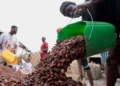
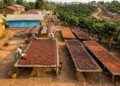
Visit cocoa communities in Eastern Region, Western North, Ashanti, Bono, Ahafo. Dawn arrives before comfort. Farmers walk into fields carrying years of experience in their hands. They prune, spray, harvest, ferment, dry. Their beans travel across oceans. Wealth grows elsewhere. The farmer often remains financially exposed.

That is the uncomfortable truth Ghana must confront.

We produce exceptional cocoa yet capture only a modest share of the finished chocolate value chain. Processing, branding, marketing, and retail profits largely accumulate abroad. Ghana exports excellence but imports expensive chocolate. We export raw potential but often import finished prosperity.

This imbalance is not inevitable. It is structural.

COCOBOD leadership including Chief Executive Randy Abbey has acknowledged financing pressures and apologized for payment delays. That transparency matters. Institutions must speak honestly when difficulties arise. But explanations alone cannot restore trust if farmers remain uncertain about when income arrives.

The debate has drifted into political trenches. Some portray farmers as agitators. Others portray COCOBOD as indifferent. Both narratives miss the larger issue. Farmers are not political tools. COCOBOD is not an enemy. The real challenge is how Ghana restructures its cocoa economy so national pride translates into farmer prosperity.

Processing even thirty percent of our annual cocoa domestically could transform rural economies. Processing half could stabilize foreign exchange significantly. Processing seventy percent could position Ghana as a global chocolate powerhouse rather than primarily a raw supplier. That is not fantasy. It is industrial policy.

The employment implications alone are enormous. A world class cocoa processing and chocolate manufacturing ecosystem could directly create thousands of skilled factory, logistics, research, marketing, and administrative jobs. Indirectly it could support tens of thousands more through transport, packaging, retail distribution, maintenance services, and supporting industries. Entire rural towns could see renewed economic activity, from food vendors to construction workers, from teachers to health professionals serving more economically stable communities.

This is also what a genuine national RESET looks like in practice. Not slogans. Not speeches. Tangible industrial transformation that creates jobs day and night. A cocoa sector that feeds factories, powers logistics, drives exports, and sustains a real twenty four hour economy where production, processing, marketing, and distribution operate continuously. That is how nations build resilience. That is how prosperity becomes visible.

Economic logic strongly supports this shift. Cocoa already contributes billions in export earnings. Local value addition would multiply that impact through manufacturing growth, technology transfer, packaging industries, export logistics expansion, and brand development. It would strengthen the cedi, deepen industrial expertise, and reduce vulnerability to global commodity price shocks.

There is also a generational urgency. Younger farmers increasingly question whether cocoa offers a stable future. Illegal mining, despite its environmental damage, sometimes appears financially more predictable. That perception alone should alarm national planners. A strategic export sector cannot survive if the next generation walks away from it.

None of this requires demonizing COCOBOD or government. Ghana faces fiscal pressures, currency volatility, climate challenges, and global market uncertainties. Institutional constraints are real. But empathy must flow both directions. Farmers are not statistics. They are custodians of a national economic pillar.

Transparency about pricing, financing, and payment timelines is essential. Predictable payment systems are essential. Investment in domestic processing is essential. Strong farmer cooperatives are essential. National pride must translate into measurable farmer wellbeing.

Ultimately cocoa is not merely an export figure. It is the quiet labour of hundreds of thousands of Ghanaians whose hands rarely appear in policy debates. Listening carefully to those voices while acknowledging institutional realities is not weakness. It is national maturity.

Until the farmer who grows the bean experiences prosperity that reflects the global prestige of that bean, Ghana’s cocoa story remains incomplete. The sweetness the world enjoys should never be rooted in silent hardship at home.


Tags: CocobodRandy Abbey

Related Stories

NPA assures public of adequate fuel supply amid global market concerns

NPA assures public of adequate fuel supply amid global market concerns

The National Petroleum Authority (NPA) has assured the public that the country has sufficient fuel stocks and that the petroleum...

Fuel prices could hit GH¢17 if Middle East crisis persists -COMAC.

Fuel prices could hit GH¢17 if Middle East crisis persists -COMAC.

The Chamber of Oil Marketing Companies (COMAC) has warned that fuel prices in Ghana could rise sharply and reach about...

Buipewura Jinapor II engages Trade Minister on agribusiness initiatives for northern development

Buipewura Jinapor II engages Trade Minister on agribusiness initiatives for northern development

Buipewura Abdulai Jinapor II, Paramount Chief of the Buipe Traditional Area in the Savannah Region and Vice President of the...

Ghana consults stakeholders on revised automotive policy phase II

Ghana consults stakeholders on revised automotive policy phase II

The Ministry of Trade, Agribusiness and Industry has held stakeholder consultations on the revised Ghana Automotive Development Policy Phase II...

Comments 1

  1. Earl says:
    2 weeks ago

    The cocoa farmers currently have to support the corrupt COCOBOD which steals approximately 1/5 of their earnings. They should not have to subsidise a loss making refinery industry on top of that.

    The price regulations have to go. Farmers must be free to sell cocoa to who they want to the price decided between the parties. If COCOBOD can operate in this environement, let it (it cannot, the “managers” are mere thieves). The refinery industry Mahama dreams about must also pay normal market price for the cocoa. It is meaningless to let farmers subsidise loss making prestige projects and the parasite snake nest of COCOBOD.

Web Design Ghana Web Design Ghana Web Design Ghana
ADVERTISEMENT

Latest News

Iran’s new supreme leader injured in US-Israeli airstrike

Iran’s new supreme leader injured in US-Israeli airstrike

Opoku-Agyemang visits Roads Ministry to review infrastructure development

Opoku-Agyemang visits Roads Ministry to review infrastructure development

Opoku-Agyemang calls for action on gender equity at International Women’s Day event

Opoku-Agyemang calls for action on gender equity at International Women’s Day event

President Mahama strengthens Ghana-South Korea relations during historic visit

President Mahama strengthens Ghana-South Korea relations during historic visit

Most Read Today

  • Three arrested over murder of Abamba queenmother

    Three arrested over murder of Abamba queenmother

    0 shares
    Share 0 Tweet 0
  • Counsellor Lutterodt arrested by police

    0 shares
    Share 0 Tweet 0
  • Ghana Culture Week 2026 set for March 13–14 at National Theatre

    0 shares
    Share 0 Tweet 0
  • President Mahama strengthens Ghana-South Korea relations during historic visit

    0 shares
    Share 0 Tweet 0
  • Ablakwa meets King Charles III at St. James’s Palace

    0 shares
    Share 0 Tweet 0
  • KMA reminds public of demolition deadline for unauthorized structures around Baba Yara Stadium

    0 shares
    Share 0 Tweet 0
The Ghanaian Standard

The Ghanaian Standard is an independent news media platfrom trusted by Ghanaian worldwide for breaking news coverage of Ghanaian politcs, business, social, legal, crime news and opinion essays. We are baed in Accra, Ghana

Browse by Category

  • Boxing
  • Business
  • Crime
  • Economy
  • Education
  • Entertainment
  • Environment
  • Expose
  • Featured
  • Finance
  • Health
  • History
  • International
  • Legal
  • Music
  • News
  • Opinion
  • Politics
  • Profiles
  • Science
  • Security
  • Social
  • Speeches
  • Sports
  • Technology
  • TV & Cinema

Contact

Soursop St GS-0750-8619, Iron City-Amanfrom, Ga South, Accra – Ghana

Phone: 233 55 091 9202
Email: contact@ghstandard.com

Follow Us

  • About
  • Contact
  • Sitemap

© 2025 The Ghanaian Standard - Breaking news in Ghana today | Designed by EnspireFX Websites | Powered by StellerHost

Welcome Back!

Login to your account below

Forgotten Password? Sign Up

Create New Account!

Fill the forms below to register

All fields are required. Log In

Retrieve your password

Please enter your username or email address to reset your password.

Log In
No Result
View All Result
  • Home
  • Latest
  • Trending
  • Politics
  • Legal
    • Crime
    • Security
  • News
    • Education
    • Environment
    • Health
    • Social
    • Tech
  • Business
    • Economy
    • Finance
  • Opinion
  • Sports
    • Boxing
  • International
  • Featured
    • Profiles
  • Job Vacancies
  • Login
  • Sign Up

© 2025 The Ghanaian Standard - Breaking news in Ghana today | Designed by EnspireFX Websites | Powered by StellerHost