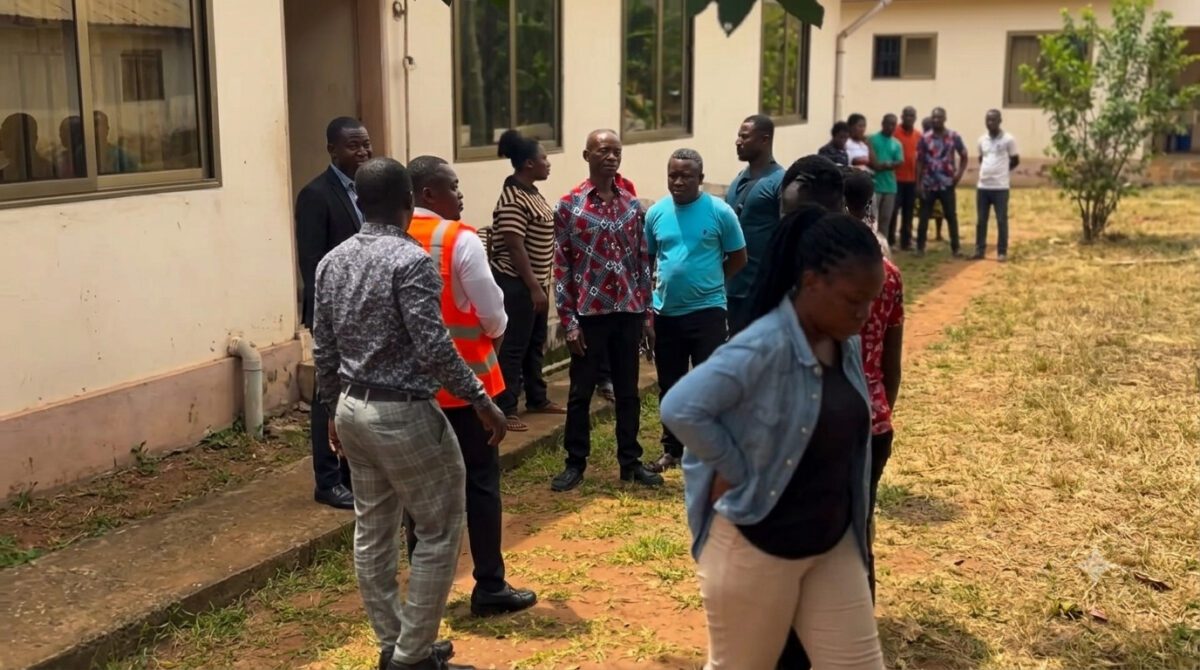
In a firm move to combat poor environmental hygiene and its direct link to flooding, the Kumasi Metropolitan Assembly (KMA) has arrested approximately 20 individuals for allegedly failing to maintain proper sanitation in their surroundings.
The operation underscores the critical connection between waste management, clogged drains, and the recurrent flooding that plagues Ghana’s second-largest city.
Get more exclusive breaking news updates on our WhatsApp channel .
The arrests come as parts of Kumasi continue to experience flooding during heavy rains, a problem exacerbated by indiscriminate dumping of refuse, blocked gutters, and poor household-level sanitation practices.
KMA officials have linked the situation directly to these environmental lapses, signalling a more aggressive enforcement approach to restore order and reduce flood risks.

Kumasi, the capital of the Ashanti Region, is a bustling commercial hub with a rapidly growing population. This growth has strained existing infrastructure, particularly drainage and waste management systems.
During the rainy season, clogged drains and overflowing gutters turn streets into rivers, damaging property, disrupting businesses, and posing serious health risks.
Key issues include indiscriminate waste disposal by residents and businesses, blocked drainage systems caused by plastic waste and other debris, and poor household sanitation practices, such as failure to clean compounds or maintain local drains.
Limited public awareness and low participation in communal clean-up activities have also contributed to the ongoing sanitation challenges.
By arresting those found negligent, the KMA aims to send a strong message: sanitation is a shared responsibility, and violations will no longer be tolerated. The move has received mixed but largely supportive reactions online.
The operation reflects a broader strategy by metropolitan, municipal, and district assemblies across Ghana to enforce sanitation by-laws. Similar exercises have occurred in Accra and other cities, often involving fines, community service, or court appearances.
Sustainable solutions require tackling the root causes through improved and affordable waste collection services, investment in modern landfill sites and recycling programmes, and the expansion of drainage infrastructure.
They also involve strengthening public education in local languages and introducing economic incentives to encourage responsible waste management practices.
Flooding in Kumasi leads to loss of lives and property, spread of waterborne and vector-borne diseases, economic losses for traders and transport operators, and strain on emergency services and public resources.
The problem is worsened by rapid urbanisation, weak enforcement of building regulations leading to construction on waterways, and climate change-induced heavier rainfall.
The KMA’s recent action aligns with national efforts by the Ministry of Sanitation and Water Resources, the Ghana National Fire Service, and the National Disaster Management Organisation (NADMO).
These agencies repeatedly warn citizens to avoid building in floodplains, dispose of waste properly, and heed weather alerts.
The arrests demonstrate a proactive approach that could help prevent future negligence if implemented with transparency and fairness.
For lasting results, the Assembly should clearly communicate the by-laws violated and penalties imposed, provide support services such as affordable waste collection, involve community stakeholders in awareness campaigns, assess the impact on flooding, and work with neighbouring assemblies to improve regional waste management
Residents also have a civic duty. Simple actions, such as desilting gutters around homes, using dustbins, and participating in clean-up campaigns, can dramatically reduce flood risks when scaled across communities.
The KMA’s decision to arrest 20 individuals for sanitation offences sends a clear signal that environmental hygiene is non-negotiable. While enforcement is necessary, true transformation will come from a cultural shift where citizens view proper sanitation as a personal and collective duty rather than a burden.
As Kumasi and other Ghanaian cities grapple with the twin challenges of urbanisation and climate change, operations like this must become part of a comprehensive strategy, not isolated events.
The ultimate goal is a cleaner, safer, and more resilient Kumasi where flooding becomes the exception rather than a seasonal norm.
Public cooperation, strict but fair enforcement, and infrastructural investment together hold the key to solving Kumasi’s sanitation and flooding problems. Every citizen must play their part, starting today.