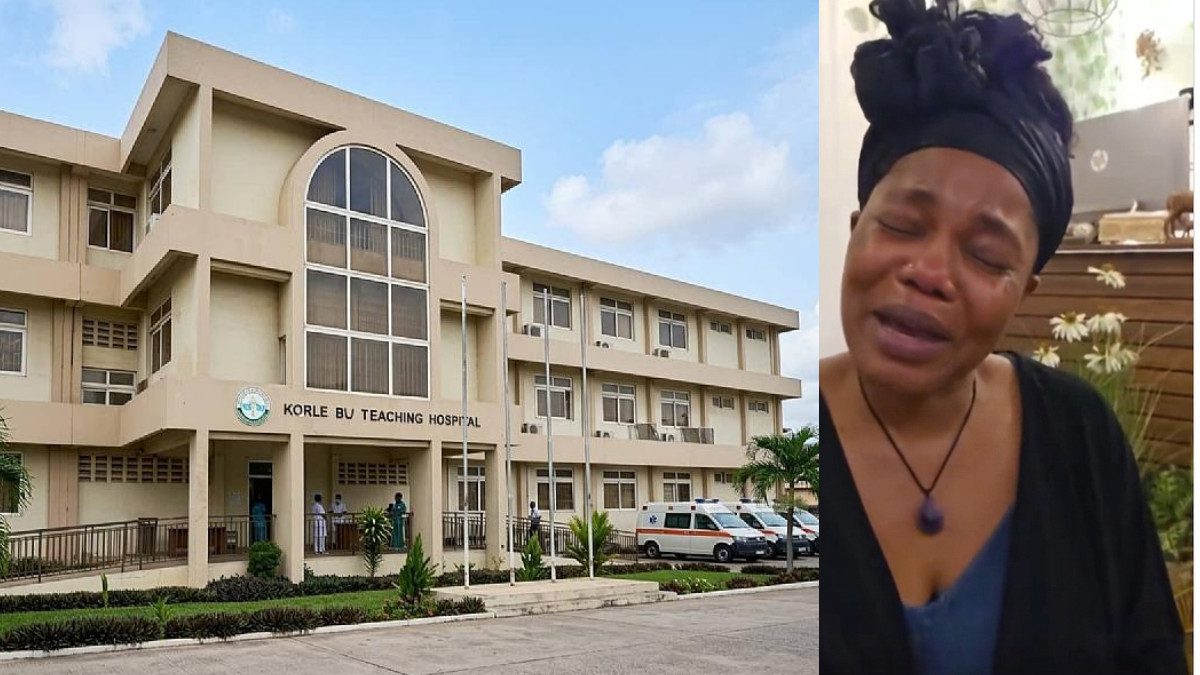
Ghanaian musician and actress Mzbel (born Belinda Nana Ekua Amoah) has been thrust into the national spotlight not for her music, but for a deeply personal and painful loss.
In a widely shared video circulating on social media, the celebrated artist broke down in tears as she recounted the death of her sister at the prestigious Korle Bu Teaching Hospital in Accra.
Get more exclusive breaking news updates on our WhatsApp channel .
Mzbel alleges that the facility’s lack of available beds directly contributed to her sister’s untimely passing.
According to Mzbel’s account, her sister was admitted to Korle Bu Teaching Hospital, one of Ghana’s largest and most advanced medical facilities, but could not secure a bed.

The musician believes this critical shortfall in basic infrastructure played a decisive role in the outcome. While full medical details have not been publicly disclosed, the core allegation revolves around overcrowding and resource constraints that forced patients into inadequate conditions.
Korle Bu, established in 1923 and serving as a major referral centre, frequently features in stories of Ghana’s healthcare challenges. Reports of patients receiving treatment on benches, floors, or being turned away are distressingly common, especially in emergency and specialist wards.
Ghana’s healthcare system has made significant progress in expanding primary healthcare and strengthening disease control programmes, including efforts to combat malaria and HIV.
However, rapid population growth, urbanisation, and an ageing population have placed increasing pressure on hospital infrastructure, resulting in shortages of beds and healthcare facilities.
The sector also faces funding constraints, with concerns over budget allocations and delays in implementing major projects such as Agenda 111.
In addition, shortages of healthcare professionals and persistent disparities in access to quality care continue to affect rural communities and low-income populations.
The emotional clip has ignited fierce debate across political lines. Mzbel questioned the government, Former President and Hon. John Dramani Mahama, under whose administration (or current political context), persistent reports of bed shortages continue to emerge.
Public reactions reflect deep frustration, with many expressing condolences while lamenting a “failed system.” Others noted the political dimensions, with some accusing Mzbel of selective outrage depending on which party holds power.
The incident has become politicised, with supporters of the current administration defending ongoing efforts and opponents highlighting unfulfilled promises.
Healthcare advocates argue that tragedies like this should transcend politics and underscore the urgency of addressing root causes through better planning, transparent procurement, public-private partnerships, and community-level preventive care.
Ghana introduced the National Health Insurance Scheme (NHIS) in the early 2000s to improve access, achieving notable successes in coverage.
However, challenges persist with claims processing, quality of care, and sustainability. The COVID-19 pandemic exposed vulnerabilities. Similar stories emerge from Komfo Anokye Teaching Hospital in Kumasi and other facilities nationwide.
International comparisons show that while Ghana outperforms many peers in West Africa, it lags behind global standards for a middle-income nation aspiring to “Vision 2057” development goals.
Experts recommend accelerating hospital expansion projects with rigorous oversight, investing in medical training and retention to reduce brain drain, strengthening primary and preventive care, leveraging technology for better bed management, electronic records, and telemedicine, and ensuring bipartisan commitment to long-term health financing.
As Mzbel mourns her sister, her public breakdown may yet catalyse meaningful conversation. In her grief, she joins countless unnamed families who have faced similar pain in silence.
Tragedies like this remind us that behind every headline about infrastructure or politics are real people whose lives depend on functioning systems.