Ghana has recorded a major increase in its non-traditional export earnings, reaching $5.006 billion in 2025, up from $3.08 billion in 2024. This represents an increase of over 30%.
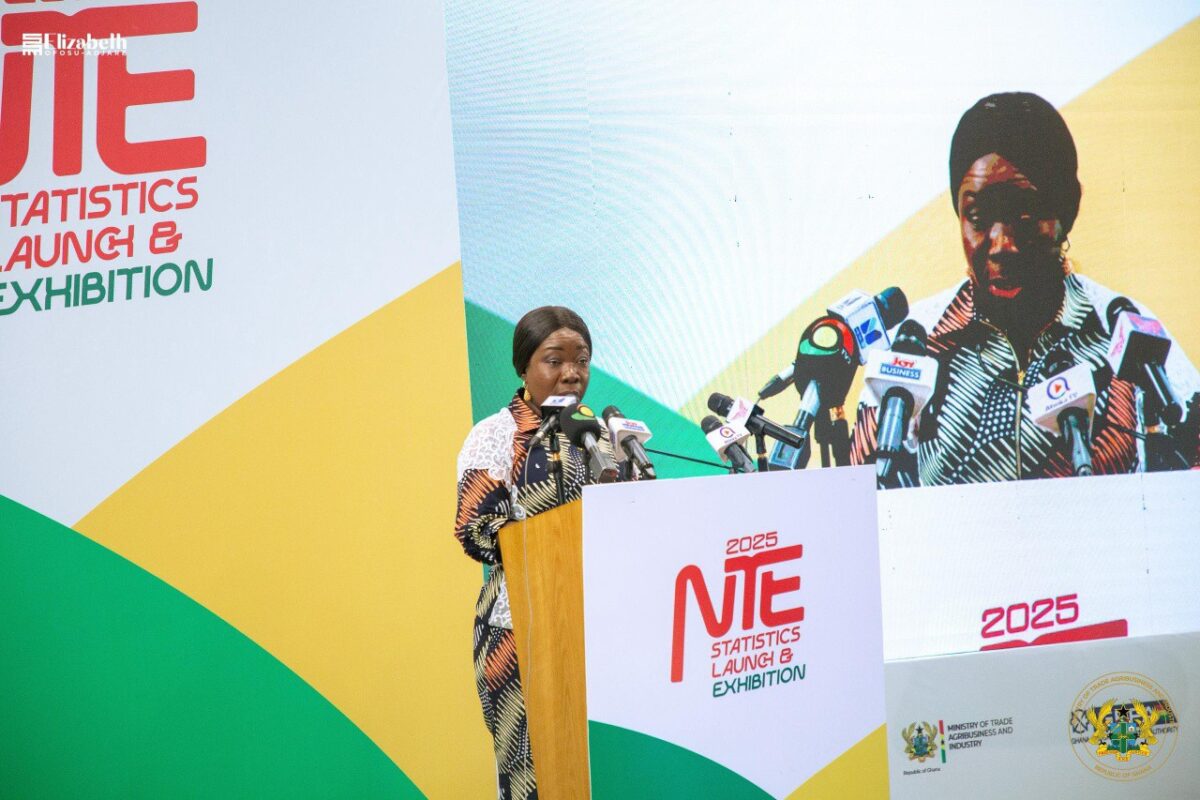
The figures were disclosed at the official launch of the 2025 Non-Traditional Exports Statistics Report by the Ghana Export Promotion Authority (GEPA), held at the African Trade House in Accra on Friday, 17 April 2026.
Get more exclusive breaking news updates on our WhatsApp channel .
The Chief Executive Officer of GEPA, Francis Kojo Kwarteng Arthur, attributed the growth to the steady expansion of Ghana’s non-traditional export sector. He noted that Ghanaian products are increasingly gaining acceptance in international markets, describing the sector as resilient with strong potential for further expansion.
Delivering the keynote address on behalf of President John Dramani Mahama, the Deputy Chief of Staff in charge of Administration, Nana Oye Bampoe Addo, commended the Minister for Trade, Agribusiness and Industry for her performance.

She highlighted the strong potential of the non-traditional export sector and noted that Ghana is gradually shifting from raw material exports to value-added production. She added that the report will serve as a key tool for importers and exporters in making informed business decisions.
The Minister for Trade, Agribusiness and Industry, Hon. Elizabeth Ofosu-Adjare, emphasised the importance of export diversification as a key pillar of Ghana’s economic transformation.
She noted that Ghana’s exports have historically been dominated by gold, crude oil, and cocoa, which together accounted for over 70% of total merchandise exports as recently as 2023.
She further stated that non-traditional exports now account for about 16% of total merchandise exports, with Africa contributing 30.36% of earnings, driven largely by trade within the ECOWAS sub-region. She described this as evidence of Ghana’s growing competitiveness within regional markets and the opportunities offered by the African Continental Free Trade Area.
Hon. Ofosu-Adjare stressed that sustained export growth will depend on improved production capacity, quality standards, access to finance, and removal of institutional bottlenecks.
She reaffirmed government’s commitment to working with institutions such as the Ghana EXIM Bank and the Ghana Standards Authority to promote value addition, industrial competitiveness, and market expansion.
She also highlighted the Feed the Industry Programme as a strategic initiative to strengthen the link between agriculture and industry by improving raw material supply for agro-processing and manufacturing.
The Minister called on exporters, manufacturers, and financial institutions to play their roles in boosting export growth. She noted that increased value addition would drive job creation, strengthen industrial capacity, and improve foreign exchange earnings.
She described the report as both a record of progress and a guide for future action, while commending GEPA and Ghanaian exporters for strengthening the country’s presence in global markets.