The Vice-President of the Oti Regional House of Chiefs, Nana Okoforibour B.K. Asante II, has called on Ghanaians to reject violence as a means of resolving grievances, stressing that conflict comes at an enormous human and economic cost.
He said his experience serving as a security officer in conflict zones, particularly in Rwanda, had convinced him that peaceful dialogue remained the best approach to resolving disputes.
Get more exclusive breaking news updates on our WhatsApp channel .
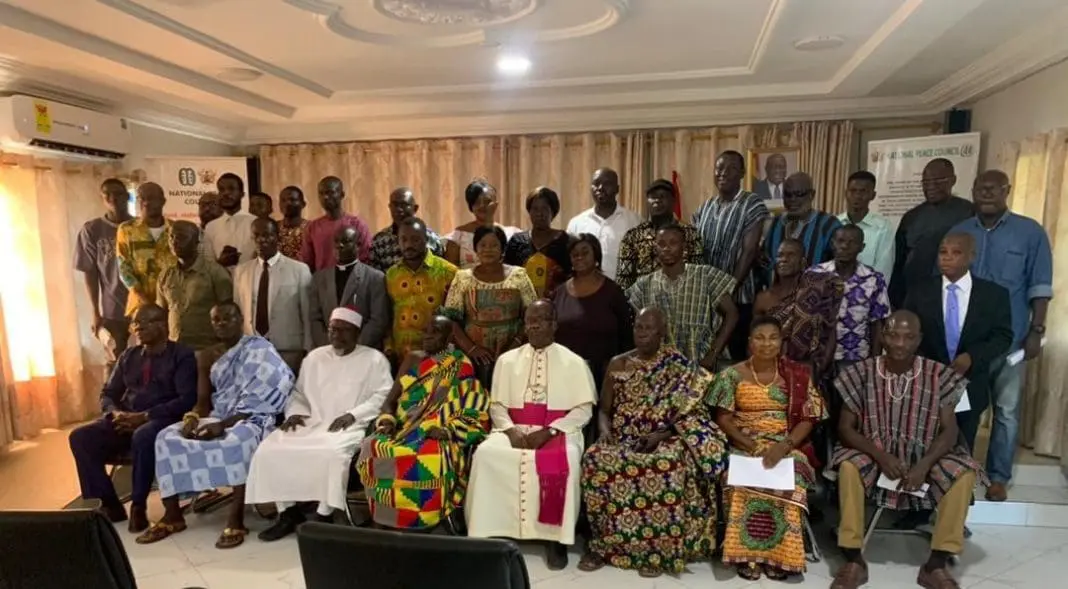
Nana Asante made the remarks during the “Building an Inclusive Nation Dialogue” organised by the National Peace Council (NPC) at Dambai in the Oti Region.
Recalling his experience in Rwanda, he said the devastating effects of conflict had left the country without basic infrastructure and essential services.

“When we got to Rwanda, we were introduced to the country as a nation without electricity, food and other basic amenities,” he said.
He added that many citizens had become refugees in their own country as public institutions and support systems collapsed during the conflict.
The dialogue formed part of efforts by the National Peace Council to engage stakeholders on issues of inclusion, national cohesion and perceptions of discrimination in the Volta and Oti regions.
In his introductory remarks, the Volta Regional Executive Secretary of the National Peace Council, David Normanyo, said the meeting was organised to present the findings of earlier consultations on perceptions of discrimination and secessionist tendencies within the two regions.
The event brought together representatives of political parties, Metropolitan, Municipal and District Chief Executives, youth groups, transport unions and faith-based organisations.
Presenting the findings of the consultations, Dr Ken Ahorsu, a Senior Research Fellow at the Legon Centre for International Affairs and Diplomacy, said many participants expressed concerns about perceived discrimination.
According to him, issues raised included alleged inequalities in public appointments, unequal distribution of development projects and perceptions of first- and second-class citizenship, all of which contributed to feelings of exclusion among some residents.
Dr Ahorsu said the report and its recommendations had been submitted to the Ministry of National Security for consideration and implementation.
He urged residents to take collective responsibility for promoting peace and fostering stronger national unity.
The Oti Regional Director of the National Commission for Civic Education (NCCE), Robert Boame, identified land ownership and chieftaincy disputes as the major potential triggers of conflict in the region.
He called for the formulation of a special land policy for the Oti Region to help prevent future disputes and urged residents to embrace tolerance, fairness and peaceful coexistence to sustain harmony and development.