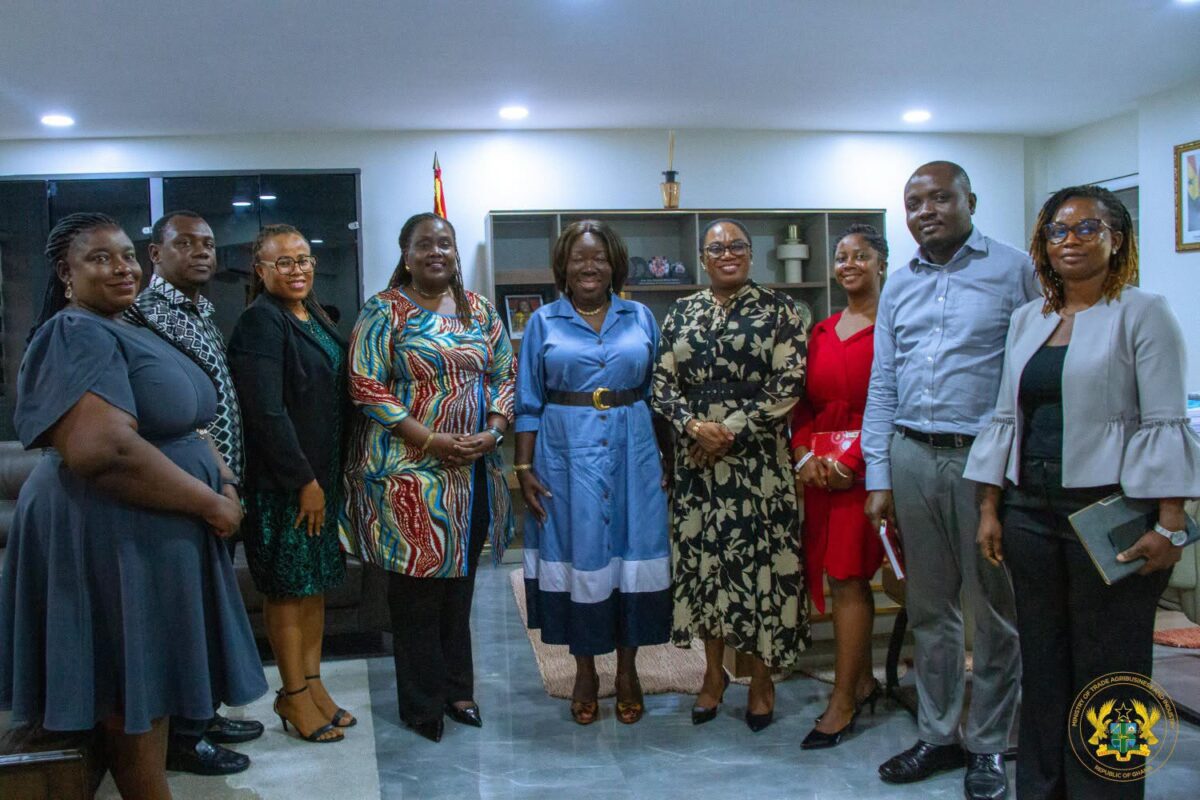
The World Health Organisation (WHO) has reaffirmed its strong commitment to supporting Ghana’s ambition to become a regional leader in pharmaceutical manufacturing.
This was made clear during a high-level courtesy call by the WHO Country Representative, Dr Fiona Braka, on the Minister for Trade, Agribusiness and Industry, Hon. Elizabeth Ofosu-Adjare, in Accra on Tuesday, July 7, 2026.
Get more exclusive breaking news updates on our WhatsApp channel .
The meeting underscored the growing collaboration between the WHO, the Ministry of Trade, Agribusiness and Industry (MOTAI), the Ministry of Health, and key regulatory bodies like the Food and Drugs Authority (FDA) to expand local production of quality medicines and vaccines.
Dr Fiona Braka highlighted that expanding domestic pharmaceutical manufacturing is central to building resilient health systems across Africa. She noted that local production improves access to essential medicines, strengthens regulatory oversight, reduces reliance on imports, and creates economic opportunities.

“Ghana has made significant progress in pharmaceutical manufacturing and is well-positioned to become a leading producer of medicines and vaccines in the sub-region,” Dr Braka stated. She praised the country’s existing manufacturing base and expressed WHO’s readiness to provide technical support under its health systems strengthening framework.
The WHO’s support focuses on ensuring that locally produced medicines meet international standards of safety, quality, and efficacy while remaining affordable for ordinary Ghanaians.
Hon. Elizabeth Ofosu-Adjare welcomed the delegation and expressed gratitude for the WHO’s consistent partnership. She reaffirmed the government’s determination to scale up local production as part of broader efforts to enhance healthcare delivery and drive industrial growth.
The Minister announced that the government has recently approved a comprehensive Pharmaceutical Policy. This policy is expected to serve as a key framework for attracting investment into the sector, promoting local manufacturing, enhancing the competitiveness of Ghanaian pharmaceutical companies, and improving access to quality medicines nationwide.
She emphasised that the Ministry of Trade, Agribusiness and Industry will work closely with the Ministry of Health and other stakeholders to translate this policy into tangible outcomes.
Developing a strong local pharmaceutical industry would enhance Ghana’s health security by reducing dependence on imported medicines and improving access to affordable essential drugs.
It would also promote economic growth through job creation, technology transfer, industrialisation, export opportunities, and a stronger regulatory system led by the FDA.
Despite recent progress, Ghana’s pharmaceutical sector continues to face challenges, including high production costs, limited access to finance, and reliance on imported active pharmaceutical ingredients (APIs).
The industry also needs greater investment in research and development, stronger compliance with international quality standards, and a larger pool of skilled pharmaceutical professionals.
The WHO’s engagement signals strong international backing. Potential areas for deeper collaboration include capacity building, technology transfer, regulatory harmonisation, and support for local manufacturers to achieve WHO prequalification.
This partnership fits into Ghana’s long-term development agenda, including the 40-Year National Development Plan and efforts to achieve Universal Health Coverage. It also supports the African.