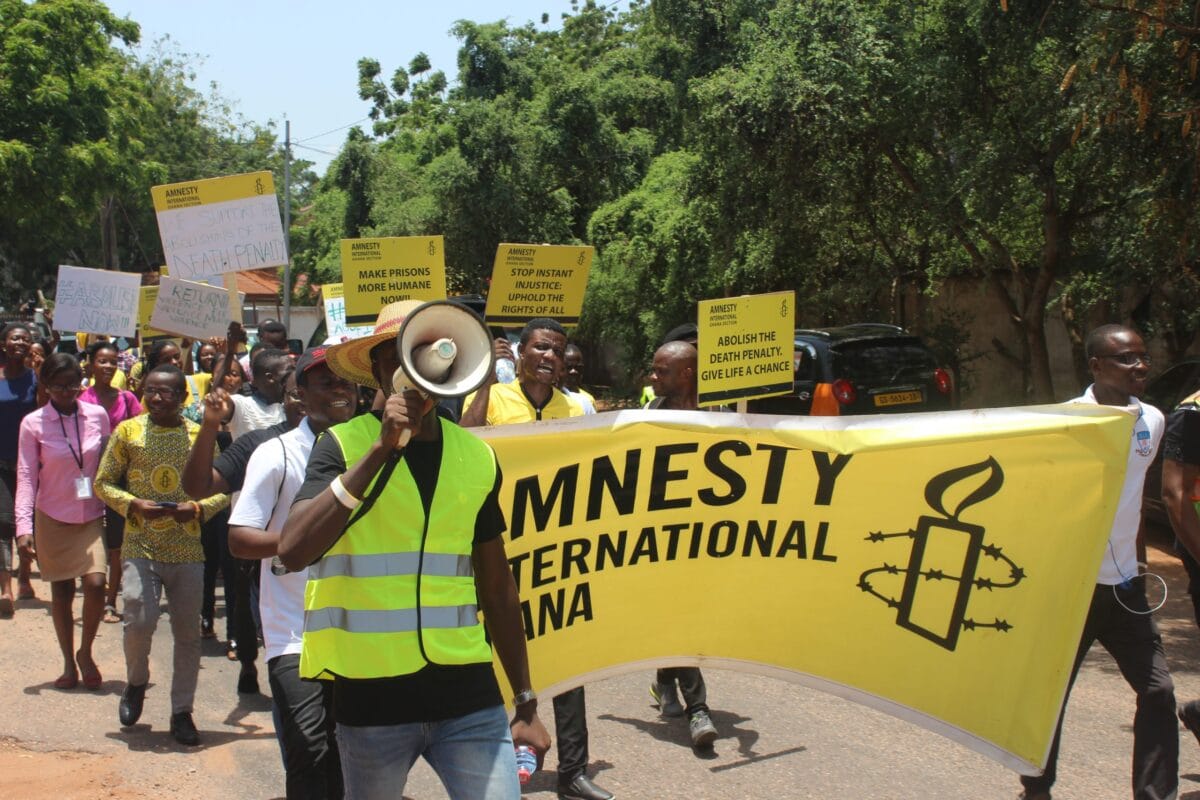
As the world observes World Day Against the Death Penalty, the European Union (EU) and its member states have reaffirmed their shared commitment to justice, human dignity, and rehabilitation, applauding Ghana’s progress toward the total abolition of capital punishment.
The EU described the day as an important moment to recognise Ghana’s achievements in human rights and to continue advocacy for a world free of state-sanctioned executions.
Get more exclusive breaking news updates on our WhatsApp channel .
Citing the words of French writer Albert Camus, who called capital punishment “the most premeditated of murders,” the EU underscored the moral contradiction of state executions, noting that when the state deliberately takes a human life, it reinforces vengeance rather than justice.
Ghana continues to earn international recognition for its strong human rights record and consistent progress toward abolitionism. The country has not carried out any executions since 1993, effectively making it “abolitionist in practice.” In 2023, Parliament voted to abolish the death penalty, leading to the commutation of sentences for 170 men and six women on death row to life imprisonment.

However, the EU noted that the process toward full abolition remains incomplete, as Ghana’s Constitution still prescribes the death penalty for high treason. The bloc expressed optimism that the country’s long-standing political direction will lead to full constitutional reform.
Across Africa, the abolitionist movement continues to gain ground, with 26 countries now having completely abolished the death penalty. Zimbabwe became the most recent to do so in December 2024, while Zambia and Côte d’Ivoire acceded to the Second Optional Protocol to the International Covenant on Civil and Political Rights (ICCPR) in 2023. In February 2025, Kenya established a task force to review its death penalty laws.
Globally, most nations have now abolished capital punishment in law or practice, driven by recognition of its irreversible and inhumane nature. Studies and historical evidence continue to show that the death penalty neither deters crime more effectively than imprisonment nor aligns with the right to life.
Looking ahead, the World Congress Against the Death Penalty scheduled for Paris in July 2026 and the regional congress in Japan in November 2025 are expected to strengthen advocacy and political momentum for total abolition worldwide.
The EU reiterated that its partnership with Ghana remains anchored in shared values of human dignity and fairness. It urged Ghana to complete the process by passing the necessary amendments to the Armed Forces Act, introducing constitutional reforms to abolish the death penalty for high treason, and signing the Second Optional Protocol to the ICCPR.
European Union countries remain united in their stance for the permanent abolition of capital punishment under all circumstances. The EU noted that Ghana’s full abolition would reinforce its image as a regional human rights leader and inspire other West African nations to follow suit.
On this World Day Against the Death Penalty, the European Union reaffirmed its partnership with the Government and people of Ghana toward building a justice system rooted not in retribution, but in the inherent dignity of human life.