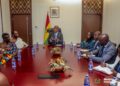
Ghana and Grenada have reaffirmed their historic and cultural bonds, marking a new chapter in Africa–Caribbean cooperation at the maiden Ghana–Grenada Political Consultation Meeting held on Thursday at Ghana’s Ministry of Foreign Affairs and Regional Integration in Accra.
The meeting was co-chaired by Ghana’s Minister for Foreign Affairs, Samuel Okudzeto Ablakwa, and Grenada’s Minister for Foreign Affairs, Trade and Export Development, Joseph Andall. It set the stage for the official visit of Grenada’s Prime Minister, Dickon Amiss Thomas Mitchell, who is expected to hold bilateral talks with President John Dramani Mahama and visit the Kwame Nkrumah Memorial Park.
Get more exclusive breaking news updates on our WhatsApp channel .
Friday’s engagements will include a State luncheon and high-level discussions to strengthen collaboration in trade, education, health, and cultural exchange.
Since establishing diplomatic relations in 2024, both countries have signed key bilateral agreements on visa waivers and cooperation in culture, trade, and education, signifying a growing Afro-Caribbean partnership.

Mr Ablakwa described the consultations as a “timely and strategic framework” to transform goodwill into concrete outcomes. He commended the progress made under the 2024 Memorandum of Understanding on Political Consultations, noting shared priorities in health, education, tourism, trade, and climate change.
He welcomed Grenada’s interest in recruiting Ghanaian nurses and allied health professionals, describing it as a model of South–South cooperation. Discussions have also begun on educational partnerships between universities and training institutions aimed at boosting human capital.
Highlighting investment opportunities, Mr Ablakwa said Ghana offered fertile ground for joint ventures in niche sectors such as spices, shea butter, textiles, and agro-products. He also underscored the need for cooperation in tourism, culture, and creative industries, areas where both nations could learn from each other.
Touching on global diplomacy, he reaffirmed Ghana’s support for reparations for slavery and colonialism, stating, “It is about dignity, justice, and restitution.” He said Ghana would work closely with Caribbean partners under the AU’s Decade of Reparations (2026–2036) to develop a unified diplomatic strategy.
Grenada’s Foreign Minister, Joseph Andall, praised Ghana for its warmth and cultural familiarity, saying, “It is the only country I have been to without feeling like a foreigner.” He highlighted shared ancestry and destiny as the foundation of a resilient partnership.
Mr Andall urged both nations to prioritise transportation and logistics infrastructure to make Africa Africa-Caribbean trade more viable. “For trade in physical goods to take place, we must engage our private sectors to build frameworks that connect entrepreneurs and create viable logistics systems,” he emphasised.
He called for the establishment of joint implementation committees to sustain momentum, adding, “We must beat the air while it is hot.”
On climate resilience, Mr Andall appealed for stronger cooperation, noting that small island nations like Grenada face disproportionate devastation from natural disasters. He called for a new global financing framework that factors in vulnerability, not just GDP.
Reiterating Grenada’s position on reparations, he said it was “not an appeal for charity but a demand for justice.” He also encouraged collaboration in real estate, tourism, culture, and creative industries, citing that Grenada’s New Life Organisation, a key skills-training institution, is currently led by a Ghanaian nun.
Mr Andall concluded with optimism about the growing partnership, saying, “The seeds that were planted a couple of years ago have begun to take root. It is up to us to keep watering and fertilising.”