
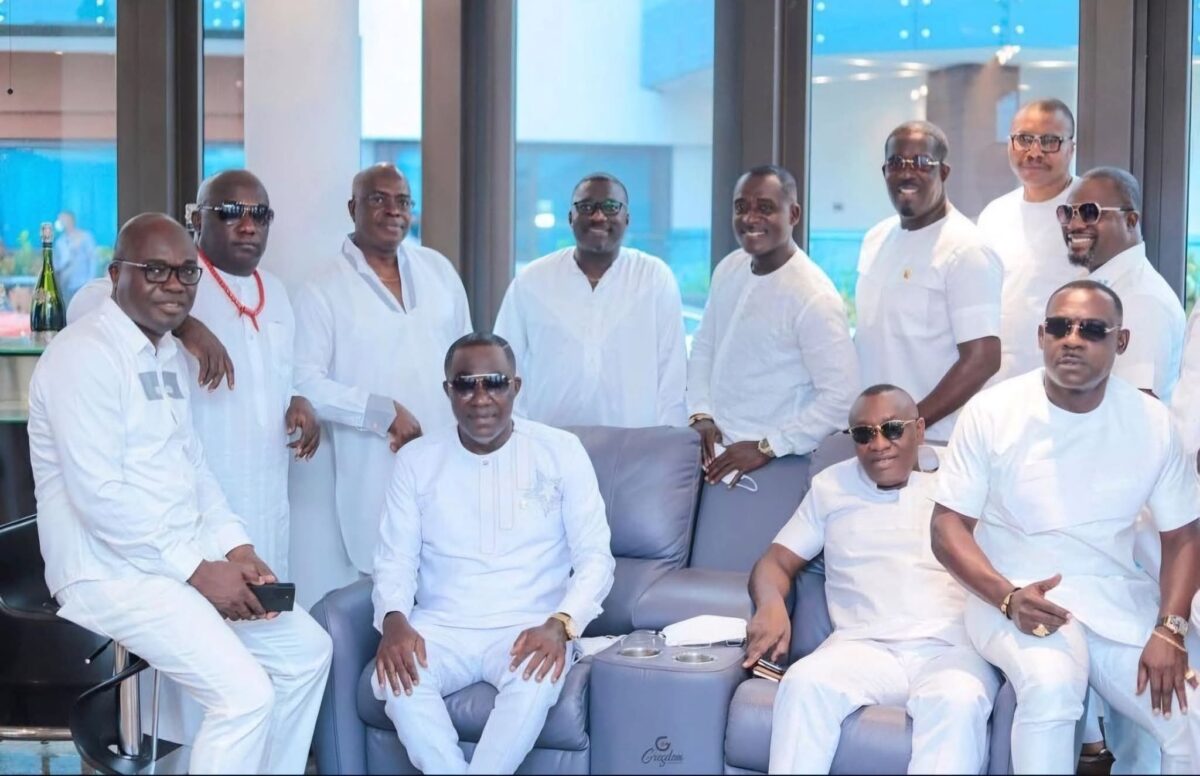
Someone sent me a piece some journo did on the East Legon Executive Men Fitness Club.
The piece attempts to bring a bit of psychology into a matter that is mostly social media banter.
Get more exclusive breaking news updates on our WhatsApp channel .
The writer of the piece says “elite power” in Ghana today is split between two “billionaire ecosystems”.
One system is an older Achimota Golf Club/corporate establishment built around boardrooms, regulated capital, and “suit & tie polish”, and then there is the East Legon Club system built around luxury convoys, fitness clubs, real estate, media visibility, and entrepreneurial brotherhood.

The East Legon class (system 2) cluster around trading, importation, distribution, media entrepreneurship, and real estate. Its symbols are conspicuous & relatable to the “avg Ghanaian”: convoys, mansions, birthdays, designer fashion, & social media.
The suit and tie crowd are aloof & “don’t connect.”
The cars, funerals, thanksgiving services, gym culture, birthdays, philanthropy, and group appearances say: “These men are liquid, connected, protected, generous, and recognized by other powerful men.”
Well, I don’t know about this kind of “viral sociology”. There are many more interesting framings.
One example is to argue that the rise of conspicuous success among “non-traditional/non-corporate” business icons and their iconic/idol status, which has grown into a new kind of “power club” model is due to the decline of other types of success in Ghanaian society.
Badly implemented neoliberal policies created a Ghanaian macroeconomic environment that weakens the old salaried-professional route to prestige.
Constant loss of purchasing power among the upper salaried classes and the sheer difficulty of building a high-street corporate success story due to exchange rate, inflation, & lending rate chaos means that the days when corporate shine in Ridge and CBD was the marker of prestige are almost behind us.
The upper-salaried classes have also been the shaper of the upper professional classes. The lawyers, surgeons, accountants, senior civil servants, judges, & architects. No longer do these enjoy automatically prestige. Hence why the more ambitious of them have discovered radio-hopping as a means to status.
Since professional status has declined in prestige, so also have the old professional clubs & networks.
Full Gospel doesn’t have the cachet it used to have. Nor does Signet Hour, YEF, and even YPO type exclusive networks. Or dare I say, the Asantes Professional Club.
But there is a particular network that has declined in appeal over the years though it retains enough prominent members to mask the disinterest among younger success chasers in signing up. I speak of the “fraternal orders”.
What in Ghana we tend to narrow down to “lodges” of, especially, “Freemasonry.”
The Grand Lodge of Ghana, established as a self-governing body in 2009, boasted 1,000 members in 2019. But lodges have met in Ghana since the nineteenth century and were credited with far more influence before the 1990s.
While Ghanaian Masonic bodies continue charitable and public-facing work, such as school water projects, no one today credits them with the grand conspiratorial power & influence they used to be accused of.
Just as the European welfare state weakened the appeal of European lodges as mutual aid bodies, the shift of economic power from the old professions, to my mind, is weakening the standing of Ghanaian Masonic institutions.
Enter the new structures of male (yes, there is a strong gender-dimension), social & economic networking model: the East Legon Executive Fitness Men’s Club.