
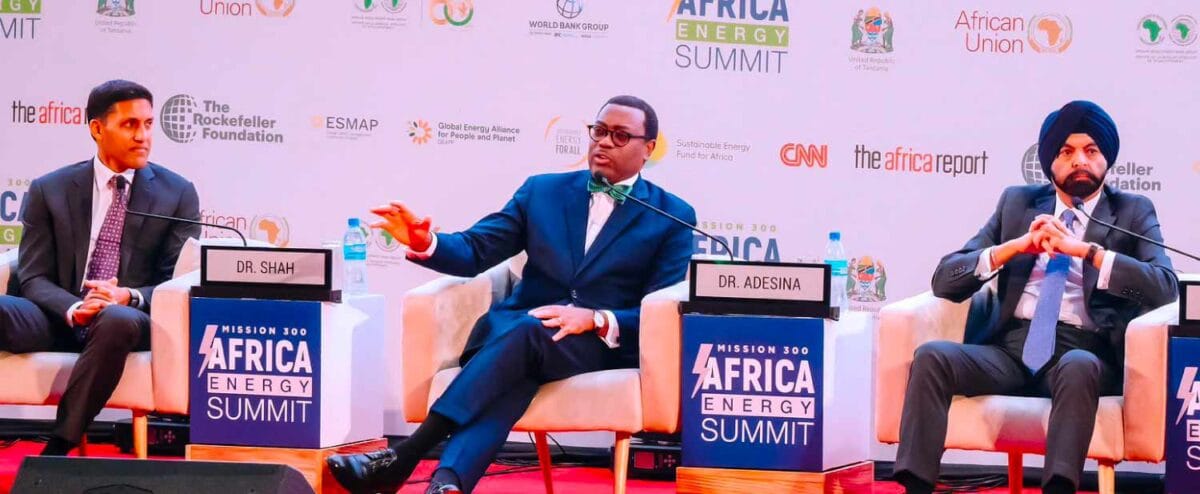
Leaders in Africa‘s energy sector have reiterated their commitment to accelerating electricity access across the continent under Mission 300, a joint initiative aimed at connecting 300 million people to reliable and affordable power by 2030.
Speaking at the Africa Investment Forum (AIF), Kevin Kariuki, Vice President for Power, Energy, Climate and Green Growth at the African Development Bank (AfDB), said the programme was designed to empower communities and entrepreneurs by ensuring access to energy for industrial development, communication and job creation.
Get more exclusive breaking news updates on our WhatsApp channel .
He noted that Mission 300 is focused on transforming lives by providing children with the light they need to study, enabling businesses to grow through reliable power, and keeping communities connected to opportunities that promote development.
The initiative is backed by the World Bank Group, AfDB, the Rockefeller Foundation, Global Energy Alliance for People and Planet, Sustainable Energy for All and supported by the African Union.

Kariuki emphasised the critical role of the private sector, pointing out that half of the funding for 29 national energy compacts is expected to come from private investors. He urged countries presenting compacts at AIF, including Comoros, Ethiopia, The Gambia, Lesotho and Guinea to demonstrate competitiveness to attract financing.
Erik Fernstrom, Regional Practice Director at the World Bank, highlighted progress made since the Dar es Salaam Declaration in January, revealing that 32 million people have gained electricity access in under a year. He noted that the World Bank is undertaking almost 90 projects to expand energy access and about 60 projects to strengthen the wider energy sector through renewable generation and utility reforms.
Fernström said Mission 300 rests on a simple but urgent principle: that everyone deserves access to energy. He commended Morocco‘s near-universal electricity access as a model for the continent.
Tarik Hamane, CEO of Morocco’s Office National of Electricity and Drinking Water, described energy access as a moral obligation and shared Morocco’s rural electrification journey, which has risen from 16 per cent in 1996 to almost 100 per cent today. He said Morocco is ready to support other African countries with technical expertise and capacity-building.
Mission 300 partners will continue discussions at the Africa Investment Forum to mobilise resources and accelerate national energy compacts, which are considered essential tools for attracting investment and driving sector reforms.
Mission 300, an initiative of the African Development Bank Group and the World Bank Group, seeks to connect 300 million people in sub-Saharan Africa by 2030 through national strategies that focus on reforms, infrastructure development and private sector participation. The initiative positions electricity access as a foundation for economic growth, job creation and improved living conditions across Africa.