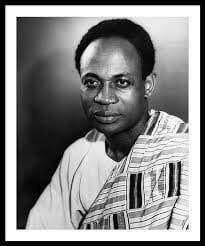
As Ghana commemorates the birthday of Osagyefo Dr. Kwame Nkrumah, an agricultural expert has urged the nation to revive farmlands and pursue food self-sufficiency as the most meaningful tribute to the country’s founding President.
Dr. Amos Rutherford Azinu, Founder and Chief Executive Officer of the Legacy Crop Improvement Centre, said Nkrumah’s agricultural foresight remains one of the least celebrated pillars of Ghana’s independence and development. In a statement to the Ghana News Agency, he argued that while Nkrumah is remembered for his political achievements and pan-African ideals, the truest honour would be found not in monuments but in the fertile soils and irrigation systems he envisioned for future generations.
Get more exclusive breaking news updates on our WhatsApp channel .
He highlighted the Volta River Project, particularly the Akosombo Dam and creation of Lake Volta, as transformative infrastructure meant not just for power generation but also for food security, rural prosperity, and economic diversification. “Nkrumah saw agriculture not as a backward sector to be abandoned in pursuit of industrialisation, but as the bedrock upon which a modern Ghana could be built,” Dr. Azinu said.
Expressing concern over Ghana’s heavy food import bill, he pointed out that the nation continues to import rice, tomatoes, and fish while its irrigation systems lie underutilised and Lake Volta’s aquaculture potential remains largely untapped. He insisted that the most fitting tribute to Nkrumah’s birthday lies in completing his unfinished agricultural vision rather than erecting statues or renaming streets.

Dr. Azinu outlined four key priorities: maximizing the Volta River’s irrigation potential through modern farming practices, investing in rural infrastructure such as roads and storage facilities, supporting smallholder farmers with credit and technology, and embracing modern agricultural technologies like precision farming, climate-smart methods, and digital platforms.
He noted that Ghana spends over $2 billion annually on food imports, stressing that even a fraction of this redirected into local agriculture would boost jobs, strengthen the cedi, and move the country closer to food security. “The rice fields that could flourish under irrigation from Lake Volta, the vegetable farms that could supply our cities, the fish farms that could stock our markets; these represent not just economic opportunities, but the fulfilment of a founding father’s dream,” he said.
With climate change and global supply chain disruptions intensifying, Dr. Azinu underscored the urgency of reviving Nkrumah’s agricultural vision. He concluded that the greatest monument to the late President would not be one built of stone or bronze, but thriving farms, prosperous rural communities, and a self-reliant Ghana nourished from its own soil.