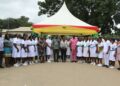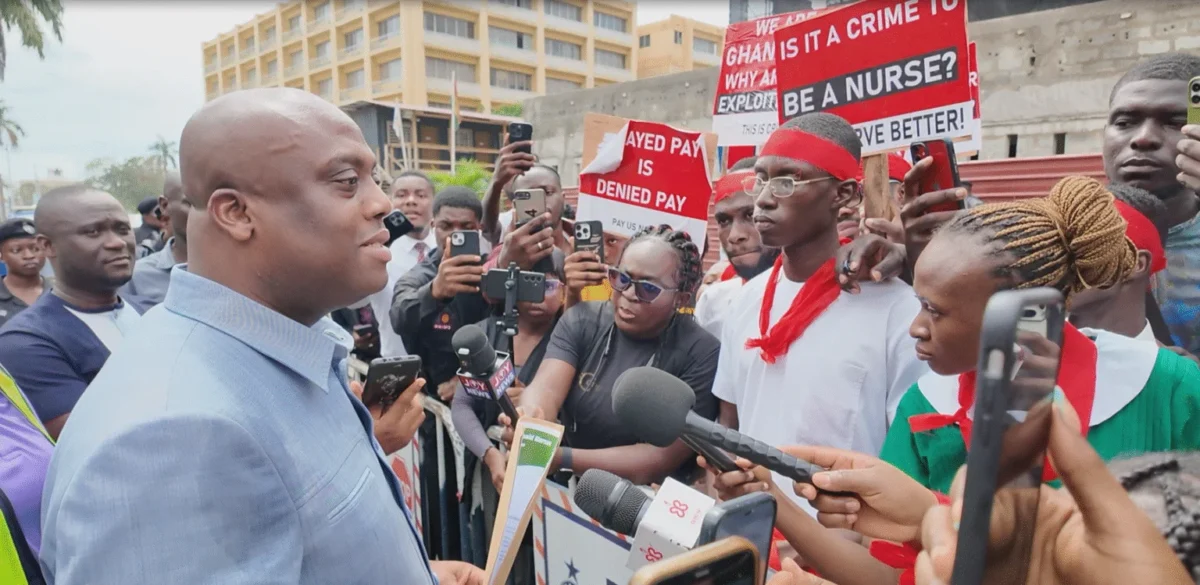
The Coalition of Unpaid Nurses and Midwives on Thursday, October 2, staged a protest in Accra to demand the release of salaries owed to nearly 7,000 health workers who have been working without pay for close to 10 months.
The demonstration began at the Efua Sutherland Children’s Park, where protesters gathered before marching through the capital. The health workers later converged at the Ministry of Finance and the Ministry of Health, where petitions were formally presented.
Get more exclusive breaking news updates on our WhatsApp channel .
According to the coalition, official postings were granted in December 2024 after financial clearance was secured. However, while about 6,500 colleagues received payment in April 2025, thousands remain without salaries despite repeated appeals to government authorities.
Convener of the group, Stephen Kwadwo Takyiah, described the prolonged delay as both unacceptable and demoralising, warning that the situation was crippling healthcare delivery across the country.

He recounted personal stories from within the coalition, noting that some members were struggling to meet urgent medical and personal needs. “One of my colleagues just underwent surgery, and we are still struggling to pay her hospital bills. Another is an asthmatic patient who spends about GH¢300 every month on inhalers, buying them three times a month. Our people are suffering and some are dying, yet we have worked honestly,” he said.
Mr. Takyiah further linked the crisis to broader risks for Ghana’s healthcare system, stressing that denying workers their salaries was unjust and dangerous. Drawing on remarks made recently by former President John Dramani Mahama at the United Nations General Assembly, he declared: “The President said the slave trade is the biggest crime against humanity. Today, I stand here to say this is modern-day slave trade. To deny citizens and health workers their salaries is the greatest crime any leader can commit. We are pleading with the government to act urgently—if not, we are dying, and our healthcare system is collapsing.”
Protesters also voiced their struggles during the march, sharing vivid accounts of hardship. One nurse lamented being unable to pay rent due in December, adding that constant borrowing had left friends and relatives unwilling to help. Another revealed the toll of extreme deprivation, admitting: “Most days I wait until 2 p.m. just to eat ‘gob3’ and then drink water till the next day. Sometimes I eat only once, and on some days not at all.”
The protest highlights a recurring challenge in Ghana’s public sector, where newly recruited workers, especially in health and education, often face long delays before receiving their first salaries.
For the coalition, the demonstration was not only a fight for arrears but also a demand for dignity, survival, and the stability of Ghana’s health sector. By taking to the streets, they made a direct appeal to government and the public, insisting that health professionals who dedicate their lives to saving others must be treated with fairness and paid promptly.