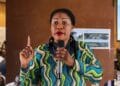
Ms Dorcas Affo-Toffey, Deputy Minister of Transport, has underscored that empowering women across the maritime value chain is essential for unlocking Ghana’s Blue Economy and strengthening long-term security in the Gulf of Guinea.
Speaking at the opening of the Women in Maritime of West and Central Africa (WIMOWCA) Regional Conference in Accra, she described the Gulf of Guinea as the “heartbeat of West Africa’s maritime economy,” noting its pivotal role in global trade, energy supply, and food security.
Get more exclusive breaking news updates on our WhatsApp channel .
The conference, held under the theme “Advancing Women’s Leadership in Maritime Security and Governance in the Gulf of Guinea,” drew participants focused on enhancing women’s roles in law enforcement, co-developing mentorship systems, and finalising a Regional Action Plan for gender-inclusive maritime leadership and workplace safety.
The Deputy Minister warned that piracy, human trafficking, illegal fishing, and marine pollution continue to threaten economic growth and environmental stability.

She stressed that such challenges cannot be effectively tackled without women’s full involvement at every level of maritime governance.
Ms Affo-Toffey reaffirmed Ghana’s commitment to gender mainstreaming in the sector, highlighting efforts to expand women’s representation in the navy, coast guard, and port operations, improve working conditions, and integrate gender perspectives into security frameworks, including the ISPS Code.
She commended the United Nations Office on Drugs and Crime and Denmark’s Ministry of Foreign Affairs for supporting gender-responsive maritime security reforms through the Gulf of Guinea Maritime Security Programme.
“This is about institutional transformation. By strengthening platforms like WIMOWCA and empowering women in law enforcement and maritime security, we are safeguarding not only our oceans but our collective future,” she said.
She added that building a resilient and inclusive Blue Economy demands leadership grounded in ethics, equity, and empowerment.
WIMOWCA President Madam Sylvia Dauda Asana-Owu noted that, despite increased participation in ports, logistics, and coastal industries, women remain scarce in top maritime leadership positions. Globally, she said, women make up less than one per cent of senior maritime executives and only about two per cent of seafarers.
Including women in governance, she argued, strengthens institutions, enhances transparency, and boosts sustainability.
She urged governments, development partners, and private sector actors to adopt gender-sensitive governance models, expand scholarships and leadership training opportunities, and deepen support for professional networks such as WIMOWCA, WOMESA, and WISTA.
Women in the sector, she stressed, must not only be seen, but be influential, shaping strategy, commanding operations, and driving innovation.