The Oti Region recorded the highest incidence of child labour in Ghana, accounting for 20.8 per cent of reported cases, according to findings from the 2021 Population and Housing Census.
The North-East Region ranked second with 11.4 per cent, followed by the Savannah Region with 9.9 per cent and the Upper West Region with 9.3 per cent. Greater Accra recorded the lowest rate at 0.4 per cent.
Get more exclusive breaking news updates on our WhatsApp channel .
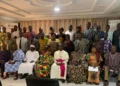
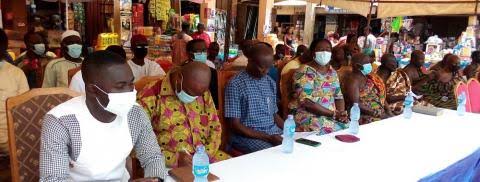
The figures were disclosed by Programme Officer of ActionAid Ghana, Mr Jamil Tanimu, during a training workshop for journalists in Kadjebi in the Oti Region.
The workshop was organised to equip media practitioners with knowledge on modern slavery and strengthen public awareness through responsible reporting.

Mr Tanimu said ActionAid Ghana, with support from the Norwegian Agency for Development Cooperation (Norad), is implementing the “Combating Modern Slavery in Ghana” project in the Oti, Upper West, Upper East and Bono regions.
He said the initiative seeks to reduce the prevalence of modern slavery through education, advocacy and collaboration with key stakeholders.
According to him, Ghana has been identified as a transit point for modern slavery, making public education and increased awareness essential to tackling the problem.
Mr Tanimu explained that modern slavery manifests in several forms, including commercial sexual exploitation, child labour, human trafficking, debt bondage, forced marriage, domestic servitude and forced labour.
He urged journalists to play an active role in educating communities about the causes, forms and consequences of modern slavery, stressing that ActionAid could not combat the problem alone.
Consultant to ActionAid Ghana, Miss Mawunyo Aziave, also appealed to journalists to report accurately and responsibly on issues relating to modern slavery.
She cited global estimates indicating that about 40 million people are trapped in modern slavery, including 21 million in forced labour, 15 million in forced marriages and four million in sexual exploitation.
According to her, women and girls account for 71 per cent of victims, while children constitute 25 per cent. She added that Africa has the highest prevalence rate, with an estimated 7.6 victims for every 1,000 people.
Miss Aziave encouraged participants to report suspected cases to the appropriate authorities to ensure timely intervention.
Speaking on behalf of the participants, Mr Baba Adams, a journalist with UTV and GTV, expressed appreciation to the organisers and pledged that the media would contribute to the fight against modern slavery through sustained public education.
Participants at the workshop identified poverty, unemployment, cultural practices, parental neglect and ignorance as some of the major factors contributing to modern slavery in Ghana.