Only 18 out of every 100 Ghanaians suffering from cataracts are able to access surgery to correct the condition, due to the uneven distribution of ophthalmologists across the country, the Ghana Health Service (GHS) has revealed. Currently, six regions, Western North, Savannah, North East, Upper West, Upper East, and Oti, have no ophthalmologists to provide essential eye care services, forcing patients either to live with blindness or travel long distances for treatment.
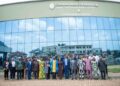
Dr Hornametor Afake, Head of the Eye Care Unit at the GHS, disclosed this during the commemoration of World Sight Day in Accra, held under the theme “Increasing Access to Quality Eye Care in Ghana.” He said Ghana must perform at least 68,000 cataract surgeries annually to clear the backlog and manage new cases. “Over the past five years, fewer than 30,000 cataract surgeries have been performed each year, resulting in an average Cataract Surgical Rate (CSR) of 712 per million population,” Dr Afake noted.
Get more exclusive breaking news updates on our WhatsApp channel .
He warned that the low surgical output had contributed to a growing backlog of untreated cataracts, now the leading cause of blindness in Ghana. Unless surgical volumes increase substantially, thousands of people will remain visually impaired or blind unnecessarily. Dr Afake urged government to integrate eye care into primary health care, expand surgical services, train and deploy more professionals, and improve infrastructure in underserved regions.
He also called for cataract care to be prioritised in national health planning, alongside expanded access to refractive services, glaucoma and cornea care, and management of posterior segment conditions such as diabetic retinopathy. “For corneal opacities, what we need is legislation on organ donation and transplantation. This will enable professionals to perform corneal transplants and restore sight to over 27,000 Ghanaians,” he added.

In a speech read on his behalf, Professor Samuel Kaba Akoriyea, Director General of the GHS, said approximately 252,000 Ghanaians were blind, while 360,000 suffered severe visual impairment, with up to 80 per cent of these cases considered preventable or treatable. He lamented that most ophthalmologists and clinics were concentrated in urban areas, leaving rural populations to struggle with distance, cost, and lack of trained personnel.
Prof. Akoriyea noted that while the National Health Insurance Scheme (NHIS) covered cataract and glaucoma surgeries, it excluded essential services such as spectacles and low-vision devices, which many families could not afford. He pledged the GHS’s commitment to integrating eye care into the Community-based Health Planning and Services (CHPS) system and strengthening human resources through training and retention of ophthalmologists, optometrists, ophthalmic nurses, and opticians.
World Sight Day, observed annually, serves as a reminder that vision is not only a health issue but a fundamental human right and a pillar of education, productivity, and dignity. In Ghana, the day provides an opportunity for stakeholders to reflect on progress, confront challenges, and renew their commitment to ensuring that no Ghanaian is needlessly blind or visually impaired. The leading causes of blindness in the country remain cataract, glaucoma, posterior segment diseases, corneal opacities, and uncorrected refractive errors.
Currently, Ghana has 141 ophthalmologists, 570 optometrists, 900 ophthalmic nurses, and 800 opticians, a workforce experts say must expand significantly to meet the growing demand for quality eye care nationwide.