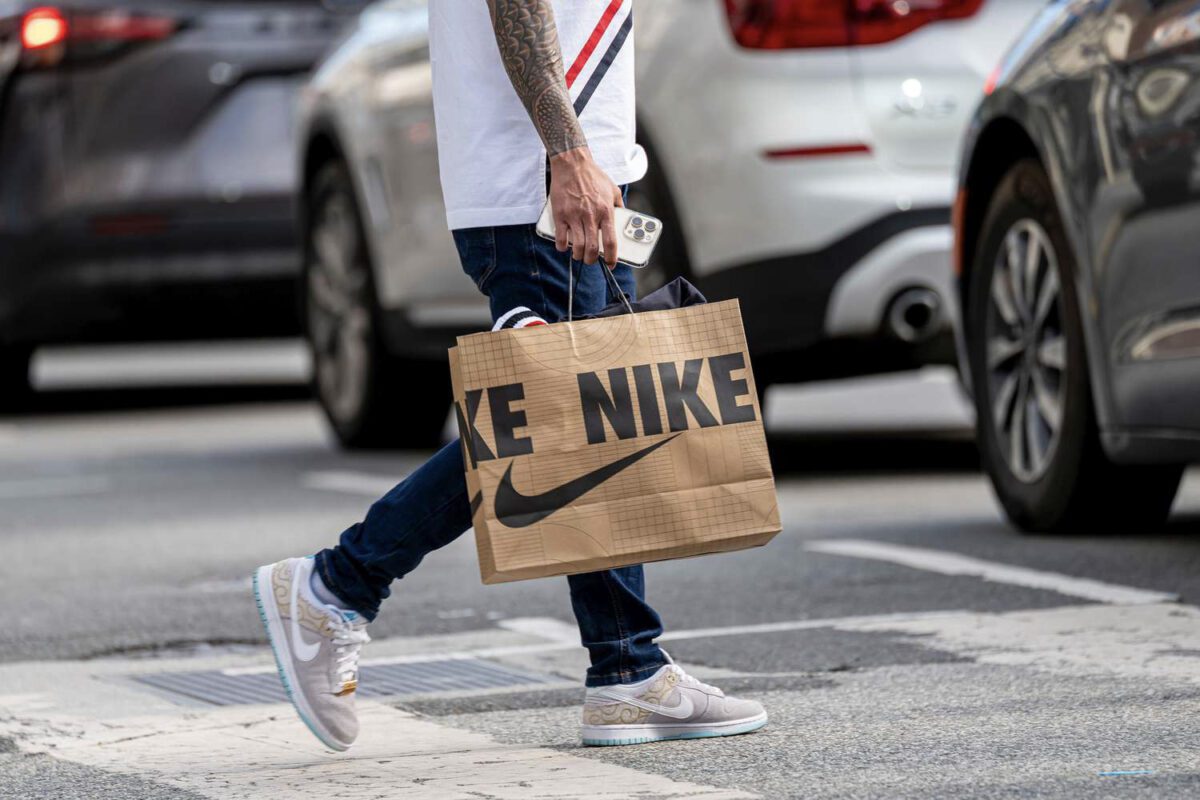
What happened to Nike? Nike lost more than $100 billion in market value between 2017 and 2024 following a series of strategic miscalculations, most notably its shift to a direct-to-consumer (DTC) model under the “Consumer Direct Offence” initiative.
The company moved aggressively away from long-standing retail partners to sell directly to customers, cutting ties with thousands of distributors and reducing wholesale accounts from 30,000 to 20,000. While DTC revenue rose from 28% to 42% of total sales, the shift created gaps in physical retail that competitors quickly filled.
Get more exclusive breaking news updates on our WhatsApp channel .
Nike’s leadership under former CEO John Donahoe accelerated the transition, reorganising the company around customer segments rather than sport-specific divisions. This move diffused internal expertise, slowed innovation, and led to a reliance on retro products such as Air Jordans and Dunks, with no major breakthrough product since the Vaporfly in 2017.
The company also misjudged the economics of e-commerce. Expected margin gains were offset by hidden costs, including chargebacks, returns, and rising digital advertising expenses. At the same time, Nike assumed full inventory risk previously absorbed by retail partners.

As Nike pulled back from specialty stores, competitors such as Hoka and On Running expanded rapidly. Hoka grew revenue from $400 million in 2018 to $1.8 billion by 2023, while On Running rose from $250 million to $1.7 billion over the same period.
Market share declined significantly, with Nike’s general running segment dropping from 34% to 26%, and its share among high-end runners falling from 66% to below 34%. Excess inventory further damaged the brand, forcing the company to offload products through discount channels, eroding its premium positioning.
The downturn culminated on June 28, 2024, when Nike warned of weak future earnings and declining North American sales. The stock fell 20% in a single day, wiping out $28 billion in value.
In September 2024, Nike replaced Donahoe with Elliot Hill, a 32-year company veteran, to lead a “back to basics” recovery focused on rebuilding retail relationships and restoring innovation.
During the Donahoe era, Nike’s stock declined nearly 50%, with over $100 billion in market capitalisation lost. The company also spent $18 billion on stock buybacks between 2019 and 2023, compared to $11 billion on research and development.
Nike’s decline underscores the risks of prioritising digital transformation and cost efficiency over product innovation and distribution strategy. The company now faces the challenge of rebuilding its identity as a performance-driven brand after years of strategic drift.