As Zuwera Alhassan walks briskly toward her village borehole in Northern Ghana, the sudden wetness between her legs reminds her it is that time of the month again, and with it, a familiar fear of staining her uniform, being teased by classmates, and missing school altogether.
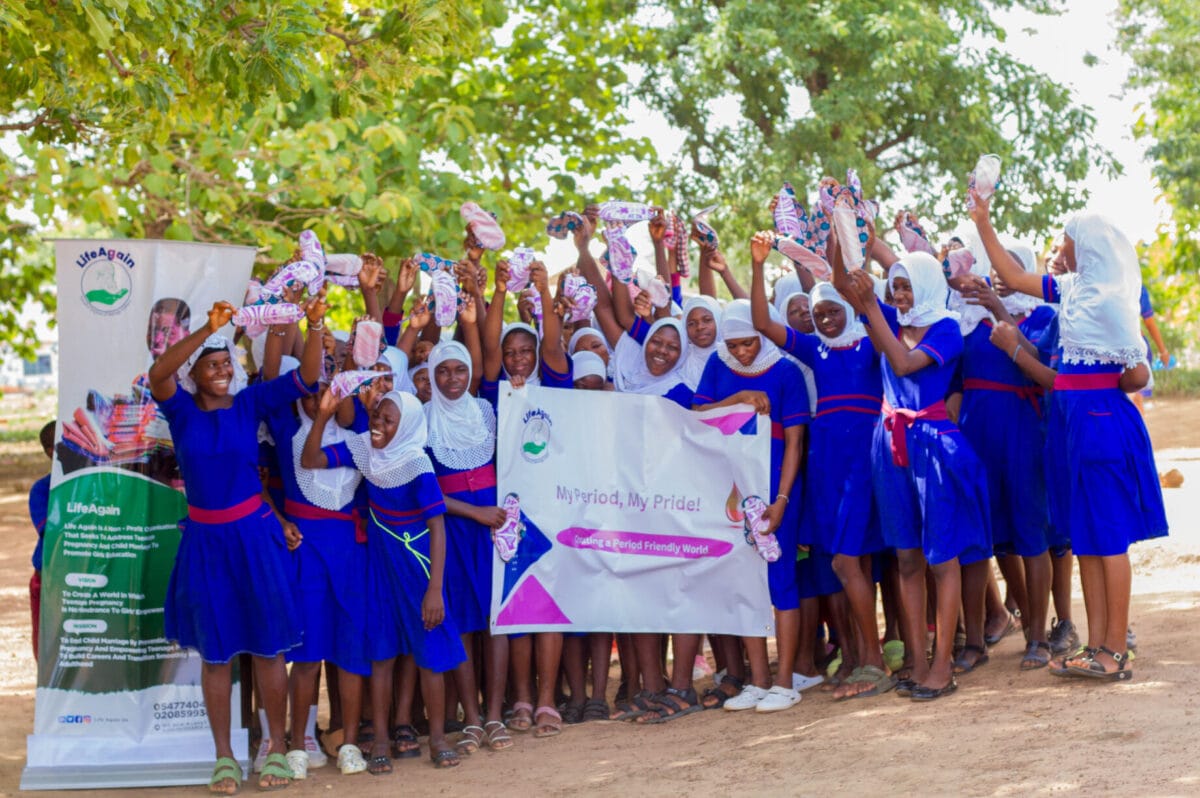
For Zuwera and thousands of other adolescent girls across the sun-baked savannahs of Northern, Upper East, and Upper West Regions, menstruation is more than a biological change; it is a recurring crisis. Many girls are forced to stay home for days every month because they cannot afford sanitary pads.
Get more exclusive breaking news updates on our WhatsApp channel .
The consequences are severe: lost school hours, plummeting confidence, and dreams deferred.
A quiet crisis of dignity and education
In many rural households struggling to afford daily meals, spending GHS10–18 per month on sanitary pads is simply impossible. Girls resort to using old cloths, leaves, toilet tissue, or even dried socks, unsafe alternatives that cause discomfort, infections, and humiliation.

“I used to stay home for days,” says 14-year-old Mary Ayaan, a student from a rural village. “I was too afraid to go to school because I didn’t have pads. I felt dirty, embarrassed, and alone.”
Her story mirrors that of millions of girls across Sub-Saharan Africa. A UNESCO report estimates that one in 10 girls in the region misses school during their period. In Northern Ghana, education officials say girls miss an average of four to five school days every month due to a lack of menstrual products, the equivalent of 20% of the academic year.
The result: lower performance, increased absenteeism, and higher dropout rates, especially in junior high schools.
Cultural silence deepens the pain
Menstruation remains shrouded in silence and stigma. In some traditional homes, menstruating girls are barred from cooking or fetching water, believed to be “unclean.” The taboo prevents open discussion and denies girls the information they need to manage their periods safely.
“Periods are never discussed at home,” says 13-year-old Abiba from the Tolon District. “If I talk about it, my brothers laugh, and my mother just says, ‘Keep clean.’ But how can I be clean without pads?”
Teachers also struggle to help. Madam Beatrice, a head teacher in the Bolgatanga Municipality, says: “Some girls come to us to ask for pads, but we don’t always have any to give. Sometimes they just stay at home.”
The lack of menstrual hygiene education and facilities leaves girls anxious, ashamed, and withdrawn. Many hide in class or skip lessons altogether to avoid teasing.
Emotional and academic toll
The emotional burden is heavy. Regina, 13, says she hides her pads “even when I have them” because she fears ridicule. The anxiety directly affects concentration and performance. “When I soil my dress, I tie a pullover around my waist and pray no one notices,” says Zuwera softly.
Without private, functional toilets and clean water in schools, managing menstruation becomes nearly impossible. The shame and fear translate into lost learning opportunities.
Government free sanitary pad policy
In a major step toward addressing period poverty, President John Dramani Mahama launched the Free Sanitary Pad Policy, targeting two million girls in public basic and senior high schools. The initiative aims to reduce absenteeism, improve hygiene, and restore dignity.
While the policy marks progress, supply gaps remain. Some girls, like Inocencia, a pupil in Walewale, say they have yet to receive any pads. “My dream is possible,” she says, “but only if every girl is supported every month.”
The Ghana Education Service (GES) recently distributed 6.6 million sanitary pads nationwide as part of the 2025 International Day of the Girl Child, themed “The girl I am, the change I lead; girls on the frontlines of the crises.”
Health workers say sustained action is crucial. “Access to pads is not a luxury, it’s a right,” says Hajia Fati, a community health nurse in the North East Region. “When girls are empowered to manage their periods, they stay in school and dream bigger.”
Breaking the cycle
Experts insist that menstrual health must be treated as a fundamental human right. Tackling period poverty requires a holistic approach, including regular pad supply, menstrual health education, improved school sanitation, and open cultural dialogue.
“Menstrual products should be as essential as exercise books or uniforms,” one NGO leader said. “We must break the silence, dismantle the shame, and keep girls in school.”
Back in her classroom, Salamatu now receives pads through a local NGO programme. She hasn’t missed school in two months. “I feel happy and free,” she says with a smile. “I want to become a nurse and help other girls like me.”