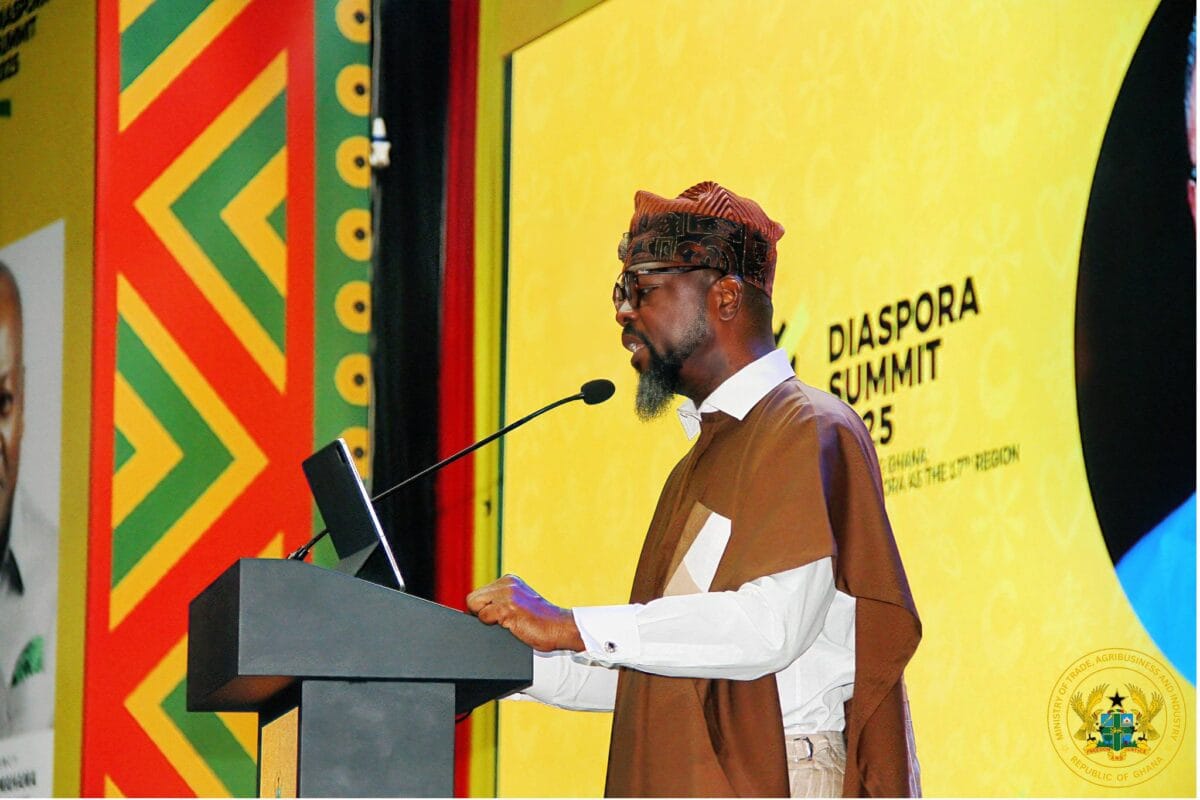
Government has reiterated its commitment to moving beyond dialogue to concrete action in addressing diaspora-related issues, as stakeholders convened for Day Two of the Diaspora Summit 2025 in Accra on Saturday, December 20.
The Minister for Trade, Agribusiness and Industry, Hon. Elizabeth Ofosu-Adjare, in a speech delivered on her behalf by the Deputy Minister, Hon. Sampson Ahi, said the summit marked a critical shift from reflection to implementation. She explained that while Day One focused on history, identity and shared purpose under the theme “Resetting Ghana: The Diaspora as the 17th Region,” Day Two was dedicated to translating shared aspirations into practical partnerships and measurable outcomes.
Get more exclusive breaking news updates on our WhatsApp channel .
According to the Minister, discussions centred on policy approaches to deepen diaspora engagement, the Sankofa Initiative, the 24-Hour Economy, and diaspora investment tools designed to align skills, capital and global networks with Ghana’s national development priorities.
Hon. Ofosu-Adjare reaffirmed Ghana’s role as a strategic gateway to Africa, noting that businesses operating from the country can access a market of over 1.4 billion people through the African Continental Free Trade Area (AfCFTA). She identified trade, agribusiness and industry as key sectors offering significant opportunities for diaspora investors, and outlined ongoing efforts to strengthen value chains, support local production, revive key industries and improve the business environment through clear and predictable policies.

The Chief of Staff at the Office of the President, Hon. Julius Debrah, in a speech read on his behalf, disclosed that nearly three million Ghanaians live abroad. He stressed that diaspora engagement must go beyond remittances, adding that with the right systems in place, Ghana could attract increased investment from its citizens overseas. He noted that under President John Dramani Mahama’s Reset Agenda, the diaspora remains a central pillar, with particular emphasis on youth involvement as government deepens recognition of the diaspora as the 17th Region.
Representing the Asantehene, Nana Dr S.K.B. Asante, Paramount Chief of the Asokore Traditional Area, called for intensified public education to encourage Ghanaians to brand the country positively at home and abroad in order to project a strong national image.
In a message to the summit, the Global Diasporan Council announced plans to establish a Global Homeland Fund next year in partnership with government, describing the initiative as a potential game changer for investment in Ghana.
Meanwhile, the Chief Executive Officer of the Ghana Investment Promotion Centre (GIPC), Mr. Simon Madjie, urged diasporans to look beyond Accra when investing, noting that other regions across the country present equally compelling and sustainable investment opportunities.