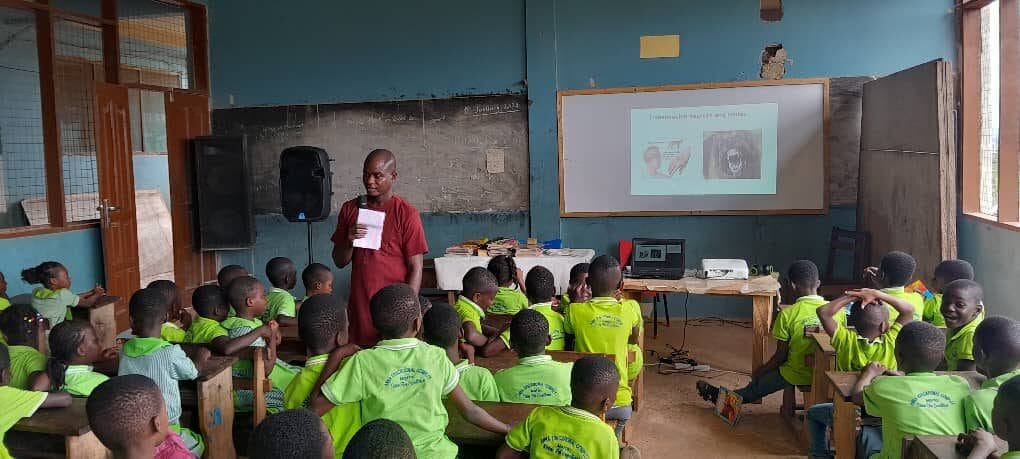
The New Juaben South Municipal Health Directorate has rolled out a rabies awareness initiative across primary schools, aiming to equip children with essential knowledge on rabies prevention and the correct steps to take after a dog bite.
Supported by Mission Rabies U.K., the campaign focuses on empowering pupils as key messengers in their homes and communities.
Get more exclusive breaking news updates on our WhatsApp channel .
Dr Moses Barima Djimatey, Eastern Regional Deputy Director of Public Health, told the Ghana News Agency that rabies remains one of the deadliest yet preventable viral infections.
Transmitted mainly through the bite of an infected dog, the disease attacks the nervous system and becomes fatal once symptoms appear.

He stressed that quick vaccination after exposure is the only effective protection, emphasising the need for immediate reporting of all dog bites to health facilities.
Dr Djimatey referenced World Health Organisation data indicating that nearly 60,000 people die from rabies each year, with more than 90 percent of deaths occurring in Africa and Asia. Children under 15 represent about 40 percent of fatalities, making school-based education critical.
The initiative aligns with the WHO-led “ZERO BY 30” strategy, which aims to eliminate dog-mediated human rabies by 2030 through:
- Annual dog vaccinations
- Public education on safe behaviour around dogs
- Prompt medical care after exposure
Pupils are being taught to recognise common signs of rabies, such as unusual aggression, paralysis, and difficulty swallowing—and to understand symptoms that may appear after a bite, including tingling or numbness at the bite area.
The Directorate says the campaign will continue across the municipality as part of broader efforts to reduce rabies risk and promote community-wide vigilance.