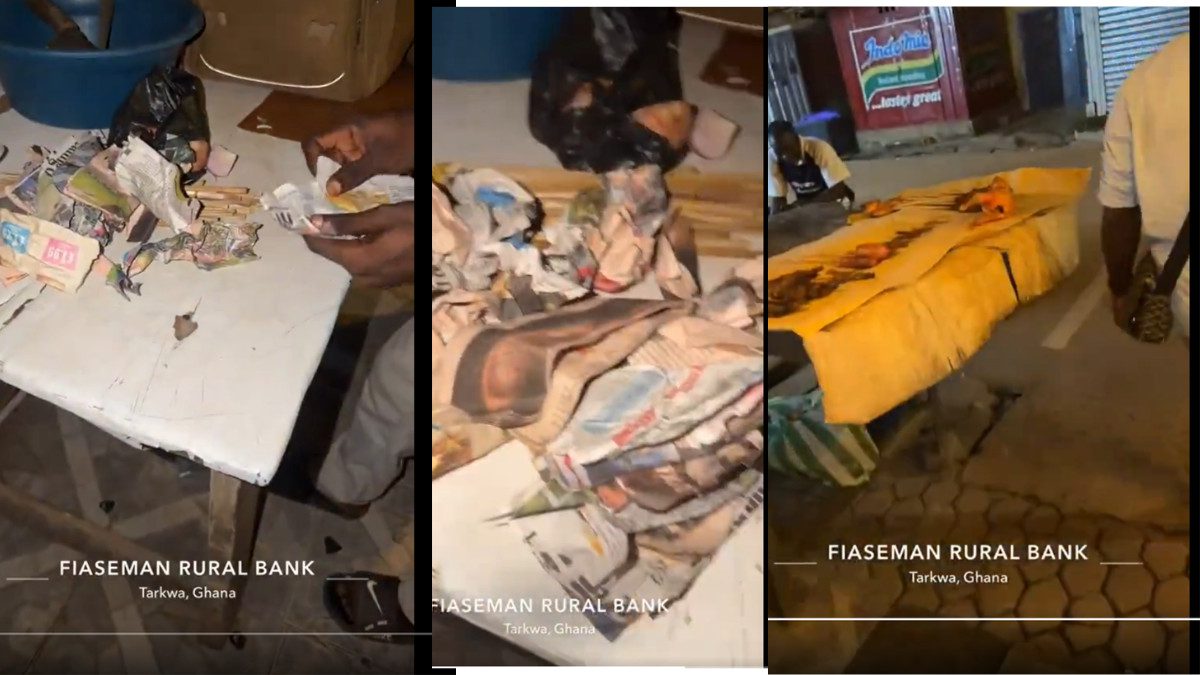
In a bizarre and heartbreaking incident that has left many Ghanaians stunned, a pork seller in Tarkwa, Western Region, was allegedly scammed after selling his entire stock of pork. The buyers reportedly paid him with what appeared to be genuine cash, only for the money to mysteriously transform into worthless pieces of paper later.
According to accounts circulating on social media and local reports, the seller completed the transaction in good faith, handing over a large quantity of fresh pork to the customers.
Get more exclusive breaking news updates on our WhatsApp channel .
The buyers paid what looked like normal Ghanaian currency notes. However, upon closer inspection or after the buyers had left, the seller discovered that the money had changed into ordinary paper.
This type of scam, often referred to locally as “spiritual” or “juju” money tricks, has been reported in different parts of Ghana and West Africa over the years. Perpetrators use sleight of hand, chemicals, or other deceptive methods to temporarily make ordinary paper resemble real banknotes.

The sequence appears to follow a familiar pattern: the buyers approached the seller and negotiated a large purchase; they paid with what seemed to be valid currency; the seller accepted the payment and released the pork; after the buyers departed, the notes allegedly transformed into plain paper, leaving the seller with neither goods nor real money.
The incident has sparked widespread outrage and sympathy for the hardworking trader, who likely lost a significant amount of capital and stock in a single transaction.
This Tarkwa incident highlights the increasing sophistication of scams targeting small-scale traders and business owners across Ghana. Common tactics include fake mobile money transfers that are later reversed or disputed, counterfeit currency, “spiritual” scams involving supposed magic money or rituals, and impersonation of trusted institutions or individuals.
Small businesses in markets, along roadsides, and in communities are particularly vulnerable because they often deal in cash transactions and may lack advanced verification tools.
The Ghana Police Service regularly warns citizens to be vigilant when conducting large transactions.
Recommended precautions include carefully verifying large cash payments under good lighting, using mobile money or bank transfers for larger deals when possible, avoiding rushing into deals that seem unusually favourable, reporting suspicious buyers or transactions immediately to the police, and installing basic CCTV or working in well-lit, populated areas.
Authorities are urged to investigate this specific case thoroughly and, if possible, track down the perpetrators to serve as a deterrent.
Beyond the immediate financial loss, such scams erode trust in everyday commerce and can push hardworking traders into debt or financial distress. For many small business owners, a single bad transaction can wipe out weeks or months of profit.
This incident also fuels ongoing conversations about the need for stronger consumer protection, public education on emerging scam tactics, and better support systems for victims of fraud.
As economic activities continue across Ghana’s markets and trading centres, citizens are reminded to remain cautious. Scammers constantly adapt their methods, preying on trust, haste, or desperation.
The pork seller in Tarkwa joins a growing list of victims who have lost valuables to clever deception. His story serves as a painful reminder that not every customer has good intentions.
Business owners are encouraged to stay alert, verify payments diligently, and report suspicious activities promptly. Meanwhile, law enforcement must prioritise investigations into such cases to restore confidence in the marketplace.