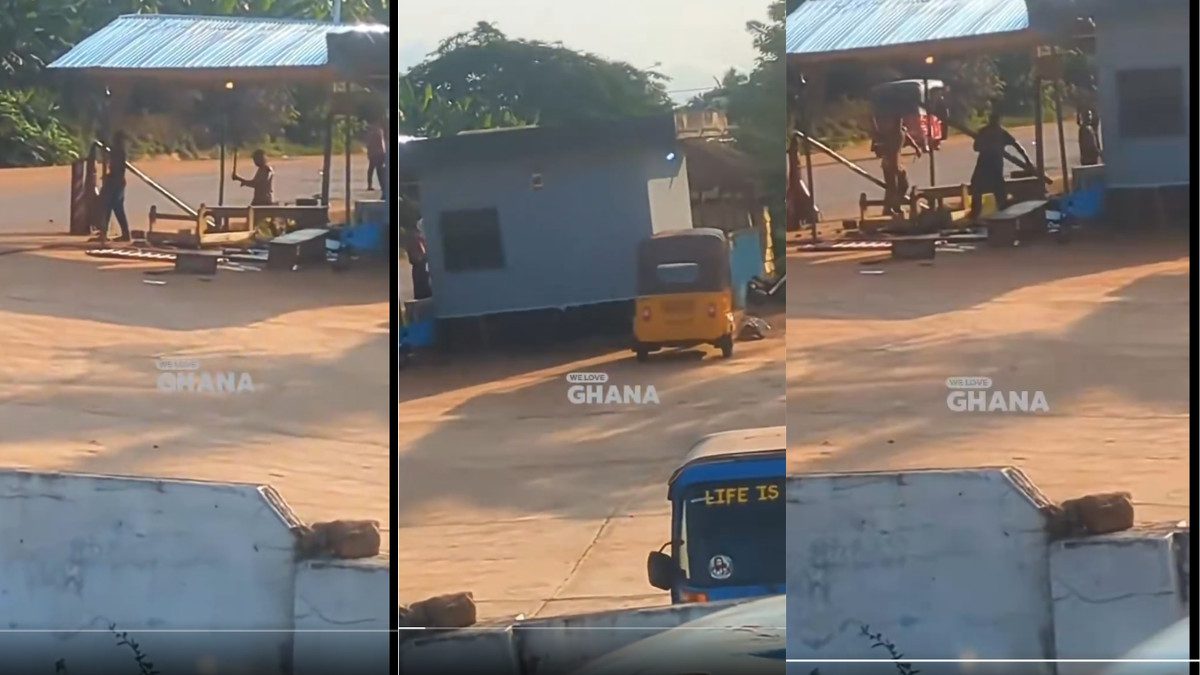
A serious confrontation erupted in Sefwi Asawinso in the Western North Region when angry youth, armed with cutlasses and other implements, destroyed a police barrier and chased away officers stationed there. The incident was triggered by claims that police personnel had killed one of their residents.
According to eyewitness accounts and video footage circulating on social media, the youth accused the police of responsibility for the death of a resident. In response, they took the law into their own hands, dismantling the police barrier and forcing officers to retreat from the area.
Get more exclusive breaking news updates on our WhatsApp channel .
While full details are still emerging, the unrest appears to stem from a dispute or confrontation involving police and a resident that allegedly ended in the resident’s death. Local sources suggest the youth mobilised rapidly after hearing about the alleged killing.
No official confirmation of the resident’s death or the circumstances surrounding it has been released by the police as of the latest reports, but investigations are expected to be launched immediately.

The Ghana Police Service is likely to respond with caution to restore order while addressing the core allegations. This incident highlights ongoing challenges in police-community relations in some parts of the country. Factors such as perceived brutality, delayed justice, and lack of transparency in handling cases involving security forces often fuel such outbursts.
Sefwi Asawinso and the surrounding areas in the Western North Region have experienced periodic unrest linked to chieftaincy disputes, land issues, and resource-related conflicts. When these intersect with allegations of police misconduct, the situation can deteriorate rapidly.
Similar incidents in other parts of Ghana have previously led to destruction of public property, injuries to both civilians and officers, temporary breakdown of law enforcement in affected communities, and long-term erosion of public confidence in the police.
Community leaders, traditional authorities, and civil society groups are being urged to intervene and call for restraint. The police have a responsibility to conduct a thorough, transparent, and speedy investigation into the alleged killing. Independent oversight or involvement of neutral parties could help rebuild trust.
Key recommendations at this stage include immediate de-escalation by all parties, protection of lives and property, transparent communication from the police on the facts of the case, engagement with community leaders to address underlying grievances, and long-term reforms to improve police-community relations.
The incident gained rapid attention online, with videos of the youth destroying the barrier widely shared. While social media helps expose issues, it can also spread unverified claims and inflame tensions.
This event in Sefwi Asawinso serves as another wake-up call for authorities to address systemic issues in policing and community engagement. Restoring calm in the area will require sensitivity, accountability, and genuine dialogue.
Violent protests, regardless of the provocation, rarely lead to sustainable solutions and often result in more suffering for the very communities seeking redress.