A 20-month-old child has died, and three women sustained serious injuries after a landslide triggered by torrential rains struck the Tantri area of Cape Coast on Friday, June 19.
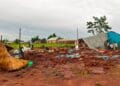
The tragedy occurred at about 4:45 p.m. when a section of a hillside collapsed onto buildings at the base of the slope following hours of heavy rainfall across the Cape Coast metropolis.
Get more exclusive breaking news updates on our WhatsApp channel .
The deceased, identified as Hanson Mensah, was pulled from the debris and rushed to Ewim Polyclinic, where he was pronounced dead on arrival.
Three other victims survived with injuries. They include 17-year-old Ella, who sustained a severe head injury and was transferred to the Cape Coast Teaching Hospital, as well as Elizabeth Kyerede, 43, and Maame Badua, 25, who were treated at Ewim Polyclinic.

According to residents, the victims had gathered in a room to seek shelter from the rain when the hillside gave way, burying the structure under mud and debris.
Relatives in nearby rooms reported hearing a loud crashing sound before discovering the building had collapsed.
Three buildings were affected by the landslide, although two of them were unoccupied at the time.
Residents initiated rescue efforts before personnel from the Ghana National Fire Service arrived to assist.
Family head Richard Joachim described the incident as unprecedented, noting that while heavy rains are common in the area, a mudslide of such magnitude had never occurred before.
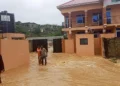
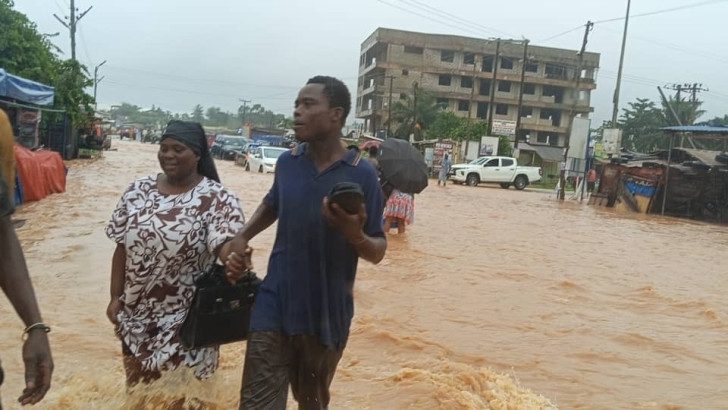
The landslide occurred amid widespread flooding that affected several parts of the Cape Coast metropolis after hours of continuous rainfall that began around 7:00 a.m.
Areas severely affected included the University of Cape Coast, where flooding was reported around the Casford area, Sandwich Lecture Block, Science Roundabout, Zenith Bank area, Ayensu and parts of Sasakawa.
Floodwaters also submerged sections of the road leading to the Cape Coast Teaching Hospital and the Electricity Company of Ghana enclave, while the Cape Coast Sports Stadium area and the Ghana National College vicinity recorded significant flooding.
The flooding disrupted transportation and business activities across the metropolis.
Several roads became impassable, causing traffic congestion and forcing motorists to seek alternative routes. Some pedestrians were seen wading through floodwaters to reach their destinations.
Many traders delayed opening their shops, while others reported a sharp decline in customer traffic due to restricted movement.
At the University of Cape Coast, authorities issued a safety advisory urging students and staff to remain indoors and avoid crossing flooded roads and walkways.
Residents attributed the severity of the flooding to choked drains, poor drainage infrastructure and the accumulation of plastic waste in waterways.
Others also cited uncontrolled development and inadequate maintenance of drainage systems as contributing factors.
Following the disaster, Cape Coast Metropolitan Chief Executive George Justice Arthur visited the bereaved family to offer condolences.
Residents are now calling for urgent interventions, including intensified desilting of drains, improved drainage infrastructure and stronger measures to address plastic waste disposal before the peak of the rainy season.