British Prime Minister Keir Starmer has announced his intention to resign as leader of the Labour Party and Prime Minister of the United Kingdom, less than two years after leading Labour to a landslide election victory in 2024.
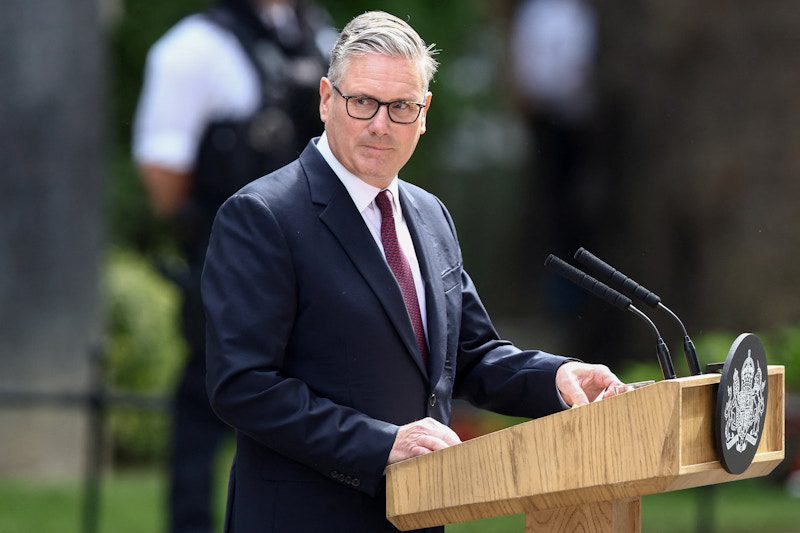
In an emotional statement delivered outside 10 Downing Street on June 22, 2026, Starmer said he had accepted the verdict of his parliamentary colleagues regarding his leadership.
Get more exclusive breaking news updates on our WhatsApp channel .
“The question my party is asking now is whether I am best placed to lead us into the next general election. I have heard the answer of my parliamentary party to that question, and I accept that answer with good grace,” he said.
Starmer’s departure follows months of mounting pressure within the Labour Party amid concerns about his leadership, policy direction, and electoral prospects.

According to political insiders, criticism of Starmer centred on what many viewed as a lack of a clear vision for changing Britain. While his pragmatic style initially appealed to voters, it increasingly came to be seen by critics as a lack of conviction.
His position was further weakened by internal party tensions, including the resignation of Health Minister Wes Streeting, who cited a loss of confidence in the government’s direction.
Starmer will remain in office as caretaker Prime Minister until a new Labour leader is elected, ensuring what he described as an orderly transfer of power.
Attention has now shifted to the Labour leadership contest, with Manchester Mayor Andy Burnham emerging as the clear frontrunner.
Burnham confirmed his intention to run shortly after Starmer’s announcement, declaring, “I will put myself forward.”
His candidacy received a major boost when Wes Streeting formally ruled himself out of the race and endorsed Burnham.
“Andy has shown what Labour can be when we are inclusive, united, and in touch with the lives of the people this party was founded to represent,” Streeting said.
Under the Labour Party’s timetable, nominations will open on July 9 and close on July 16. A new leader and Prime Minister is expected to be in place by September 1, when Parliament returns from recess.
Candidates seeking to enter the contest must secure the support of at least 20%of Labour Members of Parliament, equivalent to approximately 81 MPs, as well as support from party groups and affiliated organisations.
The leadership transition has also triggered concern in financial markets.
Following Starmer’s resignation announcement, the British pound fell 0.27% to $1.3202, extending losses recorded since speculation about his future intensified earlier this year.
Benchmark 10-year UK government bond yields also rose slightly to 4.85%, reflecting investor caution.
Economic analysts have warned that whoever succeeds Starmer will inherit significant fiscal challenges, including high borrowing costs, rising debt obligations, and weak economic growth.
Citibank economists described the situation facing the next government as a “precarious fiscal situation with few tools to deliver meaningful change.”
Financial markets are also closely monitoring Andy Burnham’s policy positions, although he has sought to reassure investors by pledging to maintain existing fiscal rules.
Starmer’s resignation marks another major chapter in Britain’s recent political instability.
Political reporter Alistair Smout noted that the appointment of Starmer’s successor will mean the United Kingdom has had five prime ministers in five years, underscoring the volatility that continues to shape British politics.