
Two men are arguing over Ghana Publishing Company.
One says, “I built this.” The other says, “I am the one who made it work.” And somewhere in between, the institution itself is being reduced to a trophy passed from hand to hand, while its deeper story, its longer struggle, and its unfinished business are quietly erased.
Get more exclusive breaking news updates on our WhatsApp channel .
This is not just a dispute between a former Managing Director and a current one. It is the shrinking of a national institution’s history into a personal résumé contest. So let us ask the uncomfortable but necessary question. Where were both of you when the foundations of what you are celebrating today were being laid?
RelatedNews




To answer that, we must go back.

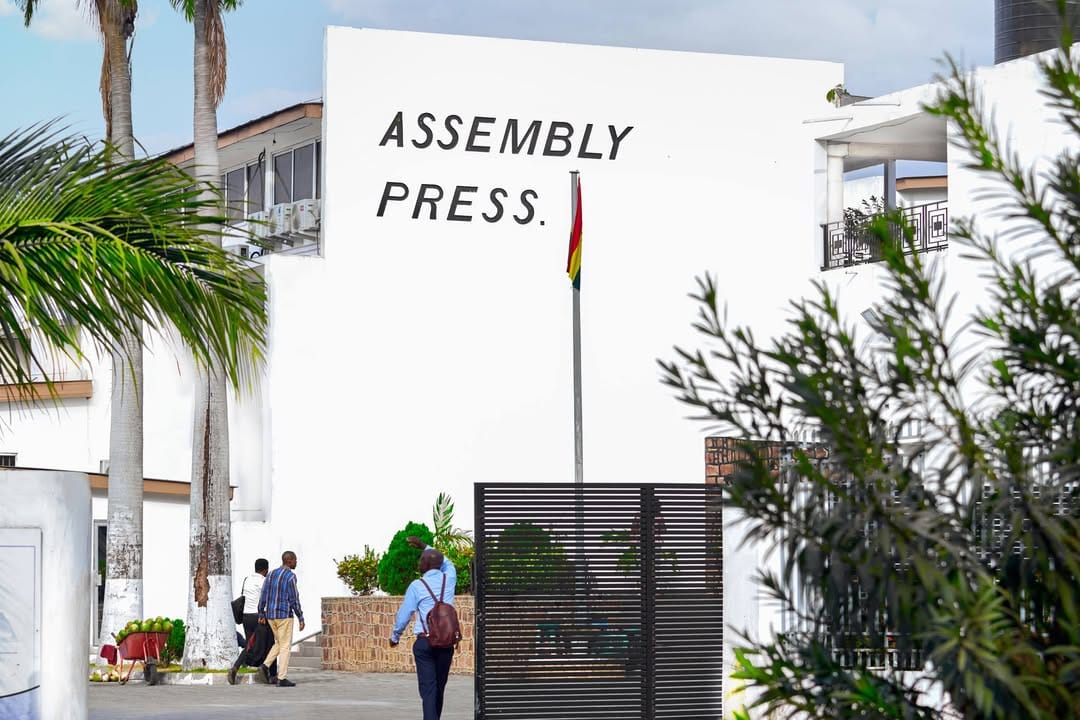
When Dr. Kwame Nkrumah took over at independence, he banned the importation of exercise books and, more broadly, moved to localise the production of textbooks and state printing. That single policy direction catalysed the rise of a national printing ecosystem. Ghana Publishing Corporation became the backbone of that project, with five production subsidiaries: Tema Press, Tamale Press, Takoradi Press, Victoriaborg Press (V’Borg), and Assembly Press. This was not just an enterprise. It was a development instrument.
But over time, that ecosystem was dismantled. One by one, the presses were divested. The last, V’Borg Press, which stood where the High Court Complex now sits, was handed to SSNIT in the 1990s. Some said the state had grown too big and was doing too little. Whatever the logic, the result was clear. A once proud production network was reduced to a single surviving limb: Assembly Press.
Then came the long season of neglect.
In the 1990s, government invested heavily in a German Heidelberg ballot printing machine, acquired specifically to print ballot papers. Yet even with this strategic asset, jobs were still being diverted to private individuals. The corporation was starved of work while being expected to survive. With a staff strength of over two thousand, Ghana Publishing Corporation slid into bankruptcy and was forced into a brutal redundancy exercise, cutting its workforce by more than half. This was not a management memo. It was a human calamity.
It was in that moment that Hon. Totobi Quakyi, then Minister of Information, led what can only be described as a reset. Management was given six months to rescue the institution. A central part of that mission was to secure printing jobs from state institutions, particularly the Electoral Commission, then in its early 1990s reconstitution, with a young and energetic Dr Kwadwo Afari-Gyan in leadership and Nana Oduro Numapa playing a key administrative role. Yet even then, GPC was being deliberately bypassed. The excuse was that it sat under the Ministry of Information rather than Trade or Industry and could not benefit from broader procurement networks. The real reason was more political. GPC was printing the Parliamentary Hansard, and that alone was enough to keep it boxed in.
And yet, it did not die.
It survived because staff refused to let it go quietly. There were moments of civil disobedience against other state institutions. There were internal battles to secure contracts, job by job, just to keep the lights on. It was in this period that staff members led the initiative to change the legal status of the corporation into a limited liability company. That single act of institutional self-rescue is what gave birth to Ghana Publishing Company Limited. Not a minister. Not a consultant. The workers themselves.
I know this history not as an outsider, but as someone whose childhood and early adult years were lived on those premises as a ward of staff. That place was not just a workplace. It was a community. It donated stationery to under-resourced schools. It ran a weekend reading program where staff could bring their children. Morale was high. Pride was real. From the security man to the Managing Director, people believed in the place.
Do today’s narrators of “turnaround” even know the names that built that soul? Roger B. Dawson. Fuachie Sobreh. Flt. Lt. (Rtd.) Franklin Adja Codjoe. Yaw Dufu. Elizabeth Bobson. Master craftsmen like Mr Aryee, Rejoice Agbai, Victoria Orhin, and Mr Leemawu. The relentless Kersiah Wright. These were not people who drove big cars or took home big cheques. They laid the foundation.
Fast forward to 2008. GPC became the elephant in the room during the transition from Kufuor to Atta Mills. Mahama 1.0 produced plenty gymnastics but little transformation. Akufo-Addo 1.0 did not improve matters. By the end of Akufo-Addo’s tenure, the company had clawed its way back from the brink, returned to profit, and even paid dividends to the state. A new Kumasi branch opened, and the momentum felt real.
Which brings us to the present.
Yes, there have been real improvements. Today, under the new administration, there is a digital press and a few more upgrades that have attracted public praise and even presidential commendation, a development that has clearly unsettled others and provoked competing claims. But recently, amid the showmanship, JoyNews published a fact check that punctured the loudest of those claims by the former Director: that Ghana Publishing had achieved a 3,000 percent increase in net assets in 2023. The truth was less heroic. The jump came largely from a revaluation surplus. Land, buildings, and equipment were simply re-priced. It was an accounting adjustment, not an operational miracle.
That does not erase progress. But it does expose a dangerous habit. Confusing balance sheet cosmetics with institutional revival.
And this is where the quarrel over who deserves credit becomes most unhelpful. The real work is not finished. Yes, Ghana now has an e-Gazette, and that is real progress. But in 2026, a national publishing institution must be judged by global standards, not local relief. What is still missing is a fully integrated, legally authoritative, real-time public law and state records system with structured data, permanent links, version control, and authenticated archives, seamlessly connected to Parliament, the courts, the Attorney General, the Registrar General, the National House of Chiefs, and the regulators. That is the difference between digitisation and transformation. That is the mission.
Institutions are not built by wild speeches. They are built by continuity, memory, and unfinished obligations.
Ghana Publishing Company Limited is not a personal success story. It is a national inheritance. And if you want to honour it, stop arguing over who owns the glory.
Start proving that you understand the burden.