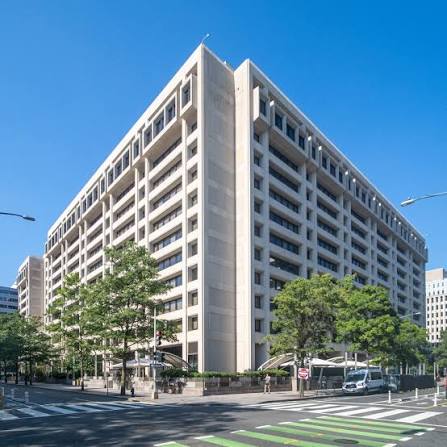
The IMF is in the news. But is it in the news because it said something it should not have said or because what it said is being misinterpreted?
The IMF’s July 2026 Technical Assistance Report is principally an assessment of Ghana’s decade-long attempt to reform the governance and performance of its state-owned enterprises.
Get more exclusive breaking news updates on our WhatsApp channel .
Importantly, the report was not a self-initiated IMF intervention or an unsolicited commentary on Ghana. The IMF mission came at the invitation of the Ghanaian authorities to provide technical assistance. It is therefore difficult to portray the resulting assessment as an unprovoked attack on the government that invited it.
Looking backward over roughly 2015–2024, the report credits successive Ghanaian authorities with establishing SIGA, adopting the State Ownership Policy and Corporate Governance Code, standardizing financial reporting, expanding performance contracts, improving external audits and strengthening fiscal-risk monitoring.

It then asks whether these institutional reforms produced tangible results. Its answer is mixed. The governance framework improved, but financial performance did not improve correspondingly. SOE liabilities increased from approximately ¢35 billion in 2015 to ¢282 billion in 2024, while a few large entities continued to generate substantial losses and fiscal risks.
The report therefore identifies a troubling disconnect between formal reform and actual performance. Ghana has built more rules, policies and oversight structures, but these have not yet translated into sufficiently disciplined, independent and commercially effective SOEs.
The report also assesses the governance arrangements that existed when the IMF mission visited Ghana in November–December 2025. It is in that context that paragraph 87 observes:
“In practice, boards of major SOEs are largely dominated by political appointees, with board chairs frequently being ministers, members of parliament, or prominent party officials.”
The report cites the current GPHA and VRA boards as examples and contrasts their composition with OECD norms, which caution against active politicians serving on SOE boards and emphasize independent, professional majorities.
That illustration has become the news and now threatens to drown out the broader, and largely uncontested, point about the politicisation of SOEs.
Some have characterized the observation as an attack on the ruling party. Predictably, some members of the ruling party are attacking the IMF, while some members of the opposition are enjoying the criticism.
Read properly, however, the IMF is not attacking the ruling party. It is attacking a bipartisan bad habit.
The current GPHA and VRA appointments are illustrations, not the entirety of the criticism. The same criticism applies to comparable appointments made by previous administrations and will apply equally to every future government for as long as the system remains unchanged.
The word “remain” in the IMF’s conclusion that board and CEO appointments “remain highly politicised” is important. It describes an enduring problem, not one invented by the current or past administration.
A structural problem does not become partisan merely because its most current examples have names.
The disease is the politicisation of SOE boards, not the use of a current example to illustrate it.
Moreover, the IMF has not discovered the problem. Ghanaian professionals and civil-society actors have warned for years that politicised appointments weaken SOE boards, compromise their independence and subordinate professional judgment to partisan considerations.
Professors H, Kofi, Kofi, and others have raised concerns about politicised or non-merit-based SOE appointments. Organizations such as CDD-Ghana, IMANI Africa and ACEP have expressed related concerns about political patronage, state capture and politically driven management of public institutions.
At a workshop on political parties on June 30, 2026, GOGO stated the narrower point directly:
“A party chairman should not simultaneously chair the board of a state-owned enterprise. The referee cannot wear a team’s jersey.”
The IMF itself did not invent the governing standard. Its report expressly relies on the OECD Guidelines on Corporate Governance of State-Owned Enterprises. Even our own State Ownership Policy and Corporate Governance Code contemplate professional, transparent and competency-based appointments.
The real issue, therefore, is not whether the IMF has embarrassed the NDC or supplied ammunition to the NPP. The issue is whether the country should continue treating strategic public enterprises as extensions of the party in power.
The report also looks forward. It recommends merit-based appointments, fewer active politicians and high-level public officials on SOE boards, stronger reporting, and better fiscal-risk and investment oversight during 2026–2027.
Thus, the report is neither exclusively about the previous administration nor exclusively about the present one. It reviews performance across a decade, assesses the system as it stood in late 2025, and recommends what Ghana should do next. A current example may illustrate the continuing problem, but the report plainly presents the dysfunction as structural and longstanding across administrations.
The solution is not merely to replace one party’s appointees with another’s. Nor is it fruitful to quarrel with the IMF for stating the obvious.
Rather, it is time to publish competency requirements for every SOE board position; prohibit serving national party executives, MPs and ministers from chairing strategic SOEs; give boards a meaningful role in selecting CEOs; and protect qualified directors from automatic removal whenever political power changes hands.
This is how we build a transparent, merit-based appointment system that every government must follow.
Unfortunately, evaluating every institutional criticism through a partisan lens is becoming the norm. There is little appetite for history, context or comprehension.
It is a sign of the times that even a long-standing bipartisan bad habit, widely discussed by Ghanaians and civil-society organizations, becomes politicized when the IMF highlights it in a report commissioned by the government, as though the IMF had intervened without invitation.
Political loyalty may qualify a person for party office. It should not substitute for independence and competence in the boardroom or anywhere else in public service.
The IMF is not the problem here. The problem is the bipartisan politicisation of SOEs, which has weakened their independence, professionalism, accountability and performance.
We should not quarrel with the IMF for drawing attention to the problem. We should learn from Sweden and other countries where SOEs are treated as public assets rather than party spoils, and board members are selected through a structured, skills-based process.
It is finished.