In the past month, we have witnessed a dramatic shift in global health financing, forcing many to confront the stark reality of donor dependence in health systems across the world.
The freezing of USAID funds, coupled with the United States’ threat to withdraw from the WHO and other key UN agencies, has sent shockwaves through the global health community and Ghana has been no exception.
Get more exclusive breaking news updates on our WhatsApp channel .
Ghana stands to lose $156 million with the health sector being the hardest hit, facing a staggering $78.2 million cut. This withdrawal directly affects programs linked to essential health services, including malaria control, maternal health, and HIV/AIDS interventions.
The abrupt nature of this funding suspension raises pressing concerns about the sustainability of donor-driven health programs and the vulnerability of national health systems when external funding is reduced or withdrawn.

But beyond the immediate financial strain and the unfortunate impact on key health programs, this crisis presents a policy window—an opportunity to hold governments accountable for the health financing commitments they have long promised but failed to fulfil.
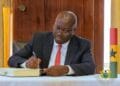
Recognising the urgency of the situation, President John Dramani Mahama has directed the Minister for Finance, Dr Cassiel Ato Forson, to take immediate steps to bridge the funding gap caused by the suspension of USAID’s international health assistance. In an important statement from the presidency, the President has urged that bridging arrangements prioritise key sectors to mitigate the potentially devastating effects of the funding cuts.
However, we urge that this not be a temporary reprieve but a catalyst for a long-term reassessment of Ghana’s health financing structure and the pressing need for comprehensive reform.
The overreliance on donor aid has long been criticised for its misalignment with national health priorities, its unpredictability, and its potential to distort domestic health financing. Donor funding often supports vertical programs that reflect the interests of donor countries rather than the holistic health needs of recipient nations.
It is also an unstable source of health financing, as foreign aid is tied to shifting geopolitical interests and economic conditions. In some cases, donor contributions enable governments to reduce their own financial commitments to health, resulting in budget distortions and inefficiencies that ultimately weaken the health system.
From donor dependency to sustainable healthcare financial reliance
The need for increased domestic funding for health is not a new realization for African governments. Over two decades ago, Ghana and other African nations signed the Abuja Declaration in April 2001, committing to allocate at least 15% of their national budgets to healthcare.
Yet, in 2024, Ghana’s allocation to the Ministry of Health stood at only 6.9% of the total national budget—far below the 15% Abuja target. Within this allocation, 71% is dedicated to the compensation of employees, leaving limited funds for infrastructure, essential service delivery, and medical equipment.
Capital expenditure, which is critical for upgrading hospitals, procuring equipment, and improving service accessibility, receives only 5.5% of the health budget. Despite these figures, Ghana has repeatedly pledged to transition away from aid dependency.
Former President Nana Akufo-Addo’s “Ghana Beyond Aid” Strategy boldly stated that after more than 60 years of independence, the country should be able to finance essential services such as education, health, sanitation, and water resources without relying on donor support. Though Ghana is still far from realizing this goal, the commitment to reducing donor dependency must remain a priority.
If the USAID freeze has demonstrated anything, it is that Ghana cannot afford to delay reforms to domestic health financing. As we head towards the finalisation of the 2025 budget there is an urgent need to advocate for greater domestic allocation of funds to the health sector and to hold the Ghanaian government accountable to the Abuja Declaration.
This is also the moment to push for full transparency and accountability in health expenditure, ensuring that revenue generated through the National Health Insurance Levy (NHIL) and other earmarked funds is fully allocated to health.
The National Democratic Congress (NDC) government must make good on its 2024 campaign promise to ensure that 100% of revenue accrued from the NHIL is allocated solely for health. Only two-thirds of NHIL revenue is actually lodged in the National Health Fund (NHF). In 2021 and 2023, only 63.1% and 47.4% of the levy was deposited into the NHF.
The practice of diverting portions of NHIL revenue to non-health-related expenditures has been a long-standing issue since the inception of the National Health Insurance and must end. If Ghana is serious about reducing donor dependency, then every cedi collected for health must actually
be spent on health.
Why the Mahama-led government must seize the occasion to deepen financing including PPPs
Expanding domestic financing for health will also require stronger engagement with the private sector.
The role of public-private partnerships (PPPs) in healthcare financing cannot be overlooked, as domestic private investment in health is a more sustainable and resilient alternative to donor funding.
While PPPs for health has gained renewed urgency in light of recent aid withdrawals, it is by no means a new proposition. Ghana has long recognized the need to foster private sector participation in health, as demonstrated in the Private Health Sector Development Policy, first adopted in 2003 and later updated in 2012. This policy aimed to create an enabling environment for private sector growth in healthcare, addressing barriers such as access to finance, regulatory challenges, and quality assurance.
However, despite these commitments, implementation and evaluation have remained weak, leaving much of its potential unrealized. It is time for a critical review and reinvigoration of this strategy to ensure that the private sector is effectively leveraged to strengthen Ghana’s health system.
Public-private collaboration was also a pillar of the 2024 NDC manifesto, which promised to develop structured frameworks to allow private entities to deliver essential services within public hospitals, including laboratory, dental, and pharmaceutical services, under best-practice models. The NDC administration must now translate this promise into action by prioritizing regulatory reforms and incentivizing private sector participation in a way that ensures affordability and accessibility for all Ghanaians.
The USAID funding suspension is a wake-up call for Ghana’s health system. While it presents immediate challenges, it also offers an unparalleled opportunity to address the flaws Ghana has long been aware of relating to donor-dependent health financing. Rather than viewing the crisis as a setback, Ghana must leverage this moment to push for greater accountability, smarter investments, and bold policy action to finally realize the promise of self-sufficient health financing.
The directive from President Mahama to urgently bridge the $156 million funding gap signals political will, which is promising. However, whether this translates to long-term health financing reforms remains to be seen. The question now is whether the government will seize this moment for true reform or allow the cycle of donor dependency to persist.