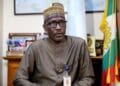
What’s with all the news of Christian genocide in Nigeria? Nigeria’s security crisis is not a conventional insurgency. According to security expert Reverend Ladi Peter Thompson, the violence tearing through the country is the result of a global “supremacist agenda” designed by al-Qaeda and perfected by Osama bin Laden in Sudan between 1991 and 1996.
He describes the threat as a hydra-headed structure, using Islam as a cover to mask a coordinated plan to take over Nigeria, expand across West Africa, and eventually use the continent’s resources for global dominance.
Get more exclusive breaking news updates on our WhatsApp channel .
The crisis is framed as a long-term project with multiple factions, including ISWAP, Boko Haram, Ansaru, Lakurawa groups and Fulani militants who have been armed externally.
Rev. Thompson estimates that their combined manpower is under 450,000, though their real strength lies in decades of penetration into Nigeria’s governance, education system, media, and especially the military and security architecture.

He insists this agenda is aimed at eliminating resistance, a pattern many Christian communities interpret as an ongoing attempt at genocide.
A recurring theme in the analysis is deep government complicity. At the centre of the allegation is the assertion that President Bola Tinubu secured power through a deal with the terrorists.
Rev. Thompson claims Tinubu recognised the many “kinetic factions” of the hydra and played them against one another to emerge president, but severely underestimated the scale of the network and is now personally endangered by it.
The Vice President, Kashim Shettima, is described as an accomplice, with the specific claim that Kabiru Sokoto, mastermind of the 2011 Madalla Christmas Day bombing, was found hiding in the official lodge of a high-ranking Borno State government official who is now the Vice President.
Other officials are similarly implicated. Former Minister Isa Pantami is labelled an al-Qaeda operative, tied to a 2004 incident in which he allegedly issued a fatwa against Christian students at ATBU that led to the killing of Sunday Achi in the university mosque.
Former Kaduna Governor Nasir El-Rufai is accused of publicly admitting that he travelled to neighbouring countries to offer money to Fulani militants responsible for violence in Nigeria.
Sheikh Gumi is linked to a call for violence upon returning from Saudi Arabia, a message followed by what Thompson describes as a planned mass-casualty attack in Kaduna that was only prevented because of a media exposure campaign.
These allegations extend directly into the military. Rev. Thompson asserts that Nigerian army units routinely have their operations sabotaged by internal actors. When soldiers locate enemy positions, signals allegedly come from Abuja instructing them not to attack until hours later, by which time the terrorists have already moved.
He argues that the policy of “deradicalising” arrested terrorists and absorbing them into the Nigerian Army is a dangerous practice that further compromises national security.
His perspective reflects a wider sentiment that Nigeria’s insecurity persists because those responsible for defending the country are infiltrated, restrained, or aligned with the very networks they are supposed to dismantle.
He maintains that this infiltration is not new, recalling former President Goodluck Jonathan’s admission that Boko Haram members had infiltrated his cabinet.
In this context, the persistent killings of Christians in many northern and Middle Belt communities are interpreted by many as evidence that the hydra’s project is succeeding under the cover of governance failure and political complicity.
Rev. Thompson argues that Nigeria’s way out lies in a strategic partnership with the United States. He points to recent statements from Donald Trump as opening a “window of opportunity” for intervention, which he frames as a potential divine turning point.
He visualises it as the “flight of two eagles,” with the American bald eagle rescuing the Nigerian green eagle from collapse.
He highlights several U.S. politicians, including Frank Wolf, Chris Smith, Louie Gohmert, Ted Budd, Pete Ricketts, Josh Hawley, James Lankford, and Ted Cruz, as longstanding allies capable of supporting a reform agenda.
He predicts that genuine cooperation with the right U.S. actors could trigger a national rebirth within four to eight years, restoring the value of human life and strengthening the naira from over 1,600 per dollar to between 250 and 350 per dollar.
According to him, Nigeria is prophetically destined to ignite a global revival, but the same destiny has drawn an opposite agenda determined to make the country the epicentre of the next great wave of global darkness.
The core claim running through this analysis is that Nigeria’s insecurity is not a coincidence and not merely the work of isolated extremists. It is a deliberate, multilayered operation with alleged collaborators inside the highest levels of government and security institutions.
Until this internal compromise is confronted, he argues, the killings and instability, particularly those interpreted as targeted attacks on Christian populations, will continue unchecked.