Minister of Health Mr Kwabena Mintah Akandoh has reaffirmed the vital role of traditional and alternative medicine in Ghana’s healthcare landscape, describing it as both a heritage and a national asset.
Delivering his message through Dr Anastasia Yirenkyi, Director of the Ministry’s Traditional and Alternative Medicine Directorate, he noted that about 70 per cent of Ghanaians currently depend on traditional or complementary medicine, particularly in underserved communities where it often serves as the primary source of care.
Get more exclusive breaking news updates on our WhatsApp channel .
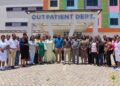
He made the remarks at the closing and certificate award ceremony for 268 practitioners of the Ghana Federation of Traditional Medicine Practitioners Association (GHAFTRAM), who completed the Professional Practice Course organised by the Institute of Traditional Medicine (ITAM) under the University of Health and Allied Sciences (UHAS) in Ho.
Mr Akandoh emphasised the Ministry’s commitment to integrating and regulating the sector. He described the Professional Practice Course as a pioneering national capacity-building model aligned with the Ministry’s policy framework for the development of traditional and alternative medicine.

The programme equips practitioners with essential competencies in clinical assessment, patient management, laboratory interpretation and good manufacturing and quality assurance practices.
He highlighted progress made, including the establishment of more than 55 herbal units in public hospitals and a strategic partnership with India’s Institute of Education and Research to advance academic exchange and global standards.
The Ministry’s overall strategy focuses on regulation, research, training, quality assurance, and alignment with Ghana’s Universal Health Coverage goals.
Representing the WHO Country Director, Dr Angela Ackon, noted that 80 per cent of Africa’s population relies on traditional medicine. She commended ITAM and GHAFTRAM for their leadership while pointing out challenges such as unregistered practitioners and the need for structured training.
She reaffirmed WHO’s support for professionalising the sector, expanding access in rural areas, strengthening policy integration, and promoting carbon-neutral initiatives.
She also called for enhanced collaboration with the Ministry of Health, the FDA and academic institutions to document health outcomes, build global evidence and leverage community trust for health education and disease prevention.
UHAS Vice-Chancellor Prof Lydia Aziato stressed the importance of structured training and integrating indigenous knowledge with modern diagnostic approaches. She said ITAM is working to fill the gap in certification and quality assurance, noting that continuous learning would eventually lead to diploma certification.
ITAM Director Prof Kwame B. N. Banga outlined the institute’s achievements, including the FDA-certified ITAM Natural Product Laboratory and the Professional Practice Course, while revealing plans to expand the training module to Francophone countries.
He added that ITAM is pursuing WHO designation as a collaborative hub for traditional medicine and called for sustained financial and institutional support.
GHAFTRAM General-Secretary Nana Obiri Danso praised the course’s impact on ethics, documentation and patient care, urging practitioners to uphold high standards.
He expressed appreciation to partners and sponsors, including the WHO, Ministry of Health, Traditional and Alternative Medicine Directorate, Food and Drugs Authority and academic collaborators.