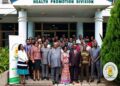
The biennial meeting of Commandants of ECOWAS Training Centres of Excellence (TCEs) has ended at the Kofi Annan International Peacekeeping Training Centre (KAIPTC) in Accra, with participants pledging deeper collaboration to tackle West Africa’s growing peace and security challenges.
The two-day gathering brought together heads of ECOWAS-designated institutions, policy leaders, and partners to review progress, assess gaps, and align training priorities with the evolving regional security landscape. Commandants reviewed implementation of past commitments, examined the ECOWAS Peace, Security and Governance (EPSG) work programme for September 2025 to June 2026, and discussed the role of Centres in supporting the activation of the ECOWAS Standby Force.
Get more exclusive breaking news updates on our WhatsApp channel .
Delivering a message on behalf of the ECOWAS Commission President, Ambassador Mohammed Lawan Gana, Resident Representative of ECOWAS in Ghana, said the meeting came at a critical time when escalating insecurity in the Sahel was spilling into coastal states. He urged renewed political will to address root causes of instability, strengthen intelligence gathering, and enhance the capacities of Training Centres to support the Standby Force, recently designated as a Regional Counterterrorism Force.
Ambassador Abdel-Fatau Musah, ECOWAS Commissioner for Political Affairs, Peace and Security, described the meeting as strategic in linking training and research with the region’s security agenda. He noted that training modules were being tailored to evidence-based research, including studies on demographics, misinformation, and disinformation. He further highlighted upcoming training for Staff Officers in Guinea-Bissau and The Gambia, as well as modules on the Protection of Civilians to refine the readiness of the Standby Force.

Brigadier General Zibrim Bawah Ayorrogo, Deputy Commandant of KAIPTC, stressed the Centres’ shared responsibility to remain innovative and collaborative. He noted that the meeting came at a time when violent extremism, transnational organised crime, climate-induced insecurity, and governance transitions required unified responses.
At the close, participants reaffirmed their commitment to strengthen ECOWAS’ peace and security architecture, expand research-driven training, and consolidate cooperation among Centres to build a more resilient, peaceful, and prosperous West Africa.