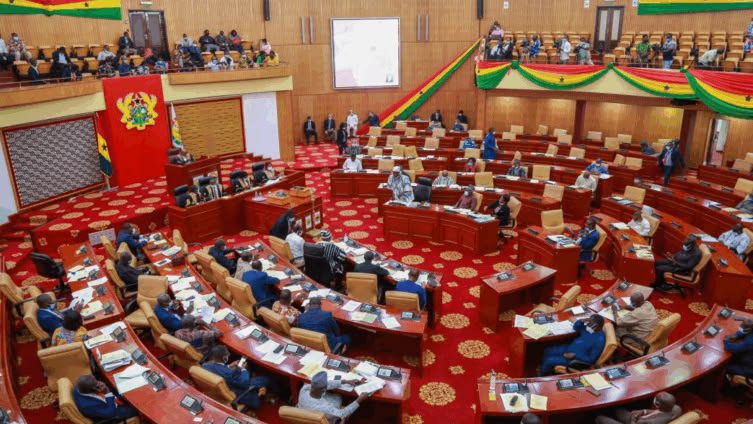
Parliament has approved a $500 million credit facility agreement between the Government of Ghana and the International Development Association (IDA) of the World Bank Group to finance the Ghana Market Access and Connectivity Project (GMACP).
The project, with a total estimated cost of $523 million, includes a $500 million IDA credit facility and $23 million in counterpart funding from the Government of Ghana.
Get more exclusive breaking news updates on our WhatsApp channel .
The initiative is aimed at improving and sustaining year-round farm-to-market road connectivity in selected districts while strengthening the maintenance of feeder roads and enhancing access to agricultural markets.
The project will rehabilitate approximately 1,050 kilometres of feeder roads across four agricultural clusters spanning 13 regions, with the roads upgraded to all-weather standards to facilitate the movement of farm produce between production centres and markets.

The largest component of the project has been allocated $473 million from the IDA facility to finance the rehabilitation of the feeder road network and improve rural transport infrastructure.
A second component, valued at $41 million, comprises $18 million from the World Bank credit and $23 million in government counterpart funding. It will support the maintenance of rehabilitated roads and institutional reforms aimed at improving road financing.
An additional $5 million from the IDA facility will provide technical assistance to strengthen the Road Maintenance Trust Fund and support the implementation of reforms introduced under Act 1147 of 2025.
The third component has been allocated $9 million to support project implementation through improved institutional, administrative and technical capacity within the Ministry of Roads and Highways and the Department of Feeder Roads.
Funding under this component will support project coordination, procurement, financial management, monitoring and evaluation, environmental and social safeguards, occupational health and safety, stakeholder engagement, and the management of compensation and land-related matters.
The project also includes a Contingent Emergency Response Component, which has no initial financial allocation but will provide a mechanism for the rapid reallocation of project funds in the event of an eligible emergency.
The emergency component may be activated to respond to natural disasters, severe flooding, disease outbreaks or other public health emergencies, subject to procedures outlined in the Financing Agreement and the project’s Contingent Emergency Response Component Manual.