The Institute for Economic Research and Public Policy (IERPP) has called on the government to provide fuller disclosure of Ghana’s public finances, arguing that the 2026 Mid-Year Budget Review presents an incomplete picture of the country’s fiscal position.
In a statement, the policy think tank acknowledged improvements in key macroeconomic indicators, including easing inflation, a relatively stable cedi and a lower debt-to-GDP ratio, but said important financial obligations were omitted from the review.
Get more exclusive breaking news updates on our WhatsApp channel .
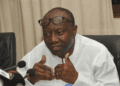
IERPP noted that while the Finance Minister disclosed that State-Owned Enterprises (SOEs) had accumulated liabilities equivalent to about three per cent of GDP annually over the past decade and that a GH¢5 billion bond had been issued to recapitalise the Bank of Ghana, the review did not state the total accumulated SOE liabilities or the central bank’s full capital shortfall.
The institute also questioned the absence of details on a recently approved facility of about US$1 billion, including a US$300 million World Bank/IDA education facility.

IERPP further criticised the review for failing to provide updates on flagship government programmes, including the 24-hour economy and the Nkonko-Nkitinkiti initiative, despite allocations made to both programmes in the 2026 Budget.
It also called on government to explain the legal circumstances surrounding the garnishee order that froze the constitutional Contingency Fund and to clarify its current status.
According to IERPP, government should publish the country’s total debt stock in both cedis and US dollars alongside debt-to-GDP ratios in future fiscal statements and provide the public with complete information on the liabilities of SOEs and the Bank of Ghana.
The institute said it was not disputing the economic gains reported by government but maintained that progress must be accompanied by transparency and full disclosure.