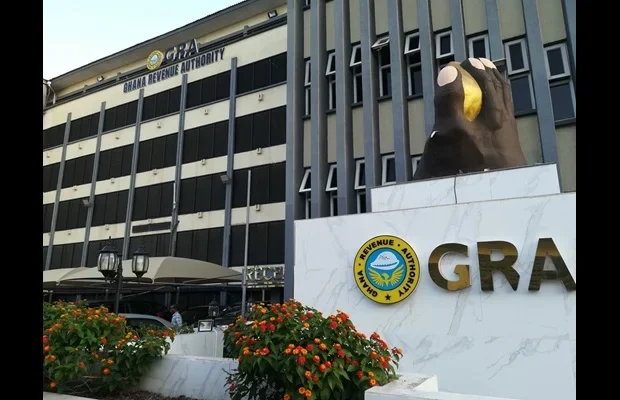
The Ghana Revenue Authority (GRA), working in collaboration with National Security and the military, has intercepted four trucks loaded with more than 9,000 jerry cans of diverted cooking oil concealed in a warehouse within the Tema enclave.
The duties on the smuggled items amount to an estimated GHS 1.9 million.
Get more exclusive breaking news updates on our WhatsApp channel .
At a press briefing, Mr Anthony Kwasi Sarpong, Acting Commissioner-General of the GRA, revealed that the goods had been falsely declared as transit cargo destined for Burkina Faso, a tactic meant to avoid paying import duties, as transit goods are exempt.
He said tracking devices on the trucks were deliberately disabled to evade monitoring.

Mr Sarpong disclosed that similar enforcement operations took place at the Aflao Collection enclave, where multiple trucks carrying uncustomed consignments were intercepted.
The seized items included rice, sugar, beverages, tomato paste, textiles and clothing, many of which had been misclassified or undervalued. Estimated duties on these goods stand at roughly GHS 1.7 million.
Combined, the two operations prevented a potential government revenue loss of approximately GHS 3.6 million.
All confiscated goods are now under the control of the GRA for tax recovery, and proceeds from their sale will be paid directly into state accounts. Truck owners involved in the scheme will also be surcharged as a deterrent.
The Acting Commissioner-General emphasised that the success of the operation reflects effective coordination between the GRA and national security agencies.
He said the Customs Division continues to work closely with officers across border points to ensure that all goods entering the country meet regulatory requirements and duties are duly paid.
“Smuggling kills businesses, takes away job opportunities and denies the state the necessary revenue for national development,” he stated, adding that offenders risk losing their entire capital when arrested.
He urged the public to avoid smuggling and understand that tax payments contribute to national development.
Mr Sarpong assured stakeholders that the GRA would keep intensifying anti-smuggling actions, protect borders from unauthorised movement, and close off illegal routes used to evade duties.
He reiterated that the Authority would not tolerate attempts to bypass the system and encouraged compliant businesses to stay the course.
Those who break the law, he warned, will face strict enforcement measures.
Appealing for public cooperation, he called on citizens and the media to share information on tax evasion and smuggling, promising strict confidentiality.
To support this, he highlighted the GRA’s Informant Award Scheme, which offers monetary rewards to individuals or organisations that provide credible, actionable intelligence leading to successful tax recovery.