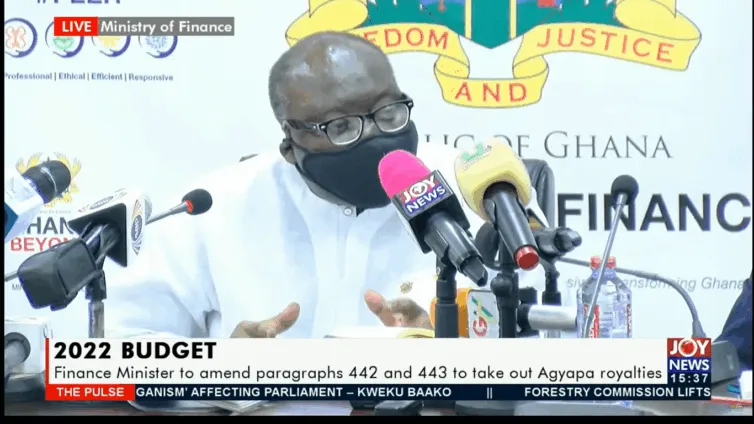
Former Finance Minister Ken Ofori-Atta has disclosed that Ghana could secure about $3 billion in financial support from the International Monetary Fund (IMF), significantly higher than the initial $1 billion estimate announced in 2022.
According to Mr Ofori-Atta, the revised projection reflects improvements in Ghana’s economic outlook, including stronger economic growth and the country’s drawing rights at the IMF.
Get more exclusive breaking news updates on our WhatsApp channel .
He said the government was also working to complete its Enhanced Domestic Programme by the end of September, describing it as a critical step towards negotiating a formal IMF support programme.
Speaking on PM Express Business Edition, Mr Ofori-Atta expressed confidence that Ghana would be able to secure an IMF programme the following year after finalising the domestic reform agenda.

He explained that negotiations for IMF programmes typically take about six months but noted that discussions on balance of payments support had already begun.
“We are thinking of a three-year programme, possibly hoping that IMF programme reforms will be completed in two years,” he said.
Mr Ofori-Atta said the proposed IMF programme would focus on restoring debt sustainability, strengthening macroeconomic stability, enhancing the credibility of government policies and rebuilding confidence in the Bank of Ghana’s ability to manage inflation.
He further disclosed that the government intended to return to the Eurobond market after concluding an agreement with the IMF to help bridge the country’s financing gap and restore investor confidence.
On fiscal management, Mr Ofori-Atta acknowledged the government’s longstanding challenges in meeting revenue targets and controlling expenditure but said greater reliance would be placed on the Ghana Integrated Financial Management Information System (GIFMIS) to improve expenditure monitoring.
He said tighter fiscal controls were expected to strengthen confidence in the economy while supporting the government’s fiscal consolidation efforts.
The government also revised its expenditure projections, reducing total spending, including arrears clearance, from GH¢137 billion to GH¢135 billion.
The revised figures were expected to result in a cash-based fiscal deficit of GH¢38 billion, equivalent to 6.6 per cent of the revised gross domestic product (GDP).