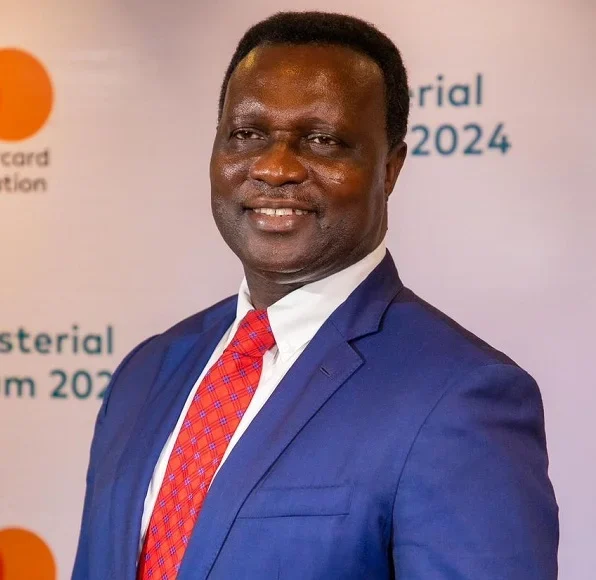
Ghana’s education sector is once again under intense national scrutiny following the release of the 2025 WASSCE results, which revealed a sharp decline in student performance, most notably in core mathematics, where the pass rate dropped from 66.86 percent under the previous administration to 48.73 percent.
The downturn has dominated public discourse, prompting contrasting explanations from former Education Minister Dr Yaw Osei Adutwum, the current administration, the Ghana Education Service (GES), and the presidency, each framing the crisis through a different lens.
Get more exclusive breaking news updates on our WhatsApp channel .
President John Dramani Mahama, describing the results as “disastrously wrong,” has ordered a full analysis of the examiner’s report, suggesting that longstanding “neglect of basic education” may lie at the heart of the decline.
Yet Dr Adutwum, who supervised some of the best WASSCE outcomes in recent years, insists the problem is not systemic failure but policy discontinuity, arguing that successful initiatives introduced under the previous government were abruptly halted, creating a performance vacuum.

At the centre of this debate is what Dr. Adutwum calls a “crisis of continuity.”
He contends that Ghana’s education system remains fundamentally strong, ranked second in Africa by the Mo Ibrahim Foundation, but has suffered from the cancellation of targeted interventions that once supported struggling students.
Among these were the 165-million-cedi annual Intervention Grant for extra tuition, a system of performance contracts for directors and headmasters, the Most Improved School Award, examiner-led teacher training, and the iBox digital learning project.
All, he argues, played substantial roles in raising outcomes between 2017 and 2020, when Ghana recorded its first year of over-50-percent pass rates in all four core subjects.
The 2025 results also reignited debate over examination malpractices. Critics suggest stricter oversight led to poorer scores, but WAEC’s data shows a spike in irregularities, 6,295 subject cancellations, 653 full-result cancellations, and 98 withheld subject results, raising questions about deeper learning challenges.
The examiners’ report identified recurring weaknesses, including difficulty interpreting diagrams, limited problem-solving abilities, and challenges with cumulative frequency tables and real-life mathematical deductions.
GES has pushed back against claims of cancelled support systems, insisting no allowances have been withdrawn.
Dr Adutwum, however, clarifies that the GES appears to be referring to the Professional Development Allowance, not the Intervention Grant he claims has been halted.
Government MPs responding during the 2026 budget debate defended their approach, emphasising expanded access through plans to build 200 primary and 200 junior high schools, increased affordability via a 4.2-billion-cedi allocation for Free SHS, and improvements in quality through enhanced teacher training and learning materials.
Central to the political argument is the direction of educational investment. Whereas the former minister rooted his strategy in STEM-driven transformation, through advanced JHS science labs, flagship STEM academies, and expanded SHS courses in engineering, robotics, and biomedical sciences, the current administration has focused on foundational learning.
President Mahama’s efforts include referencing the World Bank-supported $261 million investment secured under the previous government, covering targeted instruction and the National Standardised Test designed to measure competencies in lower primary.
As the nation awaits the outcome of the president’s directive for a full results review, the debate continues to widen beyond test scores.
Questions about policy consistency, funding priorities, quality assurance, and the balance between foundational learning and STEM innovation now sit at the centre of Ghana’s educational future.