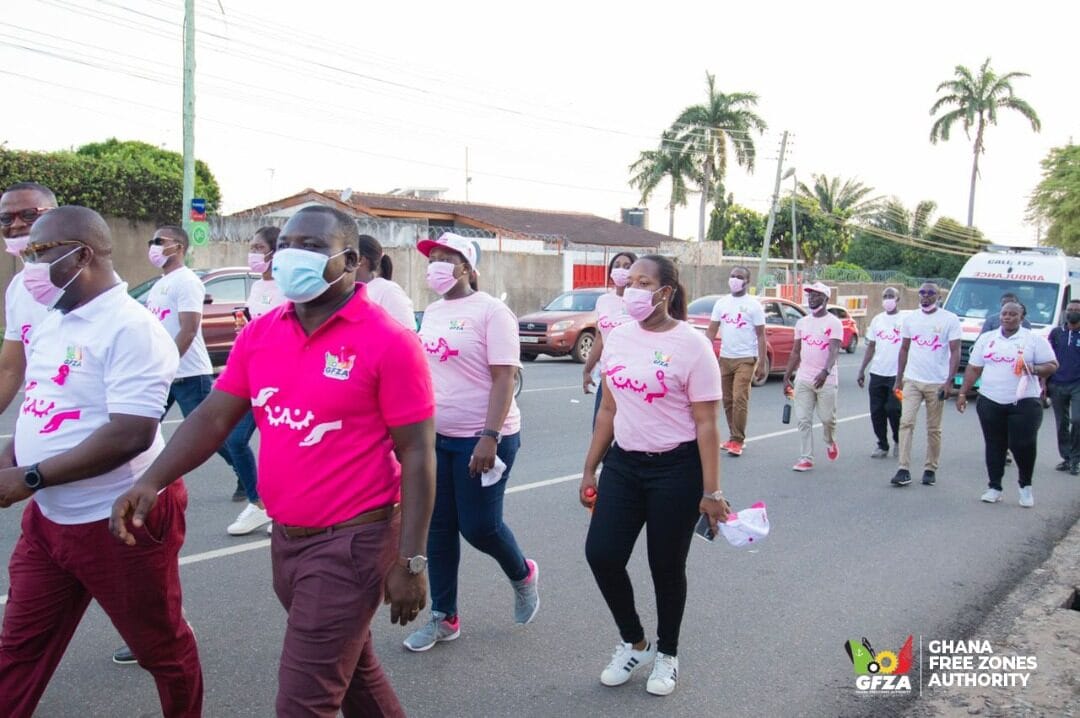
Every October, the world turns pink to mark Breast Cancer Awareness Month, encouraging women to examine their breasts, seek screening, and support those affected. Yet behind the awareness campaigns lies a stark truth: breast cancer is the most common cancer among women globally and a leading cause of cancer deaths.
In Ghana, the disease is particularly devastating, with nearly half of the women diagnosed each year not surviving.
Get more exclusive breaking news updates on our WhatsApp channel .
The Ghanaian Situation
Breast cancer has emerged as Ghana’s most common cancer in both incidence and prevalence. According to the Global Cancer Observatory, in 2022, Ghana recorded 5,025 new cases, representing 18.4% of all cancers diagnosed in the country. Tragically, 2,369 women died, accounting for 13.2% of all cancer deaths.

This results in a case-fatality rate of nearly 47%, meaning that for every two women diagnosed, one does not survive. Survivorship is also significant: an estimated 13,385 women are living with breast cancer within five years of diagnosis, the highest five-year prevalence of any cancer type in Ghana. The disease is therefore the number one cancer and the second leading cause of cancer deaths, after liver cancer.
Challenges in the Health System
Ghana’s health infrastructure exacerbates the crisis. The country has only six main cancer treatment centres (three public and three private). Public facilities are overstretched, while private centres often charge fees beyond the reach of most families. Additional barriers include:
- Severe shortages of oncologists and pathologists
- Long delays in obtaining pathology results
- Limited access to radiotherapy
These systemic limitations mean that many women start treatment too late or not at all, contributing to poor survival rates and significant emotional and financial burdens on families.
Breast Cancer Across Africa
The continent mirrors Ghana’s crisis. In 2022, Africa recorded 198,553 new breast cancer cases, representing 16.8% of all cancers, and 91,252 deaths, or 11.9% of cancer fatalities. Africa also has the highest number of survivors, with 507,659 women living with breast cancer within five years of diagnosis.
While Africa reports a lower incidence rate (38 cases per 100,000 women) compared to the global rate (54 per 100,000), it suffers the highest mortality rate worldwide at 19.2 deaths per 100,000 women. This discrepancy stems largely from systemic barriers: limited screening programs, delayed diagnoses, concentration of oncology services in urban centres, and treatment costs that are often unaffordable.
Global Context
Globally, breast cancer affects women of all ages after puberty, with rates rising with age. In 2022:
- 2.3 million women were diagnosed
- 670,000 women died, making it the most diagnosed and prevalent cancer worldwide
- It was the most common cancer among women in 157 of 185 countries
Men are not exempt, though cases are rare (0.5–1% of all breast cancers) and treated under the same principles as in women.
Risk factors include sex and age (accounting for roughly half of all cases), as well as obesity, alcohol and tobacco use, family history, radiation exposure, and postmenopausal hormone therapy.
The Takeaway
Breast Cancer Awareness Month is vital for education and early detection, but the statistics reveal a deeper crisis. In Ghana and Africa, survival is hindered not by biology alone but by systemic gaps in healthcare access, late diagnoses, and high treatment costs. Bridging these gaps is critical to reducing mortality and improving outcomes for women across the continent.