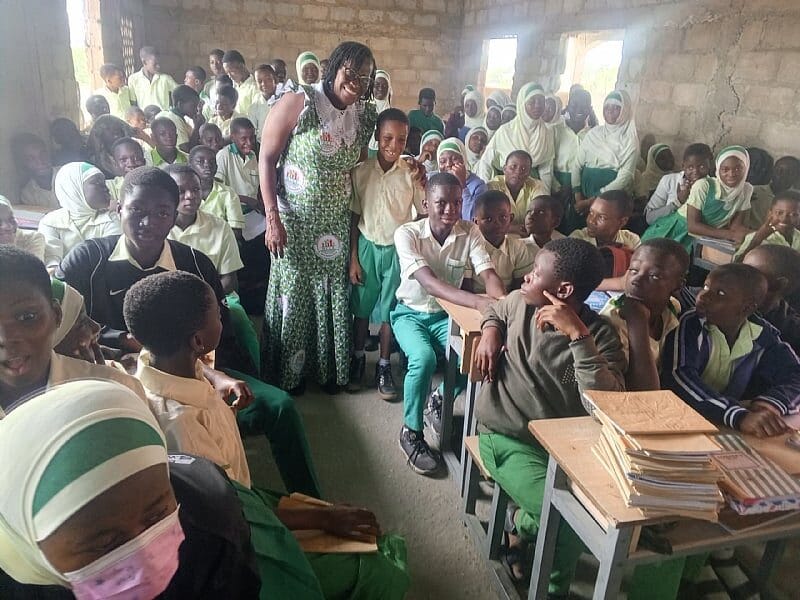
The Ga West Directorate of the National Commission for Civic Education (NCCE) has inaugurated a Civic Education Club for five schools in Amasaman to deepen constitutional awareness and civic responsibility among students.
The beneficiary schools are Shalom International School, St Stephen’s Academy, George Manieson Memorial School, Little Light Academy, and Royal Priesthood Basic School. The new club adds to several others already established in both public and private schools within the municipality.
Get more exclusive breaking news updates on our WhatsApp channel .
Speaking at the inauguration, Madam Edith Akpene Awudor, Municipal NCCE Director, explained that the initiative was part of the Commission’s strategy to reach out to young people with civic education activities.
“We formed the clubs in schools in order to inculcate the democratic and constitutional culture in students and teachers to keep civic education activities alive in their schools,” she said.

She noted that many of today’s leaders, including some parliamentarians and ministers, once belonged to civic clubs during their student days, which helped shape their leadership qualities. “Prominent people like Samuel Okudjeto Ablakwa and the likes all passed through the civic clubs system in their days as students in schools. This helped build their civic and leadership qualities and their confidence for the future,” she added.
Mr Maxwell Antwi, a patron of the new club, commended the NCCE for its commitment to nurturing students for future leadership roles. He stressed the Commission’s vital role in equipping young people with civic knowledge and skills and urged the students to uphold constitutional values while serving as ambassadors for both the NCCE and their schools.
The NCCE Civic Education Club is a non-partisan, school-based organisation established to teach students about democracy, citizenship, and the 1992 Constitution. Club members participate in quizzes, debates, and Mock Parliaments to develop civic values and prepare for responsible leadership. The clubs are currently active in more than 5,000 basic, secondary, and tertiary institutions across Ghana.