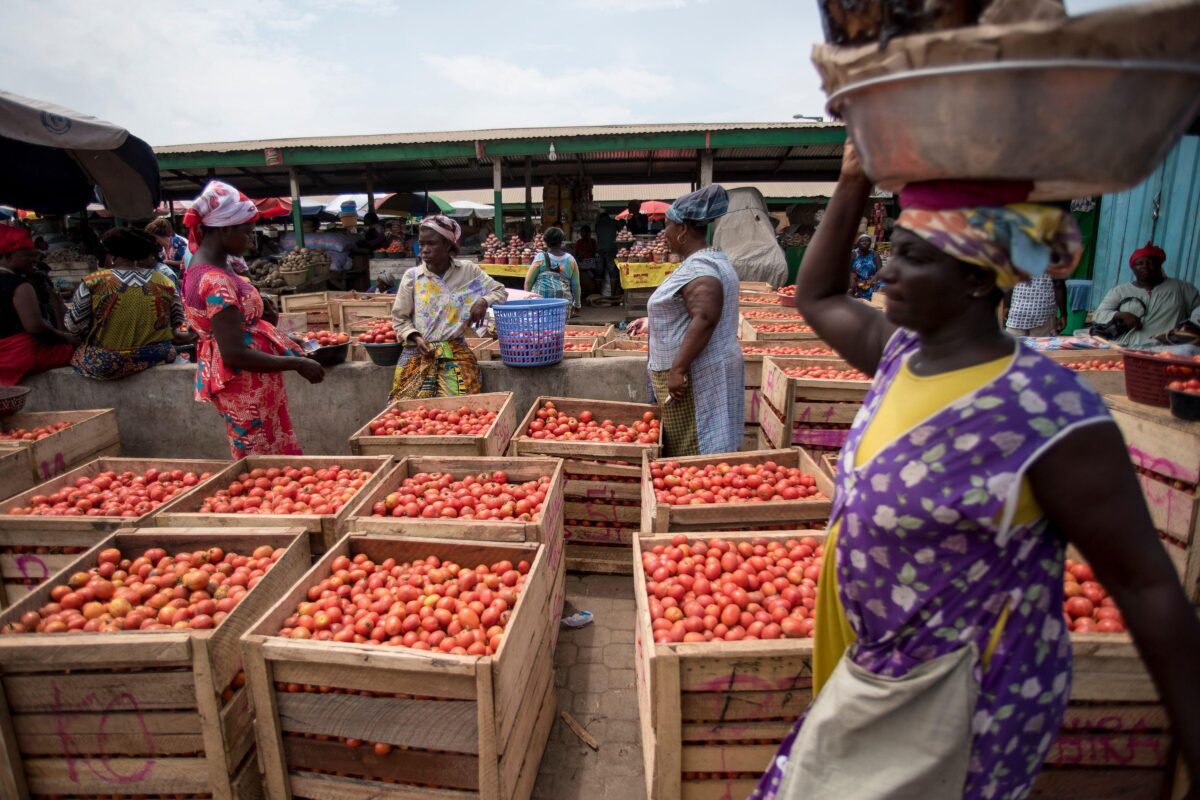
The Minister for Food and Agriculture, Hon. Eric Opoku, has announced that Ghana is poised to experience a significant tomato glut within the next three to four months. The positive projection signals a major boost for local production and potential relief for consumers facing high vegetable prices.
The Minister attributed the expected surplus to ongoing government interventions, improved farming practices, and favourable weather conditions in key tomato-growing areas.
Get more exclusive breaking news updates on our WhatsApp channel .
Several factors are expected to drive the increase in tomato supply, including expanded cultivation under various government agricultural programmes. Improved access to quality seeds, fertilisers, and extension services has also enhanced productivity among farmers.
The successful implementation of irrigation projects in major production zones, together with the adoption of better agronomic practices, is expected to further boost output. In addition, recovery from previous challenges such as pests and erratic rainfall has created more favourable conditions for increased tomato production.

A tomato glut presents several opportunities, including lower prices for consumers, income for farmers, improved food security, and agro-processing potential to reduce post-harvest losses.
However, gluts also come with challenges such as risk of price crashes that discourage farmers, potential post-harvest losses if storage and transportation infrastructure is inadequate, and the need for effective market linkages to absorb the increased supply.
The Ministry is expected to work closely with stakeholders to ensure the surplus is effectively utilised through storage solutions, processing facilities, and expanded domestic and export markets.
This development aligns with the government’s broader agenda to achieve food self-sufficiency and transform agriculture into a major economic driver.
Hon. Eric Opoku has consistently emphasised the need for strategic planning to turn production increases into sustainable economic gains.
With proper planning and support, the expected tomato boom could serve as a model for other crops and contribute meaningfully to Ghana’s agricultural renaissance. Ghanaians can look forward to more affordable tomatoes on the market in the coming months.