The Minister for Food and Agriculture, Hon. Eric Opoku, has raised concerns in Parliament about the implementation of the Nkoko Nkitinkiti Poultry Project.
Addressing the Assurance Committee, the Minister revealed that some beneficiaries have consumed the birds distributed to them instead of raising them for commercial purposes. He noted that people have been sending him videos showing the birds being eaten.
Get more exclusive breaking news updates on our WhatsApp channel .
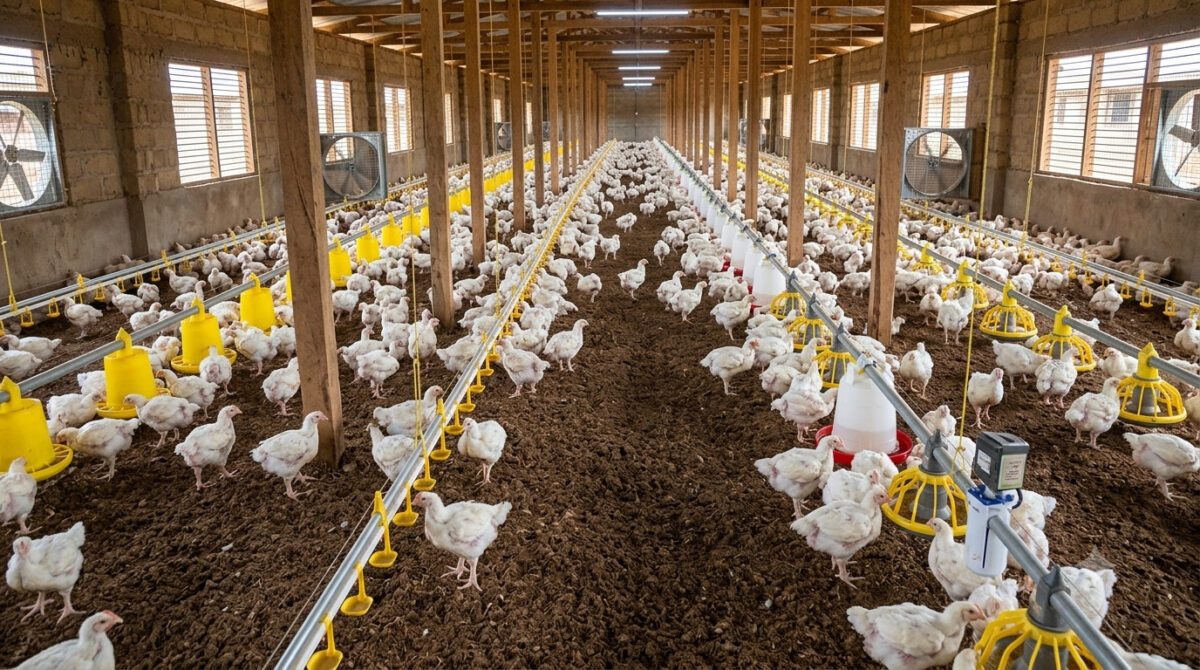
The Nkoko Nkitinkiti initiative is part of the government’s broader efforts to boost poultry production, improve food security, create jobs, and reduce reliance on imported chicken.
The project distributes day-old chicks, feed, and other inputs to selected farmers and groups with the expectation that they will rear the birds to maturity, generate income, and contribute to local supply.

Hon. Eric Opoku’s revelation before the Assurance Committee highlights a significant challenge in project implementation. While many beneficiaries are presumably utilising the support as intended, a notable number appear to have treated the birds as immediate food rather than investment assets.
This development raises important questions about beneficiary selection and readiness, effectiveness of training and sensitisation programmes, monitoring and follow-up mechanisms, and understanding of project objectives among participants.
The Minister’s candid admission demonstrates accountability while underscoring the need for stronger orientation and support systems for such agricultural interventions.
Despite the reported setbacks, the Ministry of Food and Agriculture remains focused on transforming Ghana’s agricultural sector. Poultry development is a critical component of efforts to achieve food self-sufficiency and create rural employment opportunities.
Hon. Eric Opoku’s engagement with Parliament’s Assurance Committee reflects a commitment to transparency and continuous improvement in programme delivery.
Stakeholders recommend strengthening future phases of the Nkoko Nkitinkiti project through enhanced pre-distribution training, business planning support, staged input delivery linked to milestones, and stronger community-based monitoring systems.
They also propose integrating poultry farming into broader livelihood and nutrition education programmes, alongside regular impact assessments to identify and address implementation gaps early.
While the news of beneficiaries consuming the birds may be disappointing, it provides valuable lessons for refining agricultural intervention strategies. Greater emphasis on education, monitoring, and sustainability will be key to achieving the desired impact on food security and rural economies.