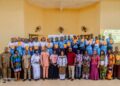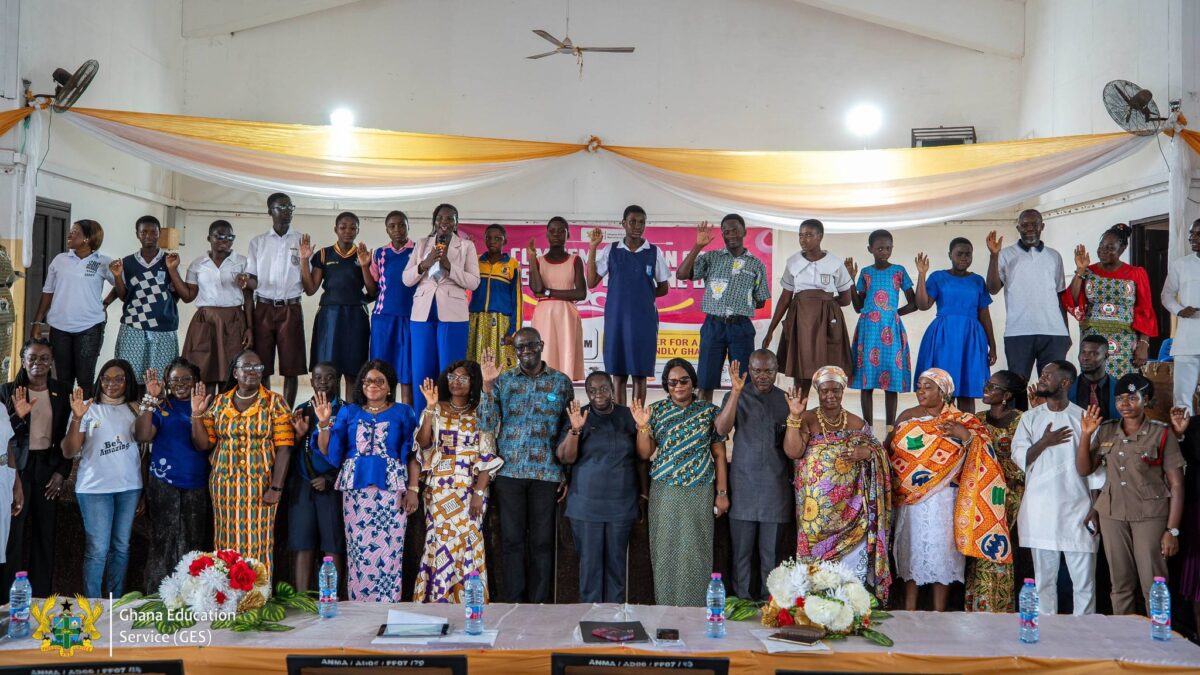
The Ghana Education Service (GES) has commemorated the 2026 Menstrual Hygiene Day with a renewed call for improved menstrual hygiene education and support for girls in schools.
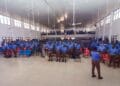
The event, held on Tuesday, May 26, 2026, at Okuapeman Senior High School under the theme “Together for a Period Friendly Ghana,” brought together government officials, education stakeholders, development partners, students, traditional authorities and guests.
Get more exclusive breaking news updates on our WhatsApp channel .
According to GES, menstrual health and hygiene remain a major issue affecting punctuality and school attendance among girls, making continuous education on menstruation and menstrual hygiene management necessary.
The Service also noted that, aside from the government’s distribution of free sanitary pads to school girls of menstruating age across the country, educating girls about personal care during menstruation remains important.

Member of Parliament for Akuapim North, Sammi Awuku, said that empowering girls through menstrual hygiene education and support systems was essential to improving school attendance, confidence, and academic performance.
Deputy Director-General of GES in charge of Management Services, Prof. Smile Gavua Dzisi, who represented the Director-General, said no girl should be denied quality education because of menstruation.
She called for intensified advocacy, improved sanitation facilities and sustained public education to help eliminate stigma associated with menstruation.
Eastern Regional Director of Education, Dr Mrs Ivy Asantewaa Owusu, said creating a safe and supportive environment for girls was a collective responsibility and urged stakeholders to continue supporting menstrual health initiatives.
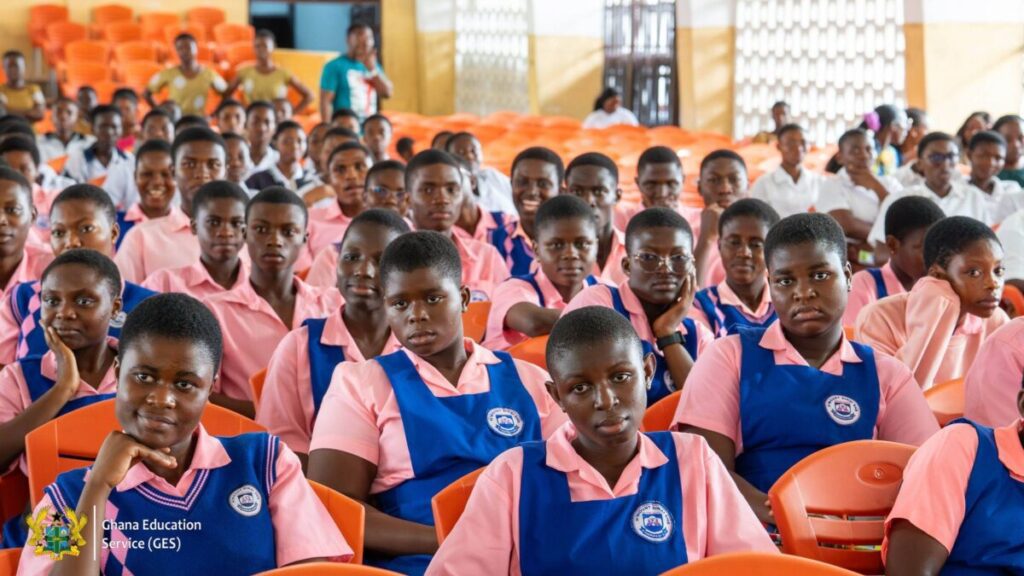
Representatives from UNICEF, UNFPA, CONIWAS and the World Bank also stressed the importance of access to menstrual hygiene education, water and sanitation facilities, and continuous awareness creation in schools and communities.
Other speakers, including the Chairperson of the event, Madam Rosemond Amoako-Apenteng, the Municipal Chief Executive and traditional leaders, reaffirmed their commitment to supporting adolescent health and girl-child education.
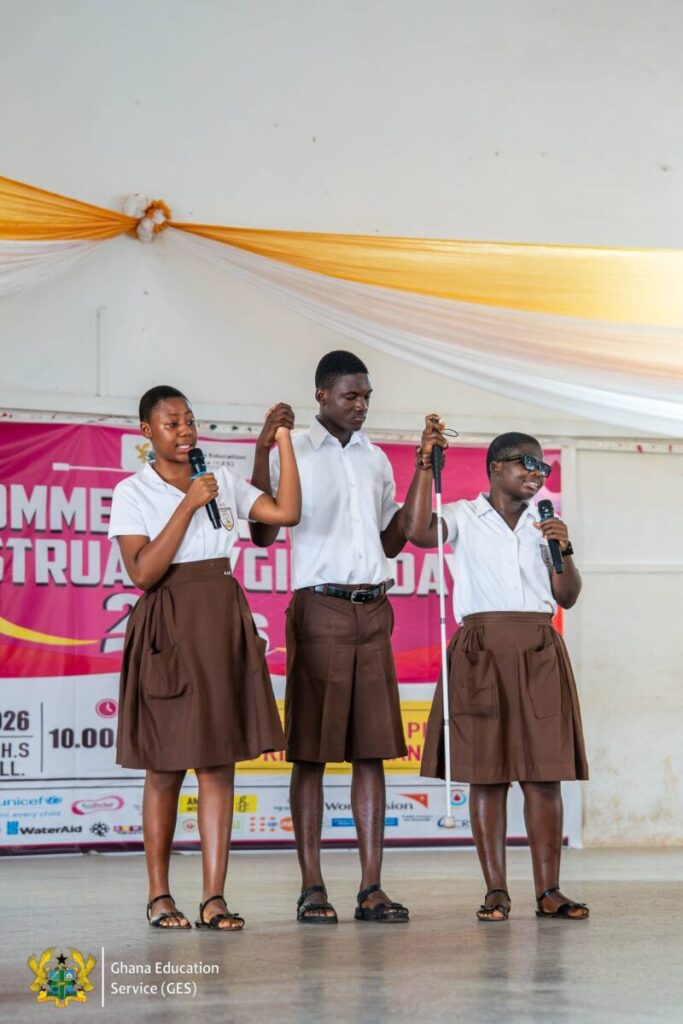
A cultural display by the School for the Deaf, Mampong, was one of the highlights of the event.
GES said the programme created awareness, encouraged discussions on menstrual health and reinforced the need for collective action to end period stigma and promote the well-being of girls in Ghana.