Thursday, April 23, 2026
  • Home
  • About
  • Contact
  • Sitemap
  • Login
  • Register
The Ghanaian Standard
  • Home
  • Latest
    • General
    • Education
    • Environment
    • Health
    • Social
    • Tech
  • TrendingHot
  • Politics
    • Legal
    • Crime
    • Security
  • Business
    • Economy
    • Finance
  • Opinion
  • Sports
    • Boxing
  • International
  • Featured
    • Profiles
  • Job Vacancies
No Result
View All Result
  • Home
  • Latest
    • General
    • Education
    • Environment
    • Health
    • Social
    • Tech
  • TrendingHot
  • Politics
    • Legal
    • Crime
    • Security
  • Business
    • Economy
    • Finance
  • Opinion
  • Sports
    • Boxing
  • International
  • Featured
    • Profiles
  • Job Vacancies
No Result
View All Result
The Ghanaian Standard
No Result
View All Result
Home Business

What happened to Pizza Hut?

Pizza Hut lost dominance after failing to adapt to delivery, digital shift, and changing consumer habits

Dennis GyamfibyDennis Gyamfi
April 22, 2026
in Business, Featured
Reading Time: 2 mins read
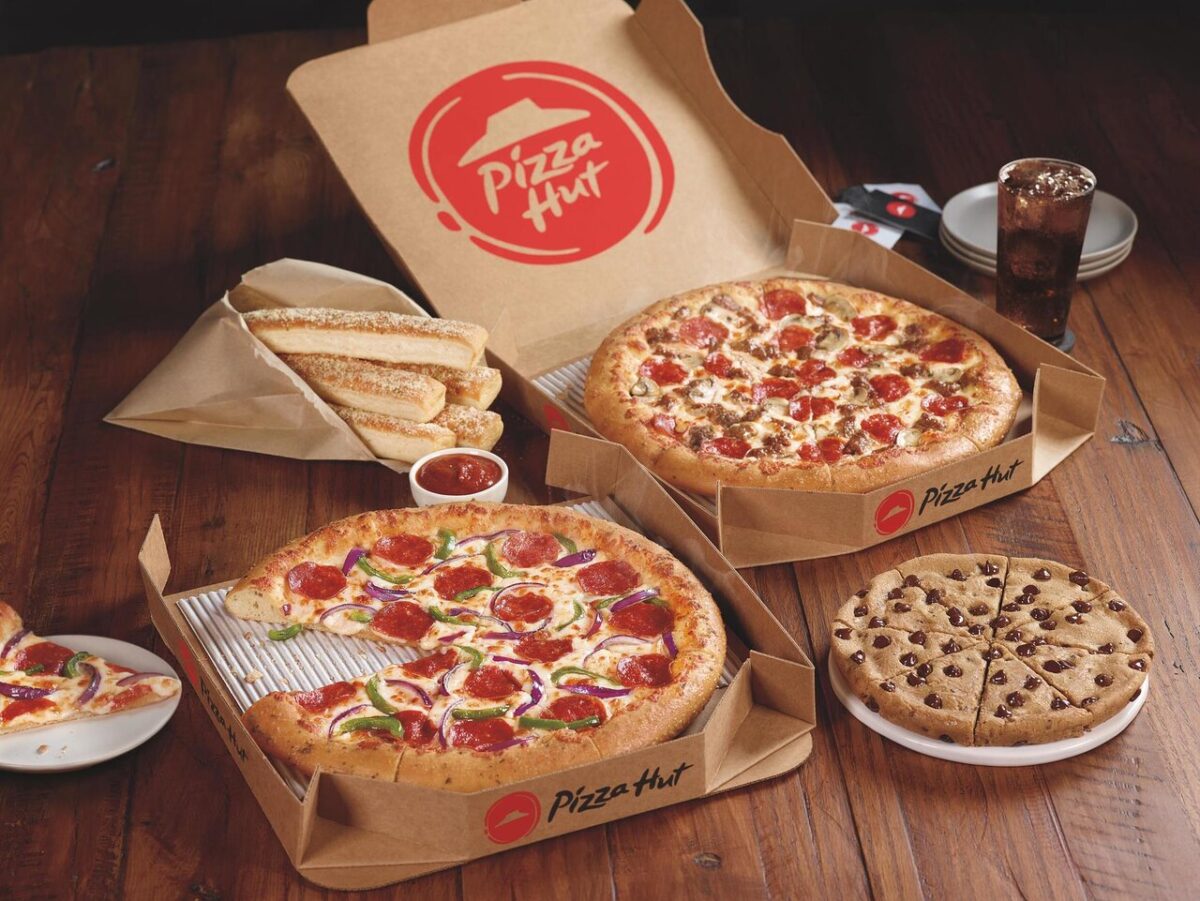
Pizza Hut

Pizza Hut, once a dominant force in the global food industry, has seen its market position erode after failing to adapt to technological change, shifting consumer behaviour, and intensified competition.

At its peak in 1995, the chain controlled 25% of the U.S. pizza market and operated more than 7,500 locations. Founded in 1958 by brothers Dan and Frank Carney with a $900 investment, Pizza Hut grew rapidly by capitalising on post-war trends, including suburban expansion, rising car ownership, and heavily subsidised dairy products that kept costs low.

Get more exclusive breaking news updates on our WhatsApp channel .

The company’s early success was driven by the increasing popularity of dining out, as well as a scalable franchise model suited to suburban America. By 1977, when PepsiCo acquired the business, Pizza Hut had expanded to 4,000 locations. Corporate backing enabled further growth through national advertising and operational scaling.

During the 1980s and early 1990s, Pizza Hut focused heavily on the dine-in experience, combining menu innovation with high-profile product launches. Items such as stuffed-crust pizza and the two-foot-long “Bigfoot” pizza drove significant sales, helping the company reach approximately $5.7 billion in annual revenue by the mid-1990s.

However, structural changes began to undermine this model. The cost advantage from subsidised cheese diminished as alternative proteins like chicken became cheaper and more efficient to produce, benefiting competitors such as McDonald’s and Chick-fil-A.

At the same time, Pizza Hut’s ownership under PepsiCo and later Yum Brands contributed to a lack of strategic focus. As one brand within a broader portfolio, it faced inconsistent quality control and declining customer satisfaction. Reviews of many locations reflected complaints about food quality and service standards.

Broader societal changes further weakened the company’s position. From the late 1990s onward, consumer lifestyles became faster-paced, reducing demand for long dine-in experiences that had defined the Pizza Hut model. The shift favoured convenience and speed over in-restaurant dining.

This transition was exploited by competitors, most notably Domino’s. While Pizza Hut attempted to balance dine-in, delivery, and product innovation, Domino’s focused exclusively on delivery. It invested heavily in digital infrastructure, positioning itself as a technology-driven company with streamlined online ordering. Domino’s also improved its product quality, combining operational efficiency with a simplified business model.

By 2017, Domino’s had captured 42% of the market, while Pizza Hut’s share continued to decline.

The COVID-19 pandemic accelerated these challenges. Although the crisis boosted demand for delivery, Pizza Hut was unable to fully benefit due to its reliance on dine-in infrastructure. Sales declined while competitors experienced growth. The company also faced instability among franchisees, with major operator NPC International filing for bankruptcy after struggling to manage pandemic-related disruptions.

Today, Pizza Hut’s trajectory reflects the risks of failing to evolve alongside market conditions. The same factors that fueled its rise, dine-in experiences, suburban expansion, and cost advantages, ultimately became liabilities in a market defined by speed, digital integration, and specialisation. The company now faces ongoing pressure as it attempts to remain competitive in a transformed industry.


Tags: COVID-19

Related Stories

Fry’s Electronics

The $100M fraud and colapse of Fry’s Electronics

New commentary defends President Mahama’s governance record while blasting NPP transparency lapses and declining media standards in Ghana

New commentary defends President Mahama’s governance record while blasting NPP transparency lapses and declining media standards in Ghana

Ghana Strengthens Nuclear Regulatory Framework with EU Support

Ghana Strengthens Nuclear Regulatory Framework with EU Support

Government announces sweeping VAT reforms, abolishes COVID-19 levy and cuts effective rate to 20%

Government announces sweeping VAT reforms, abolishes COVID-19 levy and cuts effective rate to 20%

Leave a Reply Cancel reply

Your email address will not be published. Required fields are marked *

Premium Website Design for SMEs, Brands & Institutions Premium Website Design for SMEs, Brands & Institutions Premium Website Design for SMEs, Brands & Institutions
ADVERTISEMENT

Trending News

PAC cautions assemblies over misuse of MPs and PWD funds

PAC cautions assemblies over misuse of MPs and PWD funds

Education Minister promotes transnational partnerships with Chinese university

Education Minister promotes transnational partnerships with Chinese university

Joe Mettle sets June 28 for Praise Reloaded 2026

Joe Mettle sets June 28 for Praise Reloaded 2026

Gov't releases core requirements for Ghana 2025/26 centralised e-recruitment process for military and security forces

Gov’t releases core requirements for Ghana 2025/26 centralised e-recruitment process for military and security forces

Fire Service intensifies safety education ahead of firefighters’ day

Fire Service intensifies safety education ahead of firefighters’ day

The Ghanaian Standard

The Ghanaian Standard is an independent news media platfrom trusted by Ghanaian worldwide for breaking news coverage of Ghanaian politcs, business, social, legal, crime news and opinion essays. We are baed in Accra, Ghana

Browse by Category

  • Boxing
  • Business
  • Crime
  • Economy
  • Education
  • Entertainment
  • Environment
  • Expose
  • Featured
  • Finance
  • Health
  • History
  • International
  • Legal
  • Music
  • News
  • Opinion
  • Politics
  • Profiles
  • Science
  • Security
  • Social
  • Speeches
  • Sports
  • Technology
  • TV & Cinema

Contact

Soursop St GS-0750-8619, Iron City-Amanfrom, Ga South, Accra – Ghana

Phone: 233 55 091 9202
Email: contact@ghstandard.com

Follow Us

  • About
  • Contact
  • Sitemap

© 2025 The Ghanaian Standard - Breaking news in Ghana today | Designed by EnspireFX Websites | Powered by StellerHost

Welcome Back!

Login to your account below

Forgotten Password? Sign Up

Create New Account!

Fill the forms below to register

All fields are required. Log In

Retrieve your password

Please enter your username or email address to reset your password.

Log In
No Result
View All Result
  • Home
  • Latest
    • General
    • Education
    • Environment
    • Health
    • Social
    • Tech
  • Trending
  • Politics
    • Legal
    • Crime
    • Security
  • Business
    • Economy
    • Finance
  • Opinion
  • Sports
    • Boxing
  • International
  • Featured
    • Profiles
  • Job Vacancies
  • Login
  • Sign Up

© 2025 The Ghanaian Standard - Breaking news in Ghana today | Designed by EnspireFX Websites | Powered by StellerHost