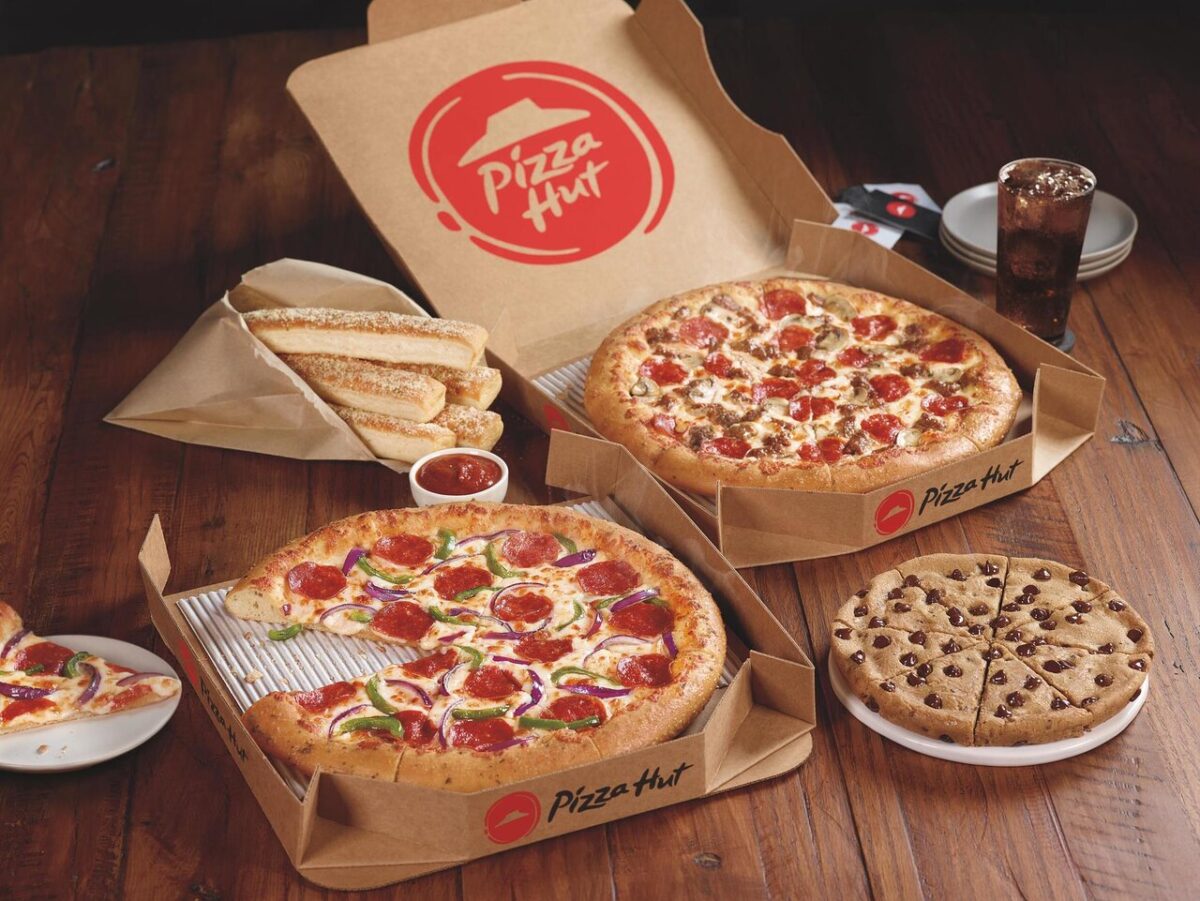
Pizza Hut, once a dominant force in the global food industry, has seen its market position erode after failing to adapt to technological change, shifting consumer behaviour, and intensified competition.
At its peak in 1995, the chain controlled 25% of the U.S. pizza market and operated more than 7,500 locations. Founded in 1958 by brothers Dan and Frank Carney with a $900 investment, Pizza Hut grew rapidly by capitalising on post-war trends, including suburban expansion, rising car ownership, and heavily subsidised dairy products that kept costs low.
Get more exclusive breaking news updates on our WhatsApp channel .
The company’s early success was driven by the increasing popularity of dining out, as well as a scalable franchise model suited to suburban America. By 1977, when PepsiCo acquired the business, Pizza Hut had expanded to 4,000 locations. Corporate backing enabled further growth through national advertising and operational scaling.
During the 1980s and early 1990s, Pizza Hut focused heavily on the dine-in experience, combining menu innovation with high-profile product launches. Items such as stuffed-crust pizza and the two-foot-long “Bigfoot” pizza drove significant sales, helping the company reach approximately $5.7 billion in annual revenue by the mid-1990s.

However, structural changes began to undermine this model. The cost advantage from subsidised cheese diminished as alternative proteins like chicken became cheaper and more efficient to produce, benefiting competitors such as McDonald’s and Chick-fil-A.
At the same time, Pizza Hut’s ownership under PepsiCo and later Yum Brands contributed to a lack of strategic focus. As one brand within a broader portfolio, it faced inconsistent quality control and declining customer satisfaction. Reviews of many locations reflected complaints about food quality and service standards.
Broader societal changes further weakened the company’s position. From the late 1990s onward, consumer lifestyles became faster-paced, reducing demand for long dine-in experiences that had defined the Pizza Hut model. The shift favoured convenience and speed over in-restaurant dining.
This transition was exploited by competitors, most notably Domino’s. While Pizza Hut attempted to balance dine-in, delivery, and product innovation, Domino’s focused exclusively on delivery. It invested heavily in digital infrastructure, positioning itself as a technology-driven company with streamlined online ordering. Domino’s also improved its product quality, combining operational efficiency with a simplified business model.
By 2017, Domino’s had captured 42% of the market, while Pizza Hut’s share continued to decline.
The COVID-19 pandemic accelerated these challenges. Although the crisis boosted demand for delivery, Pizza Hut was unable to fully benefit due to its reliance on dine-in infrastructure. Sales declined while competitors experienced growth. The company also faced instability among franchisees, with major operator NPC International filing for bankruptcy after struggling to manage pandemic-related disruptions.
Today, Pizza Hut’s trajectory reflects the risks of failing to evolve alongside market conditions. The same factors that fueled its rise, dine-in experiences, suburban expansion, and cost advantages, ultimately became liabilities in a market defined by speed, digital integration, and specialisation. The company now faces ongoing pressure as it attempts to remain competitive in a transformed industry.