

In Ghanaian public discourse, there is a concept called jandam. It is not subtle. It is cheap propaganda. A crude attempt to pass off a lie as truth through repetition, exaggeration, and emotional appeal. It does not pretend to be rigorous. It only pretends to be loud.
For the record, jandam does not require logic. It requires volume.
Get more exclusive breaking news updates on our WhatsApp channel .
Our politics, however, has now produced something more refined. It is called Miracle Narratives. It also looks very much like the brainchild of the NPP. And well, if it looks like a duck, swims like a duck, and quacks like a duck, then it is a duck.
That said, these days one has to be careful when one says “the NPP.” It is no longer a single, uniform creature. There are at least two tendencies living under the same flag. There are those who see the party’s recent history as a dead end and are genuinely trying to disrupt the old order, hoping for a reset and a return to some imagined future glory. And then there is the old guard, guarding old habits, old reflexes, and old excuses, whose politics is less about renewal and more about staging a familiar comeback.

Miracle Narratives belong firmly to the second tradition. They are not crude propaganda but an intellectual upgrade of jandam: a true observation embedded in a false explanation. They use real facts, rearrange them into a misleading story, and repackage reality to look like truth, borrowing the language of data and the costume of analysis.
In physics, if you take two real reference points and bend the space between them, you can create the illusion of a straight line while actually warping reality. In optics, that is how mirages work. Your eyes receive real light, but your brain is fooled by refraction. In statistics, it is how you can tell the truth with numbers and still lie with conclusions.


Miracle Narratives work the same way.
They do not fight facts. They reassign causality.
They take an outcome and detach it from its history. They take a condition and present it as if it appeared on its own. They take a recovery process and frame it as a failure.
They follow a simple structure:
- Start with a true statement.
- Add a real and widely felt frustration.
- Insert a misleading story about why those two things coexist.
Miraculous Example:
- Dollar down, inflation down,
- but why is it still hard for Ghanaians?
- There’s a disconnect…”
The lie is not in what is said. It is in what is left out. It is in the implied question that pretends today’s hardship is disconnected from yesterday’s collapse. You cannot set a house on fire and, one year later, complain that the room is still hot.
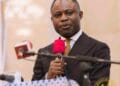
This is the intellectual technology Dennis Edward Aboagye, also known as Miracles Aboagye, brought to a recent media exchange. Fortunately or unfortunately for him, the new Ghanaian is a merchant of facts. You must sell proof.
Between 2022 and 2023, under the NPP government, Ghana recorded some of the worst economic numbers in its history. Inflation crossed 50 percent. Food inflation went even higher. The cedi went into free fall. Ghana defaulted on its debts and entered an IMF program as an emergency room patient.
By the end of 2024, as the NPP government was leaving office, inflation was still about 24 percent. Food inflation was near 28 percent. The cedi was around 14.7 to the dollar. Unemployment was above 13 percent. Public debt remained above 60 percent of GDP even after a painful domestic debt exchange that wiped out the savings of nurses, teachers, pensioners, and ordinary workers.
This is what they left behind. A scorched economy. A traumatized society. A country that had just survived financial cardiac arrest. That is the baseline any incoming government would have had to work from.
One year later, the macro indicators look better. Inflation is in single digits. The cedi is stronger, around 10 or 11 to the dollar. Growth is above 5 percent. The deficit is narrowing and reserves are improving. These are not partisan talking points. They are published numbers.
What people are feeling now is the aftershock of reckless borrowing, currency mismanagement, lost confidence, and turning Ghana into a debt defaulter. Life is still hard for Ghanaians, as even the Finance Minister and the President have openly acknowledged, because economies do not reset overnight. Prices that doubled or tripled do not fall simply because inflation slows. Lower inflation only means prices are rising more slowly, not that they are coming down.
So when Miracles Aboagye asks why life is still hard, he is really asking why the patient is still weak after we almost killed him. This is not a mystery. It is recovery, and it is happening faster than many expected. That is precisely why these Miracle Narratives matter. They are a theatre of selective memory staged by the very people who wrote the tragedy.
It is possible to be critical of the current government’s pace, priorities, or policy choices without pretending the crisis began yesterday. Miracle Narratives do not deny the crisis. They falsify its origins.
In the end, Miracle Narratives are the art of damaging something and then telling stories about how long it is taking to fix, as if the story itself were the miracle. But not all miracles are from God. Even Scripture reminds us that deception can also come dressed as wonder. Ghana does not need miracle stories or miracle doctors. It needs memory, honesty, the discipline of accountability, and the courage to tell the whole story.
TheNewGhanaian is awake, and no amount of contorted logic will survive contact with the facts