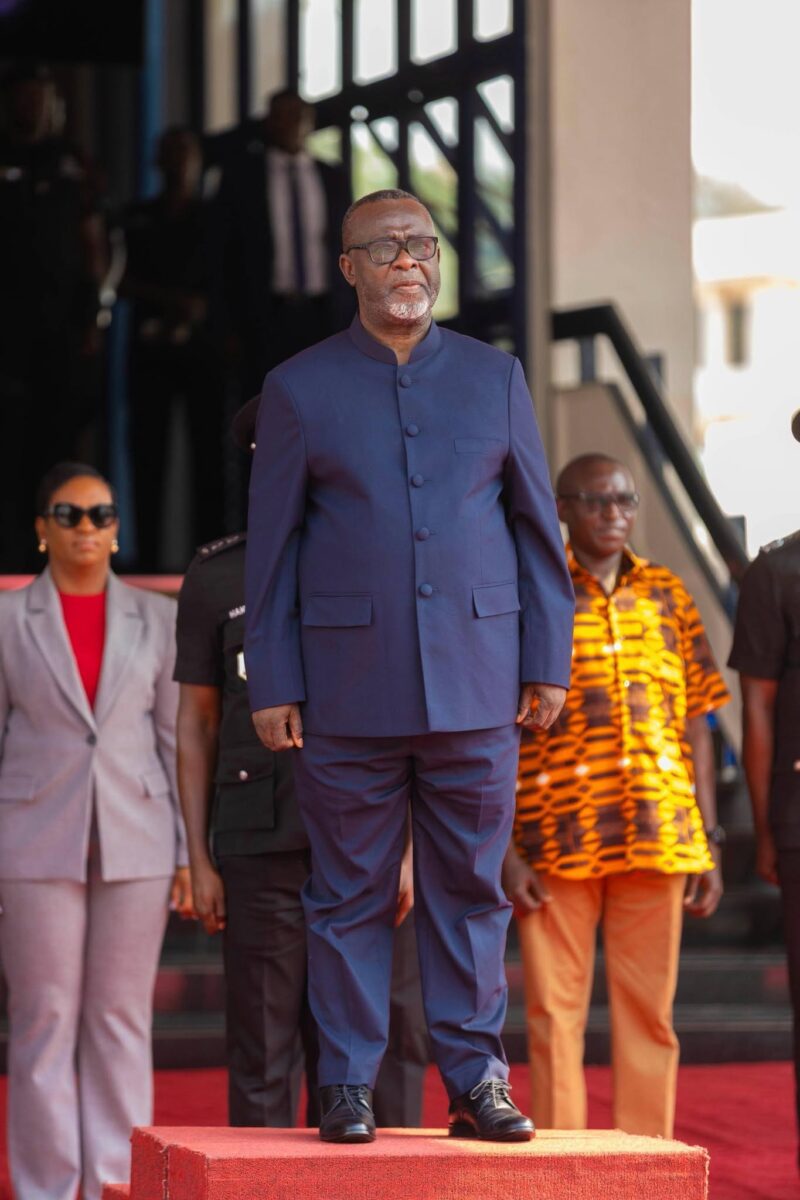
Chief Justice Paul Baffoe Bonnie could have chosen his words better. Saying public officials should help President Mahama’s agenda succeed was unnecessary. A Chief Justice should avoid language suggesting personal investment in the political success of any President.
The harder question is what the remarks actually prove.
Get more exclusive breaking news updates on our WhatsApp channel .
If we replaced Mahama with Akufo Addo, NDC with NPP and Baffoe Bonnie with another Chief Justice, would our constitutional standard remain the same?
If not, the problem is no longer constitutional principle. It is partisan consistency.

Article 125 places justice in an independent Judiciary. Article 127 protects the Judiciary, in its judicial and administrative functions, from the control or direction of any person or authority.
Judges remain open to criticism. Citizens, lawyers, journalists and political parties are entitled to question judicial conduct.
But criticism cannot substitute for the legal process by which bias or misconduct is established.
Baffoe Bonnie’s remarks may have created poor optics and justify greater restraint. But political sounding language is not, by itself, proof of actual bias, prohibited partisan activity or stated misbehaviour.
That is why Article 146 matters.
Removal rests on stated misbehaviour, incompetence or inability to perform the functions of office arising from infirmity. The Constitution also provides a process for determining whether those grounds exist.
Inappropriate comments could contribute to a case of stated misbehaviour. But stated misbehaviour should not be declared by political press conference.
If someone believes these remarks cross that threshold, Article 146 provides the machinery for determining it.
Until then, allegation remains allegation.
Justice Jones Dotse offers a useful example.
In the Woyome litigation, his “create, loot and share” language became politically explosive. The African Court on Human and Peoples’ Rights later described the remarks as “unfortunate” and beyond appropriate judicial comment.
Yet it did not find that they established bias.
Dotse does not prove inappropriate judicial speech can never establish bias. It proves something narrower: inappropriate judicial speech and legally established bias are not the same thing.
That distinction should survive changes in government.
Chief Justice Anin Yeboah praised COCOBOD’s performance in 2020 and later described the Akufo Addo government’s judicial infrastructure intervention as “unprecedented.” Chief Justice Gertrude Torkornoo called Akufo Addo a “champion of justice.”
Those remarks were open to scrutiny. But they did not, standing alone, prove that subsequent judicial decisions belonged to the NPP.
The same discipline must apply today.
The Torkornoo controversy adds political context, not proof.
Before Baffoe Bonnie made these remarks, the NPP Minority had already rejected his nomination and boycotted his 2025 vetting while challenges to Torkornoo’s removal remained pending.
That history neither invalidates nor proves today’s allegations. It simply means the controversy over Baffoe Bonnie did not begin with these remarks.
Now imagine the real constitutional test.
Tomorrow, Mahama’s government introduces a major programme. Parliament passes the law. Someone challenges it before the Supreme Court.
Baffoe Bonnie must be capable of applying the Constitution against Mahama if the law requires it.
If evidence in that particular case establishes a legally sufficient basis for apprehending bias or conflict, recusal becomes a proper legal question.
That is very different from declaring today that every future case involving this government is already contaminated.
We should not prejudge judicial bias while claiming to defend judicial impartiality.
The same principle applies to Baffoe Bonnie’s elevation.
He became Acting Chief Justice following Torkornoo’s suspension because Article 144(6) placed the functions of the office with the most senior Supreme Court Justice.
His substantive appointment later followed Article 144(1), which gives the President appointment power in consultation with the Council of State and subject to parliamentary approval.
One may challenge events surrounding Torkornoo’s removal. One may criticise Mahama. One may criticise Baffoe Bonnie.
But sequence is not proof of motive.
This is the standard Ghana needs.
If Baffoe Bonnie speaks carelessly, criticise him; if a particular case raises legally sufficient concerns about impartiality, raise recusal; and if evidence establishes conduct amounting to stated misbehaviour, invoke Article 146.
But do not collapse all three questions into one political conclusion.
A bad sentence can justify criticism. Inappropriate speech can justify restraint. A particular case may justify recusal. Proven misconduct may justify constitutional proceedings.
What none of them justifies is abandoning evidence.
The same Constitution must apply when your party wins and when your party loses.
Bad optics are not automatically bias.
Suspicion is not evidence.
Sequence is not proof of motive.
Political disappointment is not a constitutional finding.