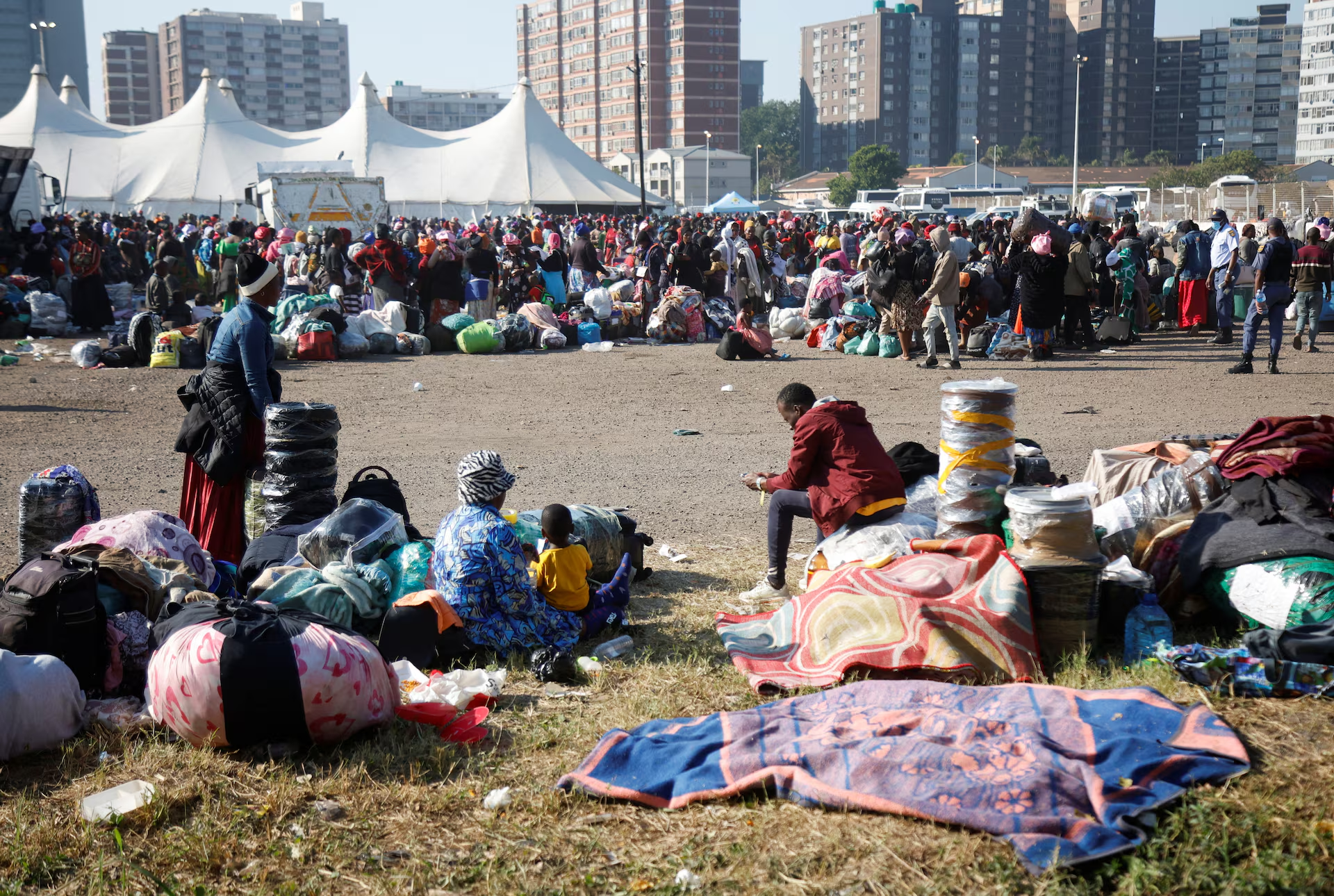
Thousands of African migrants are leaving South Africa or seeking temporary shelter ahead of nationwide anti-immigrant protests scheduled for June 30, amid fears the demonstrations could turn violent.
In Durban, thousands of Malawian migrants queued at a temporary processing centre hoping to secure transport home. In Cape Town, hundreds of Zimbabweans spent the night outside their country’s consulate waiting for buses back to Zimbabwe.
Get more exclusive breaking news updates on our WhatsApp channel .
“We are scared because you never know what people are planning to do to you. It’s not right to wait and see what will happen,” said 37-year-old Ebrahim Moosa as he waited with his wife to return to Malawi.
The latest exodus follows weeks of xenophobic protests and attacks that have forced many foreign nationals to flee their homes.

Anti-immigrant groups have given undocumented migrants until June 30 to leave South Africa ahead of planned demonstrations across the country.
Although the main protest group, March and March, says it is not calling for violence, it has also stated it will not accept responsibility for any incidents that occur during the protests.
Authorities have announced heavy security deployments in cities expected to be protest hotspots.
KwaZulu-Natal Acting Police Commissioner Phumelele Makoba appealed to demonstrators to respect the police, while President Cyril Ramaphosa said the country’s security forces were prepared to maintain order.
Mozambique, Malawi and Zimbabwe have begun repatriating hundreds of their citizens by bus, although officials say demand has exceeded available transport.
Mozambican national Antonio Njive, who worked in South Africa since 2019, said he lost everything after his home was burned during recent violence that reportedly killed five Mozambicans.
“I left home without clothes. Everything was burned,” he said.
Outside Zimbabwe’s consulate in Cape Town, 30-year-old Amina Chiwoko said many people were sleeping outdoors while waiting to leave.
“Everyone just wants to go home,” she said.
However, many migrants have nowhere safe to return to.
Leanne Sefu, a 25-year-old asylum seeker from the Democratic Republic of Congo who has lived in South Africa since the age of three, said returning home was not an option because of the ongoing conflict.
“The entire world knows that there’s a war in Congo, so me going back, it feels like going back to death,” she said.
After being attacked at the nail salon where she worked and later chased from her home in Durban, Sefu is now staying outside a Department of Home Affairs office with dozens of other displaced migrants.
She said she hopes the South African government can provide temporary shelter for those fleeing the violence.
The protests have been driven by claims that undocumented migrants are taking jobs, increasing crime and placing pressure on public services.
However, available data challenges many of those claims.
Statistics South Africa estimated there were about 3.1 million migrants in the country in 2023, representing approximately 4.1% of the population, down from 5.6% a decade earlier.
Researchers also dispute claims linking migrants to high crime rates.
Migration expert Loren B. Landau said available evidence suggests immigrants are generally law-abiding, with immigration-related offences accounting for many convictions involving foreign nationals.
A 2018 World Bank report also found that every migrant employed in South Africa helps create about two jobs through additional business activity and consumer spending.
Experts further argue there is little evidence that undocumented migrants are responsible for the country’s struggling public services, attributing those challenges largely to poor governance, chronic underinvestment and corruption.
South Africa continues to face high unemployment, deep inequality and slow economic growth, factors analysts say have contributed to rising anti-immigrant sentiment ahead of local elections expected later this year.