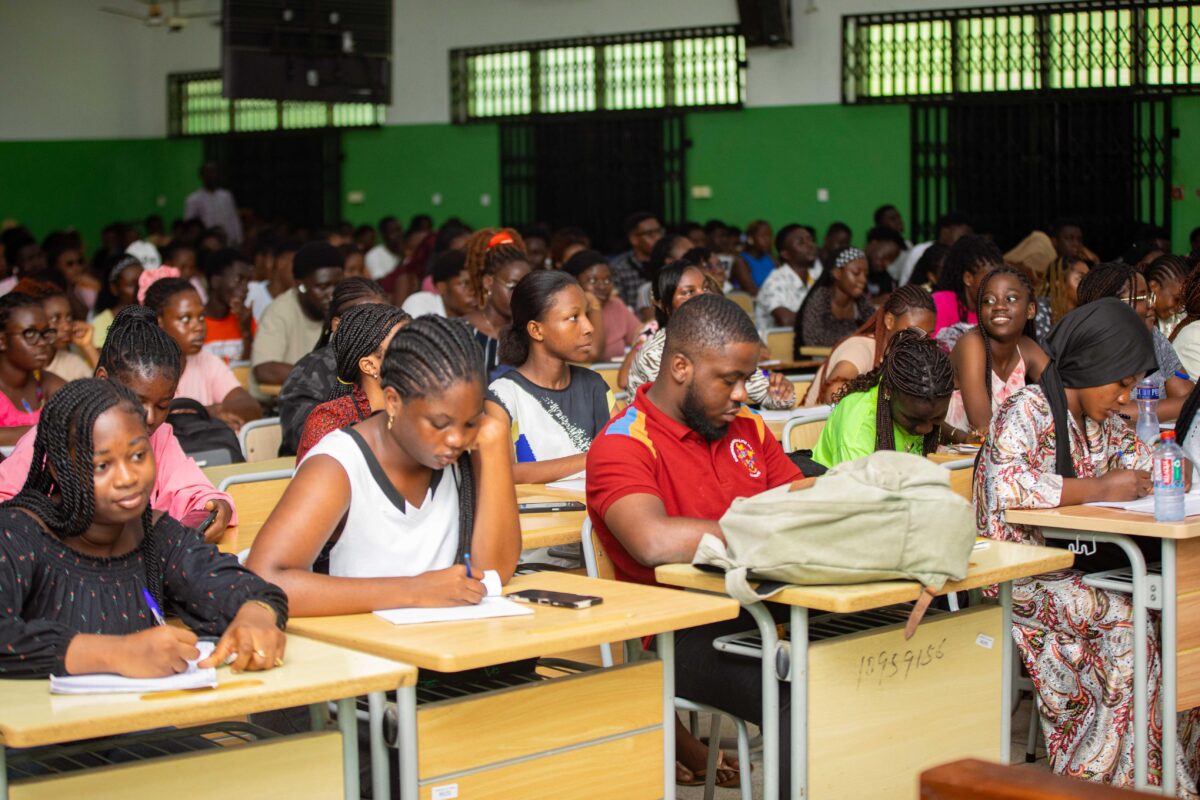
A Level 200 student of the University for Development Studies (UDS) who works as a kayayoo to raise money for her education has sparked public discussion over the management of Ghana’s scholarship funds.
The student told TV3 that she engages in kayayoo, carrying loads in markets, to raise money to pay her school fees.
Get more exclusive breaking news updates on our WhatsApp channel .
Her situation gained widespread attention after an X post by @ChristDeKing juxtaposed her story with remarks by Ghana’s High Commissioner to the UK and Ireland, Sabah Zita Benson, about alleged misuse of scholarship funds.
In remarks concerning documents she had reviewed, Ms Benson described cases where scholarship beneficiaries travelling to the United Kingdom were allegedly accompanied by spouses and children whose travel, visa, medical and other expenses were covered by public funds.

She cited one case involving a mother, her husband and three children, where logistics costs allegedly approached £90,000. She further stated that the spouse and each of the children allegedly received monthly support of about £8,160.
“I cringed reading these documents. The rot that happened under the former Registrar,” she said.
Ms Benson called for investigations by the National Investigations Bureau (NIB), including arrests where warranted and recovery of funds found to have been misapplied.
The remarks have renewed concerns about the administration of Ghana’s scholarship system, particularly allegations that scholarships intended for brilliant but needy students have sometimes benefited politically connected or affluent individuals.
The controversy has also drawn attention to reports of scholarship beneficiaries abroad experiencing delayed payment of tuition and stipends, while other students in Ghana struggle to meet the cost of tertiary education.
The contrast between the UDS student working as a kayayoo and the alleged expenditure on families of some scholarship beneficiaries has prompted questions about whether public scholarship resources are being directed towards those most in need.
The Scholarship Secretariat was established to support educational access, while reforms have sought to improve transparency, including the publication of beneficiary information and stronger emphasis on need-based awards.
Calls have now intensified for greater transparency, audits of scholarship expenditure, recovery of misused public funds and stronger enforcement of eligibility requirements.
The situation has also renewed calls for increased support for needy tertiary students in Ghana to reduce the number of students who have to undertake difficult informal work to remain in school.