
The Director-General of the Technical and Vocational Education and Training (TVET) Service, Mawusi Nudekor Awity, says ongoing reforms in Ghana’s TVET sector are designed to equip young people with employable skills and help address the country’s unemployment challenge.
According to her, the reforms form part of the government’s broader transformation agenda to make technical and vocational education more responsive to the needs of industry and the labour market.
Get more exclusive breaking news updates on our WhatsApp channel .
The measures include the modernisation and retooling of TVET institutions, capacity building for teachers, the recruitment of additional instructors, stronger collaboration with development partners, the promotion of soft skills and closer partnerships between training institutions and industry.
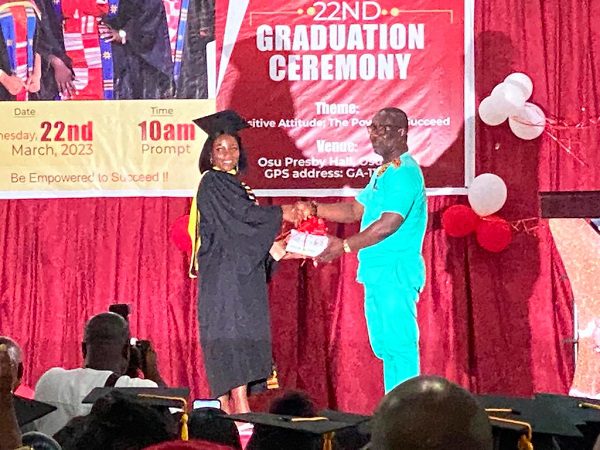
Her remarks were delivered in a speech read on her behalf by the Director of Training Assessment and Quality Assurance, Samuel Debrah, during the 22nd graduation ceremony of the 2nd Image International Skills College in Accra.

Mrs Awity noted that although access to education had improved globally over the past decade, youth unemployment remained a major concern, making quality technical and vocational education increasingly important.
She said strengthening TVET would provide young people with practical skills needed to secure employment and contribute meaningfully to national development.
The graduation ceremony, held on the theme, “Positive attitude: The power to succeed,” saw more than 120 students awarded diplomas and certificates in beauty and spa therapy, body therapy, fashion design, beauty therapy and hairdressing.
Addressing the graduates, Mrs Awity encouraged them to cultivate positive attitudes in both their professional and personal lives.
She said optimism and a positive mindset would help them overcome challenges, build stronger relationships and achieve greater success in their careers.
Director of Administration at the 2nd Image International Skills College, Clint Boa-Amponsem, said the institution places strong emphasis on practical training and moral values to prepare students for the world of work.
He urged the graduates to remain creative, make sound decisions and use the knowledge acquired at the institution to contribute to Ghana’s development.
Mr Boa-Amponsem also encouraged them to uphold the values instilled during their training and maintain a lasting connection with their alma mater as they pursued their careers.