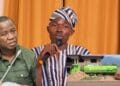
Mr Albert Kofi Owusu, General Manager of the Ghana News Agency (GNA), has called on media institutions across the Global South to unite in reshaping the global narrative by telling their own stories with accuracy, cultural depth and meaningful context.
Speaking on a panel at the Global South Media and Think Tank Forum in Johannesburg, South Africa, he said developing nations could no longer rely on external media structures or algorithm-driven platforms that often misrepresent them. The event took place from November 12–14.
Get more exclusive breaking news updates on our WhatsApp channel .
Mr Owusu noted that Western media dominance, coupled with growing misinformation and artificial intelligence systems that inadequately capture African and Southern experiences, continued to distort global perceptions.
“If we do not tell our stories, others will, and they will not tell them well,” he said, urging coordinated South–South media partnerships.
He proposed the establishment of a South–South news content exchange supported by AI tools designed specifically for African and Southern contexts. Such an initiative, he explained, must prioritise local languages, cultural identity, shared development concerns and cross-border storytelling.

“We must build AI systems that understand our languages, our geographies and our realities,” he said. “If algorithms do not understand us, they will erase us.”
Mr Owusu stressed that safeguarding the digital future of African cultures required strategic investment in technology, data infrastructure and collaborative platforms that elevate voices from the Global South.
He highlighted the long-standing concern that global information flows are still shaped by powerful media organisations in the North, often leading to skewed portrayals of societies in Africa, Asia, Oceania, the Caribbean and Latin America. The moment, he said, had come for unified action to correct those imbalances.
The Johannesburg forum, attended by about 230 media executives and think-tank leaders, was co-hosted by the Chinese Government and Xinhua News Agency under the theme: “Reforming Global Governance: New Roles and Visions for China–Africa Cooperation.”
Discussions centred on improving Global South representation in global systems, strengthening media innovation, and expanding research-driven policy influence.
Mr Owusu commended China’s ongoing investment in Global South media partnerships, describing its commitment to the Global South Initiative as a sign of “ambition, innovation and strategic partnership.”
He added that China’s development experiences offered valuable lessons for African countries seeking institutional growth and transformation.
He also referenced recent calls by African leaders, including Ghana’s President John Dramani Mahama and Kenya’s President William Ruto, for Africa to secure a permanent seat on the UN Security Council, describing the demand as part of a broader push for a more just international order.
“Africa cannot simply react to global agendas; we must set them,” Mr Owusu said, urging deeper collaboration between media houses and think tanks to strengthen evidence-based journalism and amplify perspectives often overlooked in global media.