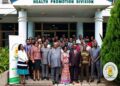
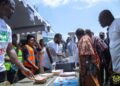
The Economic Community of West African States (ECOWAS) has launched the second phase of its Livestock Marketing Support Programme (PACBAO), an initiative designed to enhance the livestock and meat value chain across the subregion.
PACBAO seeks to promote healthier livestock and meat by improving pastoral farming, integrating farmers into value chains, and meeting regional meat demand. The new phase builds on earlier achievements to modernise production systems, strengthen post-harvest management, and leverage public-private investments to unlock the sector’s potential.
Get more exclusive breaking news updates on our WhatsApp channel .
Speaking at a knowledge-sharing workshop in Accra, Ghana’s Minister of Food and Agriculture, Mr Eric Opoku, noted that livestock contributes about 14 percent of agricultural GDP and plays a critical role in food security, income generation and employment. He acknowledged Ghana’s continued reliance on imports to meet domestic meat demand, underscoring the need for greater investment in the sector.
Mr Opoku said Ghana contributed significantly to phase one of PACBAO, and its results showed tangible progress in strengthening livestock value chains. “Phase two must build on these achievements with interventions that will transform the meat and livestock sector across the region,” he added.

Ms Janine Walz, Deputy Head of Mission and Head of Cooperation at the Swiss Agency for Development and Cooperation, stressed that livestock went beyond economics, as it provided nutrition, resilience and income for millions of families. She urged ECOWAS to address challenges such as limited market access, cross-border trade barriers, weak sanitary standards and insufficient opportunities for youth and women.
Mr Mohammed Lawan Gana, ECOWAS Resident Representative in Ghana, said the first phase of PACBAO, implemented between July 2018 and June 2023, generated valuable knowledge, innovations and best practices. He emphasised livestock’s importance to Sahelian economies, where it employs up to half of the population.
He added that the new phase would support the development of an organised and stable market to attract greater private investment while reaffirming ECOWAS’ commitment to regional integration policies and programmes.