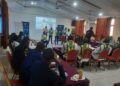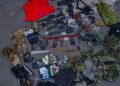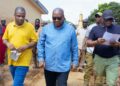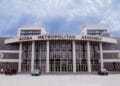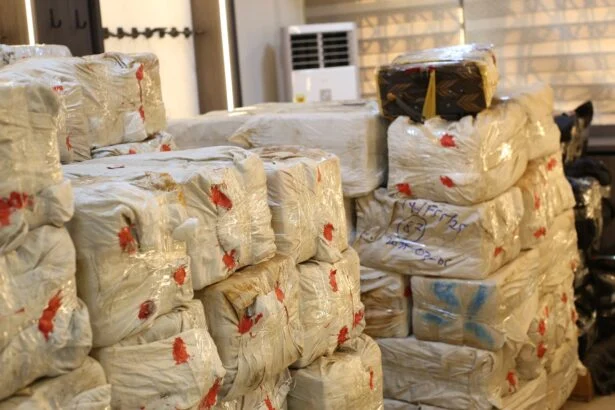
President John Dramani Mahama has summoned heads of key state agencies and private operators to Jubilee House following the seizure of a cocaine shipment valued at approximately $261 million.
The shipment was reportedly intercepted by French Customs, exposing a wider international drug trafficking network linked to Ghana.
Get more exclusive breaking news updates on our WhatsApp channel .
The development has led to intelligence-led arrests by the Narcotics Control Commission (NACOB), which has arrested three suspects accused of facilitating the activities of Dutch fugitive Jas Jakan Anj, also known as “By Jo.”
The three suspects are currently in custody and are alleged to have represented and facilitated the activities of the fugitive within Ghana.

Among those summoned to the presidential meeting are representatives from the Ministry of Finance and the Ministry of Foreign Affairs.
Also invited are the Ghana Ports and Harbours Authority, Ghana Shippers Authority, Ghana Maritime Authority and Meridian Port Services (MPS).
The revenue and customs authorities invited include the Commissioner of the Customs Division of the Ghana Revenue Authority (GRA) and the Sector Commander of Customs at the Tema Collection.
The security and intelligence agencies summoned include the National Intelligence Bureau (NIB), Ghana Police Service through the CID and Interpol, NACOB and the Chief of Naval Staff.
Operators of terminal scanners, Ghana Link Network Services Limited and the Managing Director of Ghana Airport Company Limited have also been invited.
However, the formal invitation list excludes the Minister for the Interior and the Minister for National Security, despite the presence of agencies under their respective sectors among those summoned.
The exclusion has generated concerns about coordination within Ghana’s national security architecture, particularly because the Police, NACOB and NIB are being called to account while the ministers responsible for policy direction are reportedly not part of the meeting.
Questions have also been raised about the National Signals Bureau, which is a component of National Security, and the reported absence of the sector minister from the high-level meeting.
The government’s response has also triggered criticism from the minority in Parliament and other critics who have accused Ghanaian security agencies of being passive or lethargic, arguing that French authorities had to intercept the shipment before action was taken locally.
NACOB, however, has rejected the accusations and maintained that its operations are intelligence-led.
The Commission said the three suspects were monitored for a specific period before they were arrested on a Sunday, stressing that intelligence operations require underground collaboration and cannot always be made public without compromising investigations.
NACOB has reaffirmed its commitment to ensuring that Ghana does not become a “safe haven, transit, profit, or operational base” for international drug cartels.
The Commission also emphasised the transnational nature of organised drug crime, saying no single country can combat such networks alone and that it is collaborating with international law enforcement partners to disrupt their financing and infrastructure.
The case has raised broader concerns about Ghana’s international reputation, with the repeated association of the country with large-scale drug trafficking described as damaging to its image.
Questions have also been raised about the effectiveness of terminal scanners and the integrity of security operatives at the country’s ports and airports.
There are further concerns about the accessibility of drugs to young people, with the view that preventing such shipments from entering the system would significantly reduce access.
The incident has also raised questions about vulnerabilities in Ghana’s financial and physical security borders, including concerns surrounding “fake dollars” and the ability of individuals to mobilise gold and currency from unknown sources.
The investigation is continuing as authorities seek to disrupt the wider network connected to the Dutch fugitive, Jas Jakan Anj, also known as “By Jo.”